Monday, 29 July 2024.
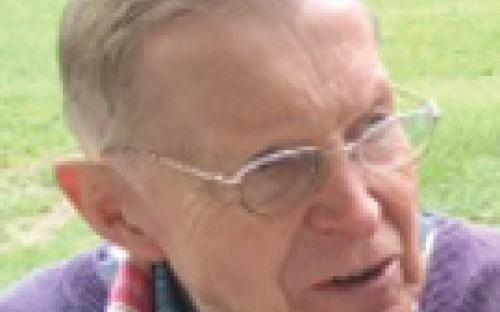
Peter Reddaway, “a unique moral voice for justice and decency” in the West [1], has died in the United States at the age of 84.
Born in England, he studied at Cambridge University, after which he taught at the London School of Economics. In the mid-1980s he moved to the United States and was for several years (1986-1989) director of the Kennan Institute for Advanced Russian Studies.
Thereafter he was a professor at Georgetown University in Washington until his retirement in 2004.
*
Never just an academic, though he was a fine and meticulous researcher, Peter Reddaway did more than anyone in the West to publicise the emerging human rights movement in the USSR [2].
He followed the efforts of courageous individuals in the Soviet Union to assert and defend the human rights that were, ironically, outlined during Stalin’s rule — in the 1936 Soviet Constitution and then publicly promoted by the United Nations in the 1948 Universal Declaration of Human Rights.
Not only did his 1972 book Uncensored Russia make A Chronicle of Current Events widely known; he also battled successfully to ensure that succeeding issues were regularly translated and published in English. Some numbers appeared in French, German and Italian — thanks to Peter’s efforts the only complete sequence of the Chronicle in any language other than Russian is that in English. The anonymous translations of issues 16-64, some 6,000 typescript pages in all, make up this website.
*
A second key work helped expose the abuse of psychiatry to repress and discourage opposition voices within the USSR. Russia’s Political Hospitals (1977), co-authored with Sidney Bloch [3], analysed and documented the most insidious and cruel form of punishment inflicted on dissenters.
Reddaway’s “Memoir of Working with the Resistance in Russia (1960-1990)” appeared in 2020. The Dissidents (318 pp.) spans the post-Stalin era and describes his involvement with a movement that, in Sakharov’s words [4], despite being few in number profoundly altered attitudes within the USSR.
It thereby made Gorbachev’s attempted reforms of the late 1980s possible, as noted a reviewer in The Economist [5].
*
The dissident movement Reddaway knew and admired was a peaceful, non-violent movement of unimpeachable honesty that helped to avert the brutal consequences of change elsewhere (in Romania, for instance).
It was very much in tune with Reddaway’s own stance and outlook as a modest, practising Christian.
============================================
COMMENT
Reddaway was a key figure in the establishment and management of two other organisations.
Both aimed to support and expand awareness abroad of the dissident and human-rights movement in the USSR: the Herzen Foundation in Amsterdam and the quarterly Chronicle of Human Rights in the USSR, which was published in New York by the Khronika Press.
The Herzen Foundation was established in 1969 (CCE 11.15 [4]) when it began to publish in Russian; the Chronicle of Human Rights in the USSR (CHR) first appeared in 1972 (CCE 29.1).
*
Other obituary notices have since been published.
That in The Guardian (11 August 2024) was written by veteran journalist Jonathan Steele who was Peter Reddaway’s fellow student at Cambridge University.
*
NOTES
- These are the words of Thane Gustafson, Professor of Political Science at Georgetown University (Washington D.C.).
His commentary on The Dissidents (2020) continues
“Through his research and humanitarian activity, [Reddaway] helped to dispel the illusions of an uninformed and often indifferent West about Soviet repression of dissent, the abuse of psychiatry, and its victims.”
↩︎ - Reddaway, says the inside cover flap of The Dissidents,
“spent decades studying the Soviet Union and came to know the dissidents and their work, publicizing their writings in the West and helping some of them to escape the USSR and settle abroad.”
Like certain other academics, Reddaway was banned for decades from entering the Soviet Union, from the time of his first visit in the 1960s up until the Gorbachev era.
↩︎ - The US edition of Russia’s Political Hospitals was entitled Psychiatric Terror.
↩︎ - “In a totalitarian, closed society imbued with fear of the State and with dependence on it; imbued with tyranny and egoism: the appearance of such a movement, despite its small numbers and material weakness, is a phenomenon of historical significance,” stated Sakharov in 1976.
He continued, “The movement for human rights in the USSR is important for the whole world, because totalitarianism and closed societies are, in fact, the greatest threat to the future of mankind.”
Sakharov interview (1976) with a Norwegian correspondent CCE 44.22-2.
↩︎ - “A chronicle of heroism in the Soviet Union”, The Economist, 8 April 2020 (review of The Dissidents). ‘Historians who think the dissident movement was ineffective’, reads the subtitle ‘are mistaken.’
↩︎
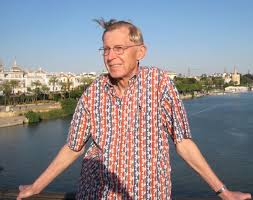
Peter B. Reddaway (1939-2024)
====================
 A Chronicle of Current Events