
- 13-1. Chistopol Prison. Mordovia. Perm.
- 13-2. Other Prisons & Camps. In Defence of Political Prisoners. Releases
*
1. Chistopol Prison.
KAZACHKOV’S HUNGER STRIKE.
On 2 August Mikhail Kazachkov (CCE 53.19-1) had a two-hour visit from his mother.
Before the visit his mother (D. A. Kazachkova) asked prison head Malafeyev to have the censor cross out the prohibited passages in the letters her hunger-striking son had written her and let her read the ‘remnants’ — so that during the visit she could pretend that she had been given the letters and could persuade her son to call off his hunger-strike. Malafeyev refused.
On 13 August D. A. Kazachkova went to the RSFSR Procuracy. There V. Ya. Bolysov, who heads the Department Supervising Places of Imprisonment, told her that only the KGB had control over the work of the censors.
*
In mid-September prison officials promised Kazachkov that he would be able to write and receive letters in the normal way, and gave permission for him to receive a food parcel from home (evidently in accordance with Article 56, pt. 4 of the RSFSR Corrective Labour Code: “ill prisoners … may be permitted to receive supplementary food parcels”; prisoners serving their sentence in a prison do not generally have the right to receive parcels). Kazachkov promised he would call off his hunger-strike (begun in January 1979!) when he received the parcel.
Prison officials added the name of Balakhonov, on hunger-strike with Kazachkov (CCE 53.19-1), to the telegram in which Kazachkov informed his mother that he had been permitted to receive a parcel. In a letter to his mother, dated 24 September, Kazachkov wrote:
“… On no account will I end my marathon before we have both received our parcels. We will talk seriously about medical treatment only when we have ended our extreme measures.
“At the moment, in my opinion, it would be unethical and premature. My neighbour’s health is considerably worse than mine … They have started to force B1 (vitamins) down us and they are building him up with masses of powerful injections (the heart is a serious matter) …“
In October Kazachkov and Balakhonov received their parcels. On 12 October they called off their hunger-strike.
*
Anatoly Shcharansky (CCE 53.19-1) is still in bad health. Any references to his health in his letters are always crossed out by the censor. References to letters he has received are also deleted. In October Shcharansky was told to make changes in his regular letter to his family, and then the altered letter was confiscated.
In November Shcharansky was told that he had been deprived of his regular visit which was to have taken place in February 1980.
*
In September, after five years in prison, Vasily Fedorenko was sent to Mordovian Camp 1. He still has to serve ten years in special-regime camps.
*
2. Mordovia
2.1: Camp 1 (special-regime)
MURZHENKO
On 16 August Alexei Murzhenko [1] had a visit from his wife.
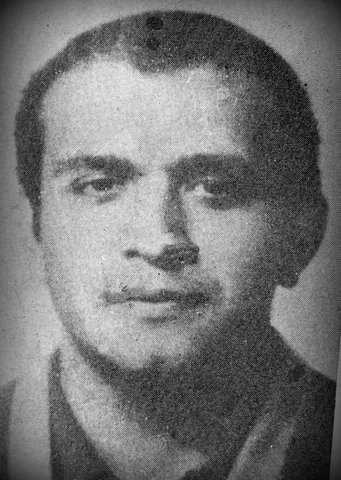
Alexei Murzhenko (1942-1999)
*
On 3 September Lyubov Murzhenko wrote to the Head of the Medical Department of the Mordovian camp complex:
“My husband … has for many years suffered from chronic over-acidity of the stomach.
“Recently these complaints have got worse. He has begun to suffer pain in the area of his lower stomach and kidneys, he finds it painful to swallow and has the symptoms of dyspepsia, A rash of festering sores has appeared on his face.
“In addition, my husband is suffering from a latent form of pulmonary tuberculosis and chronic cardiovascular weakness with intermittent heart pains…
“I ask you to arrange immediate hospitalization“
On 21 September M. K. Samoilenko, Head of the Medical Department, replied:
“… Alexei Grigorevich Murzhenko has been examined annually in the central hospital since 1972. He was last examined and treated from 25 May to 29 June 1979.
“On his discharge he was pronounced virtually healthy.
“At present A. G. Murzhenko’s health is satisfactory and there is no evidence that he needs hospital treatment.“
*
The left hand of Ivan Hel [Gel] is withering, and he can no longer move his fingers. Doctors at the camp hospital cannot reach a diagnosis.
Hel’s wife Maria has written several times to the USSR Ministry of Internal Affairs (MVD) asking for her husband to be given treatment, but received no reply. On 8 November she wrote to Amnesty International, appealing for help in obtaining her husband’s release.
In November Hel was admitted to hospital.
*
2.2: Camp 19
In May Mykola Rudenko had a hernia operation.
In June he fell ill with polyarthritis and was unable to walk for three months. He also suffers from gastritis. In July Rudenko staged a ten-day hunger-strike in protest against the fact that his poems had been confiscated yet again (CCE 48.10, CCE 49.8-1).
*
KARPENOK
Mikhail Karpyonok is seriously ill.
In 1978, while he was in the cooler, he began to suffer from pain in his leg. In order to gain admission to hospital, he went on strike. He was sent to hospital, but a week later he was told there was ‘nothing wrong’ and discharged.
In 1979 the pain got worse, but he was still forced to work and called a shirker. It was not until his leg began to turn blue that he was admitted to the hospital, where he was operated on immediately. Just after the operation he was brought back to the camp, seriously ill. He was not admitted to the medical unit, but lay in the barrack where he lived. Rudenko carried him outside from time to time.
Then the pain got worse again and his leg turned black, at which point 40 prisoners, including some ‘old-timers’ who do not usually take part in protest actions, declared a hunger-strike. (Such a mass act of solidarity had not occurred for many years.) After this Karpenok was admitted to hospital, where he was found to be suffering from bone decay.
*
From 14-18 September R. Nazaryan, V. Osipov, Z. Popadyuk, N. Rudenko, S. Soldatov and A. Radzhabov staged a hunger-strike in protest against compulsory political education classes: prisoners in this camp are punished for non-attendance at these classes.
*
“PROPHYLAXIS” IN SARANSK
In November-December 1978 Leonid Lubman (CCE 54.24) and Andrei Turik were in Saransk for a ‘prophylactic’ session (CCE 51.9-1); they shared a cell there.
On their return to camp, they said that in Saransk they had suffered from severe headaches and watering eyes. This stopped when they were back in camp, but after a while Lubman began to complain of the same symptoms.
For this reason Vladimir Osipov, in a statement to the USSR Procurator-General, demanded that Lubman and Turik be medically examined and endorsed their view that all this was the effect of some external influence.
At the beginning of August Lubman and Turik were transferred to Perm Camp 36. Here too, both of them, but especially Turik, maintain that they are being subjected to some sort of irradiation. The other prisoners do not believe it. They say that Turik talked of ‘irradiation’ as long ago as when he was in Vladimir Prison (he was there in 1975-1978, CCE 39.2-2, CCE 51.9-1).
*
Babur Shakirov [2] and Robert Nazaryan have also been transferred to the Perm camps.
*
Vladas Lapienis, whose three-year camp sentence ended on 19 October, has been sent off to serve his two-year term in exile.
In July his wife wrote to the Presidium of the Lithuanian Supreme Soviet, requesting that her husband be released from serving his term of exile in view of his age (73) and state of health. She was informed that the prisoner would have to make the request himself.
*
CAMP DISBANDED
In October 1979, Camp 19 was disbanded. Most of the prisoners have been transferred to Mordovian Camp 3 (CCE 51.9-1) and some to the Perm camps.
*
2.3: Camp 3
On 19 October 120 prisoners (including M. Rudenko, V. Osipov, S. Soldatov, G. Ushakov, Z. Popadyuk, Karpenok and V. Kapoyan) were transferred from Camp 19 to Barashevo, Zone 5 of Camp 3 (ZhKh-385/3-5).
Several of the warders from Camp 19 were also transferred here. The camp Head is Major Zinenko, former assistant to the Head of Regime at Camp 19.
The single barrack has been a little enlarged, but is very cramped nevertheless: the bunks are so close together that in some places there is not even room to put a bedside table between them.
Eighteen prisoners (including Vladimir Osipov, Zoryan Popadyuk and Sergei Soldatov) have occupied the ‘red corner’, the recreation and reading room; they have been threatened with eviction back to the barrack.
The prisoners’ work is sewing gloves. The daily norm, 69 gloves, is difficult to fulfil (Osipov can manage 39 at present).
*
During the transfer from Camp 19 to Camp 3 a copy of the New Testament was confiscated from Vladimir Osipov, with the explanation that prisoners are forbidden to have books published abroad. However, when Osipov’s wife brought him a New Testament published by the Moscow Patriarchate, Zinenko would not allow him to have it.
*
Six letters addressed to his wife were confiscated from Sergei Soldatov without explanation.
*
3. PERM
In Camp 35 there are about 70 prisoners; about 60 in Camp 36; and in Camp 37 there are 24 prisoners in the ‘large’ zone and 19 in the ’small’ zone (see CCE 45.11).
*
3.1: Camp 35
VISITING MATUSEVICH
On 14 April Nikolai Matusevich was punished with 15 days in the cooler.
In April he was deprived of his ‘short’ visit and in June he was sentenced to three months in the punishment block. In the punishment cells he was sentenced to another 15 days in the cooler, for refusing to work. (CCE 53.19-1 listed his punishments incorrectly.)
At the beginning of July, T. Matusevich, wrote to the camp Head, N. M. Osin, enquiring about the length of the ‘long’ visit (due on 18 July). She was not yet aware that her brother was in the punishment block. Osin replied: “deprived of visit”. To her repeated enquiry about the visit, T. Matusevich received a reply from Osin dated 10 August, in which he informed her that on 14 August Matusevich had been deprived of his ‘regular visit’ and that her brother would inform her himself of the date of the ‘long’ visit.
*
At the end of September she did, in fact, receive a letter from her brother, who was by then out of the punishment block.
He invited her to come for a ‘long’ visit and also informed her that on 14 August he had been told that his ‘short’ visit, scheduled for November, had been cancelled. She booked tickets and sent her brother a telegram saying she was coming, but two days before she was due to leave, she received a telegram from Osin announcing that her brother had been deprived of his visit.
At the beginning of November Matusevich’s mother wrote another letter enquiring about the date of the ‘long’ visit and his wife wrote enquiring about the ‘short’ one. A telegram from Osin soon arrived: ‘Deprived of visits in 1979’.
Matusevich suffers from hypertension, on account of which he was exempted from military service; and also has a weak heart.
In October N. Matusevich’s mother appealed ‘to all people of good will’ to come to the defence of her son.
Few letters from his family reach Matusevich.
*
3.2: Camp 36
During the summer the construction of doors with metal surrounds and of door and window bars began in the camp. The prisoners think that either a prison or a special-regime zone is going to be built next to Camp 36.
*
There are 35 working prisoners. The rest are unfit for work.
*
An article by Dovganich [3], former prisoner of Camp 36, was published in a Spring issue of Towards a New Life, the MVD’s periodical for prisoners [correction CCE 57.27].
The article claims that ‘dissidents’ in the camp receive parcels and printed matter worth 250-400 roubles from abroad every month. The ‘dissidents’ over-eat, pass food on to “their own people” (even in the punishment cells!) and sell the rest to other prisoners. In order not to attract undue attention, the ‘dissidents’ deceive the warders, who think that they go to the bathhouse to wash, whereas in fact they go there to eat their supplies.
Before it was published, prison officials showed the article to Sergei Kovalyov (also mentioned in the context ’Kovalyov and other Zionists …’) and asked his opinion. Kovalyov replied that in his opinion the article could be freely published and that no commentary was needed.
*
On 20 September the prisoners of Camps 36 and 37 staged a joint ’Day in Defence of the Helsinki Groups’. This was the second day of its kind for the prisoners of Camp 37 (CCE 51.9-1). Grigoryan, Ismagilov, Kovalyov, Marinovich and Yuskevich staged a one-day hunger-strike and sent statements about it to the administration.
*
NEW JOBS
In the autumn a group of prisoners was transferred to a new job: the camp is to produce components for electric irons. To assemble one component a prisoner has to put in three or four 3-millimetre screws, using a semi-automatic screwdriver, and attach a cable to two of them. He must then twist the cable.
The norm for the job is 700 components. None of the prisoners have been able to fulfil this norm — the largest output does not exceed 400 components. Group II invalids (whose working day is half as long) have to fulfil half the norm, but in order to do this they continue working after dinner. In an attempt to make the prisoners fulfil the norm, the administration makes use of the fact that ‘even’ the invalids fulfil their norm.
Some female workers, who performed the same job at a ‘free factory’ and fulfilled the norm in a day, visited the camp at the invitation of the administration.
The prisoners regard their transfer to this new job as a punishment, for it requires practice and a particular skill, whereas they had got used to their previous job and were able to fulfil the norm. Similarly, the prisoners who were in their turn transferred to the old job are still unaccustomed to it and unable to fulfil that norm.
Grigoryan, Ismagilov, Kovalyov, Strotsen and Yuskevich are known to be among those transferred to the new job. Strotsen’s transfer was evidently caused by his persistent refusal to write an appeal for pardon (CCE 52.5-2).
***
In the summer Nikomarov replaced Rozhkov as Head of Operations.
It was Nikomarov who said to Kovalyov in March that the reason his visit from lawyer Reznikova did not take place was her own announcement that she did not want to see Kovalyov (CCE 53.19-1).
*
ARTYOM YUSKEVICH
In August Yuskevich’s daughter came to visit him. On the day of her arrival a notice was put up to the effect that visits were cancelled “until further notice”. Yuskevich was granted his visit in Camp 35 a week later.
*
On 18 October duty officer Rak asked Yuskevich to explain why he was not at his work-place. Yuskevich replied that he was going to fetch water.
That evening Yuskevich was informed that he was being punished with five days in the cooler for ‘insulting’ Rak. The following day, however, Yuskevich was unexpectedly (his sentence ends in December) dispatched under guard on his way to release.
(Such actions by the administration are termed ‘snatches into transit’ in camp jargon. The obvious reason for these ‘snatches’ is to prevent the prisoners who remain behind from transmitting any information to the outside world via the released prisoner.)
The following were confiscated from Yuskevich before his transfer: a copy of the judgment in his case; private notes, including a notebook with information on acupuncture, notebooks containing exercises in foreign languages, self-compiled mini-dictionaries, and 66 poems given to him by Ivan Kalynets, who was released earlier.
***
ONUFRY KULAK
Onufry Kulak’s 25-year sentence is due to end in 1981 [4].
Kulak was born in 1928. He took part in the Patriotic War (1941-1945) and was thanked by Stalin for his part in the capture of Berlin. In 1956 he was given a prison sentence for belonging to the Ukrainian Insurgent Army (UPA). Until the end of the 1960s he refused to work in the camps. For several years now he has refused to receive parcels, printed matter and letters.
Kulak suffers from thrombophlebitis and a trophic ulcer in his leg. He is a Group II invalid. In 1978 attempts were made to persuade him to write an appeal for a pardon. He refused and was subsequently deprived of his invalid status (CCE 51.9-1). He was not restored to invalid status until August 1979. Attempts to persuade him to appeal for a pardon continue.
***
At the beginning of August about ten prisoners arrived here from Mordovian Camp 19.
Apart from A. Zagirnyak (CCE 51.9-1), Leonid Lubman and Andrei Turik, the group included several prisoners sentenced ‘for war crimes’. There were several completely senile or seriously ill prisoners among them.
***
3.3: Kovalyov’s hunger-strike
On learning of Sergei Kovalyov’s hunger-strike (CCE 53.19-1, 15 June-11 July) his son Ivan wrote to Brezhnev on 30 June:
“Naturally, you realize that a prisoner already tormented by hunger will resort to such an extreme form of protest only in the most extraordinary circumstances.”
Ivan Kovalyov then describes his father’s refusal to engage in correspondence (CCE 47.9-2), the violation of his right to a defence, and the ’openly mocking’ way in which he was deprived of his last visit in June (CCE 53.19-1).
“My enforced acquaintance with the Soviet penal system, which has lasted over four years, has convinced me that all acts of tyranny are left totally unpunished. I believe that you, as Head of State, are more than anyone else responsible for this lawlessness.”
*
On 25 July Procurator Melnikov came to see Sergei Kovalyov. He wanted to discuss “a complaint received by the RSFSR Procuracy,” he said.
Having discussed in detail the reasons behind Kovalyov’s hunger-strike [correction CCE 54.24], Melnikov asked two questions: were prisoners tormented by hunger, and what was the situation as regards their medical service? Kovalyov replied that on normal camp rations the prisoners “are not tormented by hunger”, but he described the cooler rations in detail: 1,350 calories one day, 850 calories the next, the normal camp ration being 2,450 calories a day (CCE 33.2). Speaking for himself, he could not remember an occasion when he had been refused medical assistance.
On 8 August A. S. Pobezhimov, a Deputy RSFSR Procurator, replied to Ivan Kovalyov’s letter to Brezhnev. On the orders of the CPSU Central Committee a check had been carried out. It ascertained that:
- Sergei Kovalyov’s correspondence rights had not been violated in any way;
- he himself had announced in court that he would conduct his own defence and had refused the services of a lawyer;
- he had been granted three visits from his lawyer;
- a further visit had been arranged for 1 March, but defence attorney Reznikova had refused to see Kovalyov (CCE 53.19-1);
- Kovalyov had been justly deprived of his June visit from his family;
- all the prisoners, including Kovalyov, were fed ‘in accordance with the established norms’;
- medical assistance was and continues to be given;
- at present Kovalyov’s health is satisfactory.
*
On 8 August Kovalyov had a ‘long’ visit from his family. For the first time he was granted 48 hours with them.
During the visit Kovalyov described how in the spring he had been in the medical unit with hypertension — his blood pressure was over 200. (On 4 June, when his wife and children came to visit him, Fyodorov had told them that Kovalyov was in good health, there was no cause for complaint.) During his hunger-strike Kovalyov’s blood pressure fell to a hypotonic level (100) but by the time of the visit it had risen to normal again. Even then, however, he was still very weak, his legs were still swollen.
*
Kovalyov told his family that he wanted to try writing letters again and had already submitted his first letter for censorship. In this connection he described a conversation he had had with camp head Zhuravkov.
During the last time he had seen his lawyer Kovalyov submitted a request to Zhuravkov — that he discuss things with him in the presence of his lawyer. Zhuravkov sent a message that he would definitely drop in, as soon as he could find the time. During the three days until Reznikova’s departure, he did not ‘find’ the time. The discussion nevertheless took place the day after her departure.
Kovalyov explained to Zhuravkov that he wanted to write and receive letters again, but that he would like a guarantee that there would be no more ‘losses’ in the post. He considered the following a sufficient guarantee: he would write to his wife that Zhuravkov had confirmed that Kovalyov was correct in his interpretation of the law regarding letters which arrived for him, namely that the administration could either confiscate them, presenting him with the relevant document stating the reasons, or give them to him; letters he had written would either be returned to him by the censor for rewriting, or posted immediately.
Zhuravkov replied that Kovalyov understood the law correctly, but forbade him to mention in a letter that he had said this, or the letter would be confiscated. For this reason, Kovalyov removed this passage from his letter. His wife received the letter. It is to date the first and only one.
*
3.4: Camp 37
Arkady Tsurkov (trial CCE 53.6) has arrived in the ‘large’ zone. Merab Kostava, Matti Kiirend and Maris Tilgalis are in the same barrack.
On 28 August Tsurkov had a ‘long’ visit from his wife, lasting three days. Before and after the visit she was thoroughly searched — to the point of being made to squat down and bend over.
Tsurkov’s sight has deteriorated considerably. He is suffering from thrombophlebitis.
*
Orlov’s situation
On 21 August Yury Orlov had a ‘long’ visit from his wife and son, lasting 24 hours. When she was searched, Irina Valitova (Orlov’s wife) refused to undress completely.
The Deputy Camp Head in charge of regime told her that the visit was of minimum duration only, since Orlov “does not want to fulfil the [work] norm”. For failure to fulfil the norm, Orlov has been deprived of access to the camp shop and the administration is threatening him with further reprisals. In fact, he is unable to fulfil the norm on account of his poor health.
Orlov is once again (CCE 53.19-2) working as a lathe operator.
He becomes over-exhausted, often has headaches and pains in his spine, sometimes his right arm and leg become paralysed: these are evidently the consequences of the concussion he sustained in a motor accident. He has managed, with difficulty, to obtain permission to rest for two hours either before or after work.
For a year Orlov complained of toothache, but was unable to obtain assistance. He wrote to the USSR Procuracy. Shortly before the visit referred to above, he received a reply from the Medical Administration of the MVD: “The dental technician came, you were seen to”. But Orlov got no medical treatment.
Orlov receives, on average, one letter a month from his wife, although she writes a great deal more often. He does not receive letters sent to him from abroad. He is forbidden to correspond on scientific matters and scientific observations are crossed out, even in letters to his wife.
Orlov received the following reply to his statement to the Procuracy concerning the confiscation of his scientific correspondence:
‘‘… The prisoner may keep with him his private correspondence, five books and nothing else; this includes anything in the form of scientific notes.’
On 27 August, on her return from the visit, Irina Valitova published a statement concerning her husband’s situation. In it she reproduced from memory Orlov’s statement of 12 May, the third anniversary of the founding of the Moscow Helsinki Group:
On the Group’s Anniversary
I believe that our sacrifices are not in vain!
During the many years of its existence, the Democratic Movement has contributed
- to changing the phraseology of the powers that be, and this influences the next generation;
- to the ideological emancipation of the intelligentsia;
- to a growing sympathy among workers for the campaign for political and civil rights.
Therefore, I look to the future with optimism.
At the end of September or the beginning of October Orlov sent a list of camp ‘stool-pigeons’ to the KGB; one of them (Syurguchev) had admitted to Orlov that he had been ‘assigned’ to him.
In October Orlov was questioned about the manuscript of a scientific article he had written which was found outside the zone (one of the ‘free’ workers was suspected of taking it out). On 22 October Orlov was sentenced to six months in the punishment block on this account.
*
On 24 September M. Kostava, B. Mukhametshin, A. Berniichuk, M. Kiirend, A. Tsurkov, S. Kuznetsov, N. Belov, Kokorin, Ukolov and Magdeyev staged a one-day strike.
In the statements they sent to Khorkov, head of ‘Institution VS-389’ [i.e. the Perm camp complex, ed.], they protested against: the substitution of oats for groats and ducks’ giblets for meat; the delaying of letters; the lack of a daily milk ration for those doing harmful work (instead of 0.5 litres daily they are given 3.5 litres once a week); and the showing of the same film for weeks on end.
The strike was answered by punishment: some were issued reprimands, others given extra cleaning duties.
*
The administration is confiscating stamps and blank post-cards, including those with pictures and envelopes, which arrive in letters (CCE 52.9-3).
========================================
NOTES
- Murzhenko was one of the two non-Jewish participants in the attempted 1969 Leningrad airplane hijacking (CCE 17.6-1). Later he aided Kronid Lyubarsky in setting up the annual protests on 30 October, Political Prisoners’ Day.
↩︎ - Shakirov was thus not granted the early release foreshadowed in CCE 51.9-1.
↩︎ - Z.P. Dovganich was “a long-time informer”, March 1978 (CCE 48.10).
A witness at Yury Orlov’s trial (May 1978, CCE 50.1-2), he was sent to Orlov’s trial to testify and to “do chemistry” (December 1978, CCE 51.9-1). The following year Perm 37 prisoners offered a KGB officer “Condolences on the loss of Dovganich, informer and provocateur” (March 1979, CCE 52.9-3).
↩︎ - Kulak was a Twenty-Fiver released at the end of his sentence (CCE 63.16). In 1977-1982 only half of those due to end their lengthy post-war sentences were let out of Soviet camps and prisons on time.
↩︎
============================
 A Chronicle of Current Events