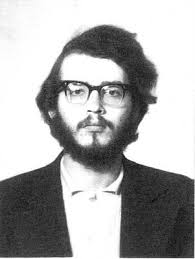
In spring 1976, on the opening day of the 25th CPSU Congress (24 February), a group of young people circulated some leaflets in Leningrad (CCE 40.15).
They included Andrei Reznikov, 1st-year student of the Mathematics & Mechanics Faculty (Leningrad State University, LSU); Arkady Tsurkov, 1st-year polytechnical college student; Alexander Skobov, 1st-year student of LSU History Faculty; and Alexander Fomenkov, in his final year at school.
*
On 4 March 1976 Reznikov was arrested.
He was charged at first under Article 70 (RSFSR Criminal Code), then under Article 190-1. On 30 March the case was closed and Reznikov was released. He was immediately expelled from university and in the autumn was taken into the Army.
*
Tsurkov was expelled from college, but did not go into the Army for health reasons (acute short-sightedness). He started work in a factory [1].
Skobov transferred from his full-time studies in the History Faculty to an evening course, and started work as a watchman [2].
Fomenkov was expelled from school. In spring 1977, when he finished evening school, he was taken into the Army.
*
SKOBOV
During the winter of 1976-1977 Alexander Skobov organized a ‘commune’.
Half a wooden house on the outskirts of the city was rented. There young people gathered constantly; they held discussions, read, listened to music, held exhibitions; they often had guests from other towns.
In autumn 1977 a journal began to appear. Two numbers came out (the first was called Unity; the second, Perspective). A third number was prepared. In the middle of October 1978, the group prepared an ‘inter-town’ conference.
*
SEARCHES & ARRESTS
On 12 October searches were conducted at the homes of Reznikov, Tsurkov and Irina Lopatukhina, and in a further three flats. A large bag full of samizdat was confiscated from the Left Luggage Office at the Moscow Rail Station in Leningrad.
The same day about forty people were interrogated by the KGB.
On 14 October 1977 Andrei Besov from Moscow and Victor Pavlenkov from Gorky were detained at the rail station. Besov was forcibly hospitalized in a psychiatric hospital; he was discharged only on 26 December (CCE 52.7). Pavlenkov was put in prison for ten days for ‘petty hooliganism’.
On 16 October Skobov and on 31 October Tsurkov were arrested.
They were charged under Article 70 (RSFSR Criminal Code). The case was conducted by KGB investigators: Lieutenant-Colonel Blinov and Gorshkov; Major Groshev; Captains Gordeyev, Yegerev, Melnikov and Tsygankov; Senior Lieutenant Karmatsky.
*
LOPATUKHINA
In November or December 1977 Irina Lopatukhina received, via an investigator, a letter from Tsurkov asking her to give evidence.
He later explained that the investigator had frightened him into making this request. Otherwise the entire blame for publishing the journal Perspective would rest on her, the investigator told Tsurkov. She had already admitted to typing materials for the journal (at the search on 12 October a typewriter and materials for the third number were confiscated from her, CCE 51.8), but she did not say who had given them to her.
On 13 December Tsurkov requested an interrogation. He took responsibility for as many of the journal’s articles as he could, and said that Lopatukhina had typed the material under pressure from him. After this, Irina Lopatukhina confirmed that Tsurkov had given her some articles to type, but refused to talk about anyone else.
*
1. TSURKOV TRIAL
From 3-6 April 1979 Leningrad City Court, presided over by Judge Nina Isakova, examined the case of Tsurkov, accused under Article 70 (RSFSR Code; plus the analogous Article of the Estonian SSR Code).
The prosecutor was Deputy Procurator of Leningrad Ponomaryov.
The defence lawyer was Yarzhinets.
*
Arkady Samsonovich TSURKOV (b. 1958) entered the Mathematics Faculty of Tartu University in 1977. In 1978 he transferred to the second year of the Mathematics Faculty at Leningrad’s Herzen Pedagogical Institute.
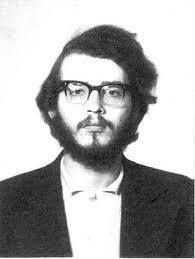
Arkady Tsurkov, b. 1958
*
The Tsurkov Case was separated from Case 95 (CCE 51.8 made a mistake here), the Skobov Case.
The indictment accused Tsurkov of inciting other people in Tartu and Leningrad to set up an anti-Soviet organization, circulating slanderous literature and oral ‘fabrications’, organizing (together with Skobov) “a publication of anti-Soviet content”, and of being the author of a number of its articles.
*
WITNESSES
Twelve witnesses were interrogated.
I. Maisky testified that Tsurkov had given him material from the journal Perspective to type out and photograph.
Irina Lopatukhina was approached in the entrance hall of the court by three people in civilian clothes, who said that they were from the Pedagogical Institute: they threatened to beat her up after the trial if she retracted her pre-trial evidence. She and Alexei Khavin retracted the evidence they had given at the pre-trial investigation, declaring that they had given it under duress (all the same, the record of the trial stated that Khavin had corroborated his evidence).
Four of Tsurkov’s fellow-students from Tartu testified that he had said “Down with the Party’s monopoly of all spheres of public life!”
Yet another witness from Tartu, Timchenko (once, after a conversation with Tsurkov, Timchenko had taken him to the local KGB office) gave extensive evidence about Tsurkov’s utterances: these “were anti-Soviet in character and called for the overthrow of the Soviet system”.
All the witnesses were asked:
“What is your attitude to the utterances of Tsurkov which you have heard, or to the literature seen in his possession? Are they slanderous?”
Lopatukhina refused to answer this question.
Khavin said he did not consider them slanderous. (See also ‘The Khavin Case’ in “Miscellaneous Reports”, CCE 53.29 [16]).
*
Fomenkov, who had been brought from his military unit (there was evidence that Tsurkov had brought Perspective to him in his unit), declared that he was in full agreement with the line taken by the journal. He tried to substantiate his position at length, but was interrupted; with the help of an officer who had come with him, he was removed from the courtroom.
The remaining witnesses confirmed the ‘slanderous character’ of Tsurkov’s utterances and the journal’s materials.
*
TSURKOV TESTIFIES
Tsurkov himself admitted his participation in publishing Perspective and the authorship of the articles incriminating him. He also admitted to being the author of all the articles whose authors had not been ascertained at the pre-trial investigation.
He did not admit guilt, however, saying that the journal was not of a slanderous nature. Of the utterances incriminating him, he denied those which mentioned an armed struggle against the Soviet authorities. At the trial Tsurkov categorized his views as Marxist. “Marxist-Leninist?” he was asked. “No, Marxist.”
The Procurator asked for six years’ camps and three years’ exile for Tsurkov. The lawyer asked for leniency, taking into account the age of the accused, his state of health (acute short-sightedness, thrombophlebitis and cystitis of the colon), and that of his mother (a Group II invalid).
In his final speech Tsurkov again said that he did not consider himself guilty; he declared that after his release he would continue the struggle. Tsurkov asked for his mother to be looked after and for his marriage to Irina Lopatukhina to be allowed: not long before his arrest they had been to a registry office to arrange the marriage.
In answer to the greetings of friends who had gathered around the court building he cried “Long Live the Democratic Movement!”
Sentence: five years’ strict-regime camps and two years’ exile.
*
REZNIKOV
During the night of 30-31 March, when Andrei Reznikov and his pregnant wife were walking along the street, eight people attacked them. Andrei was beaten up. His wife was thrown to the ground.
On 31 March Judge Kotovich of Kuibyshev district people’s court (Leningrad) placed Reznikov under arrest for 10 days.
*
In the courtroom where Tsurkov was being tried, they attempted not to admit any of the accused’s friends. The courtroom was filled in advance with a ‘special public’. Only Tsurkov’s mother was admitted without hindrance. I. Fyodorova managed to get into the first session.
They tried to remove witnesses from the courtroom directly after their examinations. The witnesses refused to go, referring to Article 283 (RSFSR Code of Criminal Procedure). They only succeeded in staying in the courtroom until the next break — after the break they were not let back in.
When Lopatukhina tried to re-enter the courtroom after a break, they threw her on the ground, damaging her hand. “What’s she sprawled out here for?” they said and started calling the police.
Everyone who came to the trial was checked thoroughly at their place of work or study to determine whether there were valid grounds for absence. V. Repin, a correspondent of the newspaper Leningrad Worker, was asked to resign “at his own request”. He refused.
*
KUCHAI & PAVLENKOV
On the morning of 4 April Muscovite Lev Kuchai and Victor Pavlenkov came to the trial.
They were pushed out of the court building and Kuchai was punched in the stomach. Pavlenkov and Kuchai left the court and started walking along Nevsky Avenue [Prospekt]. A policeman approached them and asked for their documents.
They were pushed into a car and taken to Police Station 5. Here they were asked to sign a statement that they had “expressed themselves in unprintable language and had tried to pester citizens”’ — at the time it had been the policemen who were continuously swearing. They shut Pavlenkov and Kuchai in a cell.
On 5 April Judge L. P. Samarina of Leningrad’s Kuibyshev district court sentenced them to 15 days jail, expressing regret that she could not give them more. In the evening of 5 April, they were put in a special detention centre (6 Kalyayev Street).
A warder there hit Pavlenkov in the face, after which the latter declared a total hunger-strike. On 9 April a doctor and a Procurator came to Pavlenkov’s cell: according to the doctor it was the first time in six years that the Procurator had visited a ‘fifteen-day man’. The Procurator promised Pavlenkov to “sort it out” (regarding the warder’s attack); in addition, they stopped using the familiar form of ‘you’ [thou = ты] and insulting him — for this reason Pavlenkov ended his hunger-strike on the evening of 9 April.
In the end the Procurator did “sort it out”: Pavlenkov had not been hit, he had merely received rude answers to his ‘anti-Soviet shouts’.
Visiting Pavlenkov for a second time, the Procurator said:
“Just don’t say anything superfluous, Victor Vladlenovich, it isn’t necessary. Or else look — your father writes to us that you’ve been savagely attacked — well, is that the truth? Or all sorts of terrible things will be said and people might start believing them. Nothing superfluous.
“So there’s no unpleasantness either for you or for us. Goodbye! All the best!“
*
In the evening of 18 April Kuchai and Pavlenkov were released.
That day they both simultaneously started to feel ill: headache, rheumatic pains, a temperature of 39.5 degrees Centigrade. They even had to call for first aid.
On 19 April (the day Skobov’s trial took place, see below) a policeman arrived in the morning at the flat where they had spent the night. In spite of their high temperatures, they were again taken off to Police Station 5. After detaining them for about four hours, the police returned their documents and ordered them to leave Leningrad the same day.
*
The marriage between Arkady Tsurkov and Irina Lopatukhina took place on 23 May 1979 at the Leningrad KGB Investigations Prison. After the ceremony the newlyweds were granted a five-minute meeting in the presence of a prison official.
Several days later I. Fyodorova was summoned to the Leningrad KGB for a ‘chat’. During this conversation she asked a KGB official why Tsurkov and Lopatukhina had been given only a five-minute meeting. He replied that they did not deserve any more, as Lopatukhina was also a criminal. When asked what court had declared Lopatukhina a criminal, he replied that as soon as the answer came to the Tsurkov case appeal, Lopatukhina would be prosecuted for refusing to give evidence.
*
2. SKOBOV TRIAL
In February 1979 a forensic psychiatric team at the Serbsky Institute (CCE 52.15-2) ruled Alexander Valeryevich SKOBOV not responsible; the diagnosis was ‘schizoid psychopathy’.
*
On 19 April the trial of Skobov took place in Leningrad City Court.
The prosecutor was the same Ponomaryov, the defence lawyer was S. A. Kheifets. Skobov was not in court. The court sent Skobov for compulsory treatment in an ordinary psychiatric hospital.
===================================
NOTES
- On Tsurkov, see CCE 51.8; CCE 53.29 [16], CCE 54.22 [1] and February 1987 release (Vesti 4-1.)
↩︎ - On Skobov, see CCE 51.8; CCE 52.15-2, cce 65.2 [R], 1983 trial (Vesti 9-1) and 17 July 1987 release from Leningrad Special Psychiatric Hospital (Vesti, 14-1).
*
RUSSO-UKRAINIAN WAR (February 2022 onwards)
In spring 2025, Alexander Skobov was sentenced to 16 years imprisonment for his anti-war views (The Guardian, 21 March 2025).
↩︎
==========================
 A Chronicle of Current Events