
BERDNIK. MELNIK. MELNICHUK. BADZIO. IVASYUK. SICHKO.
MONAKOV. SAPELYAK. CHORNOVIL. LANDA
*
[1]
The Arrest of Alexander Berdnik.
On 6 March 1979 writer Oles (Alexander) Berdnik was arrested in Kiev.
On the evening of the same day and on the morning of the following day searches were conducted at the homes of many members of the national movement and the movement to defend the rule of law in Ukraine, in connection with his case.
*
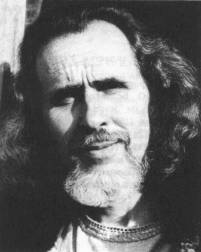
Oles Berdnyk (1927-2003)
Alexander Pavlovich BERDNIK was born in 1927 into a peasant family. He participated in the Patriotic War. He was first arrested in 1949 for ‘anti-Soviet activity’ and released in 1955.
On his release he engaged in literary activity, became a member of the Ukrainian Union of Writers, and a number of his works were printed. He has been a member of the Ukrainian Helsinki Group from the moment of its inception in November 1976, and became the Group’s leader after the arrest of M. Rudenko in February 1977. He was expelled from the Union of Writers and his works were removed from libraries (CCE 47.17 item 2). Recently Berdnik has been working in an arts workshop.
*
Berdnik left his flat a midday on 6 March and did not return.
The next morning, a search was conducted at the home of his wife Valentina Sokorinskaya, who lives in Grebeni village (Kiev Region). Nothing was confiscated at the search. Berdnik’s wife was informed of his arrest only on 12 March. The KGB told her that he had “committed a State crime”.
Berdnik is being held in the KGB’s Republic Investigations Prison in Kiev. Investigator Tsimakh is conducting the interrogations in connection with his case.
Berdnik’s relatives and friends have reason to believe that after his arrest he declared a hunger-strike ‘to the death’. As a mark of solidarity with her husband, Sokorinskaya also held a hunger-strike from May 22 until 1 June. Vasily Sichko, who had come to visit her, joined in the strike.
*
SEARCHES
On 6-7 March four searches were carried out in Kiev in connection with the Berdnik Case, at the homes of Oksana Ya. Meshko, Vladimir Malinkovich (CCE 49.4 & CCE 52.15-1), Mykola Horbal (Gorbal; CCE 47.10 & CCE 52.15-1) and Pavel Stokotelny (CCE 51.19-2 & CCE 52.15-1).
On the same days four more searches were conducted in the Kiev Region, at the homes of V. Lysenko (Vasilkov), Mikhail Melnik (Pogreby Village), Yury Litvin (Barakhty Village) and Raisa Rudenko (Koncha-Zaspa Village).
In Dolina (Ivano-Frankovsk Region) another two searches were carried out, at the homes of Vasily Streltsov and of Pyotr Sichko and his son Vasily.
Works by A. Berdnik — the articles ‘Holy Ukraine (The Ukrainian Spiritual Republic)’ and ‘The Alternative Revolution’, and the poem ‘The Oath’ — were removed, as well as other typewritten texts. From V. Malinkovich they even confiscated a typewritten copy of Osip Mandelstam’s ‘Egyptian Stamp’ (although they later returned it).
From Yu. Litvin they confiscated his own manuscripts: poetry, a research paper entitled ‘The Soviet State and the Soviet Working Class’, and drafts of Ukrainian Helsinki Group documents. (Yury Litvin is a member of the Ukrainian Helsinki Group.)
*
A search was conducted at the home of Pyotr Vins in connection with the same case on 12 March, and a second search at the home of Raisa Rudenko on 19 March.
From Raisa Rudenko they confiscated several works by her husband Mykola Rudenko, including the book Economic Monologues and unpublished verses. They also took a typewritten literary collection entitled Behind Bars and a description of the trial of N. Rudenko and A. Tikhy (CCE 46.4). She is being threatened with a separate criminal case for ‘possession and duplication of anti-Soviet works’.
On 20 March Raisa Rudenko tried to buy a plane ticket for Moscow, but when she showed the cashier her passport, the latter, on seeing her surname, made some excuse to delay handing her the ticket. A few minutes later Raisa’s ‘overseer’ from the KGB suddenly appeared. He told her that she was being summoned for interrogation and took her to the KGB. (On the way he said, ‘Well, what’s the point of your going to the capital… ?) R. Rudenko refused to answer any questions.
*
On 6 March, during the search of O. Meshko’s flat, her acquaintance Yelena Lelyukh (Lelekh in CCE 51.9-2) dropped in. She was detained and searched, and a collection of poetry, Yury Litvin’s Tragic Gallery, was confiscated from her.
A week later E. Lelyukh was summoned to the KGB and issued with a ‘caution’. The cautioning statement mentioned three offences: the collection of poetry by Litvin; the Ukrainian emigre journal Suchasnist (The Contemporary) which was taken from her during a search in June 1978; and her participation in an unofficial gathering to commemorate T. G. Shevchenko on 22 May 1977 — the KGB has in its possession a photograph of E. Lelyukh placing flowers beside Taras Shevchenko’s tombstone. Elena Lelyukh is a chemical engineer working in Kiev. She has an eight-year-old son.
*
MALINKOVICH
On 23 March several men in plainclothes attacked Vladimir Malinkovich on a Kiev street.
They dragged him into a car and drove him to one of the so-called ‘public rooms’. Here they announced to him that he was ‘in custody’, forcibly searched him, and advised him in parting to end his acquaintance with P. Vins and O. Meshko. During this episode they did not show Malinkovich any documents, but it is known that one of the participants in the ‘operation’ was KGB official Titarenko.
On 30 March Malinkovich was subjected to an interrogation. The questions were about Berdnik, whom Malinkovich does not know, and Oksana Meshko. Malinkovich refused to answer the questions.
After the interrogation they drove Malinkovich to the KGB Regional Office, where they returned everything confiscated from him on 6 March with the exception of tape-recordings of songs by Galich (these were classified as anti-Soviet). They also issued Malinkovich with a caution ‘under the Decree’, which he refused to sign.
*
On 2 April Ivan Kandyba was detained in Kiev. He was taken to the KGB and interrogated in connection with the Berdnik Case.
He was then put on a train to the place where he lives in the Lvov Region (Pustomyty village). Notification about the extension of administrative surveillance of him was waiting for him there, “in view of the fact that he had not stepped on to the path of correction and had not engaged in socially useful labour”. Kandyba’s previous term of surveillance had ended on 23 March.
*
[2]
The Suicide of Mikhail Melnik
During the night of 9-10 March Mikhail Melnik (CCE 51.8) ended his life.
At a search on 6-7 March 1979 he had lost his entire archive: the results of all his scholarly and literary endeavours were removed.
*
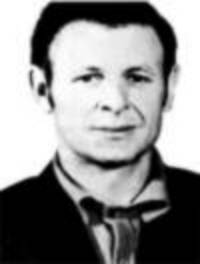
Mykhailo Melnyk, 1944-1979
Mikhail Melnik was born in 1930 [1] into a peasant family.
In 1969 he graduated from Kiev University and subsequently worked as a teacher in village schools. From 1969 to 1971 Melnik was a postgraduate student at the UkSSR Academy of Sciences’ History Institute.
He was obliged to give up his studies shortly before the end of his course, because of his participation in an unofficial celebration to commemorate Taras Shevchenko on 22 May. He was then expelled from the Party. For a year he worked as a teacher in Kiev. In 1972 he made a written protest against arrests among the Ukrainian intelligentsia After that he was forced to ‘resign’ from the school. His last job was as a watchman in a brick factory.
*
In recent years Melnik made several protests to the press about violations of human rights in Ukraine, and was a correspondent of the Ukrainian Helsinki Group. Melnik was married; his widow is left with two children, aged five and 10.
Melnik’s funeral took place on 12 March in Pogreby village, under the surveillance of KGB agents. Two of Melnik’s friends, Pavel Stokotelny and Oksana Meshko, were detained on their way to the funeral. Stokotelny was taken to the KGB, where he was interrogated in connection with the Berdnik Case, and Meshko was detained at the KGB until the end of the funeral without any excuse being given.
Only one copy of Melnik’s collection of poetry A Calendar of Memorable Dates remained after the search. It was confiscated on 23 March from Grigory Minyailo (CCE 49.18 item 6), who was stopped in the street and subjected to a body-search.
*
[3]
The Arrest of Taras Melnychuk
Taras Melnichuk (CCE 33.5-1 & CCE 35.7), poet and ex-political prisoner, was arrested in March in Utoropy village (Ivano-Frankovsk Region).
Apparently, he has been charged with “malicious hooliganism” (in January he was provoked into a fight). In connection with his arrest searches were conducted at the homes of ex-political prisoners D. Grinkiv, I. Shovkovoi and D. Demidov: see CCE 51.9-2 [2].
*
[4]
The Arrest of Yury Badzio
On 23 April literary specialist Yury Badzio was arrested in Kiev.
The arrest was accompanied by a search, A manuscript of Badzio’s, The Right to Live, was confiscated for the second time (CCE 52.4-2). A typewritten copy of N. Rudenko’s Economic Monologues was also taken.
Badzio is charged with “Anti-Soviet Agitation & Propaganda”.
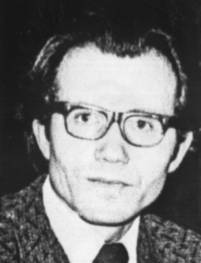
Yury Badzio, b. 1936
Yury Badzio is 43 years old.
In 1958 he graduated from Uzhgorod University and completed a postgraduate course in 1964.
He worked as a journalist and literary critic and had dealings with a number of publishing houses. He was dismissed from his main place of work in 1968 (the Youth of Ukraine Publishing House) for political reasons. He was finally stopped from doing literary work in 1972 after publicly speaking out against arrests of members of the Ukrainian artistic intelligentsia.
His wife Svetlana Kirichenko was likewise dismissed from the USSR Academy of Sciences’ Institute of Ukrainian Language and Literature [3]. She later managed to get a job as a proof-reader.
Yury Badzio could not get any job for a long time. Eventually he was taken on as a loader at a Kiev bread factory, where he worked until his arrest. The couple have two school-age children.
*
On 19 April Vasily Streltsov was summoned to an interrogation in Dolina. On 20 April and 22 May Pyotr Sichko and Vasily Sichko were interrogated.
On 30 April Pyotr Sichko renounced his Soviet citizenship in writing.
On 22 May Streltsov and P. Sichko were cautioned ‘under the Decree’. They both refused to sign the ‘warning’ statements.
*
On 30 May Yury Litvin [Ukr. Lytvyn} was summoned to an interrogation by KGB Investigator Zinich.
Litvin sent the Ukrainian KGB chairman a statement saying that he refused to go, and that he considered the KGB’s involvement in the affairs of the Ukrainian Helsinki Group a crude violation of the law.
*
People who visit Oksana Meshko are afterwards detained and interrogated (CCE 51.8).
For example, Klim Semenyuk was detained on 25 March, and searched. But Oksana Meshko’s Open Letter to Oles Gonchar, which he had in his possession, was not taken; the officials even refused to read it, although Semenyuk invited them to do so: “We do not read other people’s letters”. (Three days before, a copy of this letter had been sent to V. V. Shcherbitsky, First Secretary of the Ukrainian Communist Party’s Central Committee.)
Semenyuk was ordered to stop visiting Meshko and threatened with 15 days jail for hooliganism. “I’m not acting like a hooligan,” said Semenyuk. “You will be in a moment,” they replied. One of the officials promised him a beating if he continued to visit Meshko.
Architect Pyotr Vovchenko, an old friend of the Sergienko-Meshko family, was visited by a KGB official. The theme of their talk was the same, end your acquaintance. However, in deference to Vovchenko’s position, this was said extremely politely.
*
[5]
The Death of Vladimir Ivasyuk
At the end of April 1979, the 25-year-old poet and composer Vladimir Ivasyuk disappeared.
A student at Lvov Conservatory, he was approached there by a man who invited him to go somewhere. He was not seen again by any of his acquaintances.
*
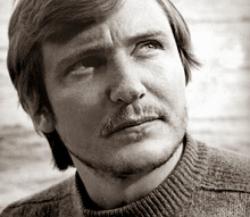
Volodymyr M. Ivasiuk (1949-1979) [4]
Ivasyuk is the author of songs which are especially popular among young people (e.g., ‘Chervona Ruta’ [‘Red Rue’]), He also arranged Ukrainian folk songs. His works were performed at international festivals and competitions.
His official situation seemed satisfactory: he was a member of the Komsomol Regional Committee and was allowed to travel abroad. He also had disagreements with the authorities. It is known that he refused an invitation to compose an Oratorio to commemorate the 40th anniversary of the “Reunification of Ukraine” (in 1939).
Before he disappeared, he was for some reason being summoned to the KGB.
*
For a long time after Ivasyuk’s disappearance, his family was told that attempts to find him were being made without success.
On 18 May they were told that his body had been found hanging from a tree in a thick part of a forest, and that expert analysis had determined it was a case of suicide, committed about three days before he was found. One of Ivasyuk’s relatives, a doctor, who was allowed to attend the postmortem, said that the corpse did not show certain signs characteristic of a hanging.
*
The funeral took place on May 22 in the Lechakovsky Cemetery in Lvov. It turned into a huge demonstration.
On 12 June, Trinity Day, there was a veritable pilgrimage to Ivasyuk’s grave. It was heaped with a mountain of flowers. Pyotr and Vasily Sichko came from Dolina to visit the grave.
Vasyl Sichko climbed on to the neighbouring grave and made a speech. “We don’t know”, he said, “when Vladimir Ivasyuk died. We only know the date of his funeral, 22 May”. Vasily Sichko suggested that this day be marked in future as a Day of Mourning and Remembrance for all the well-known figures of Ukrainian culture who had died in mysterious circumstances. Apart from Ivasyuk he named the composer Leontovich and the artists Alla Gorskaya [Horska] and Rostislav Paletsky. At Vasily Sichko’s suggestion, the crowd honoured the memory of these people with a minute’s silence.
Petro Sichko spoke next. He said that he and his son Vasily were members of the Ukrainian Helsinki Group, which was fighting for human rights in Ukraine and the national rights of the Ukrainian people; he appealed for support and help. “We arrived here and found villages decorated with flowers and greenery,” he said. “So in spite of 40 years of the policy of suppressing our national spirit and of atheistic propaganda, our folk traditions and faith are alive. The Ukrainian people must preserve itself and its culture.” After his speech the crowd chanted “Glory to Ukraine!”
When Petro and Vasyl Sichko were leaving the cemetery, a man came up to them and said, “You could be arrested. Let me give you a lift in my car.”
Petro Sichko replied that the man was a KGB agent. The crowd escorted Petro and Vasyl Sichko to the bus stop and many people got on to the bus with them.
*
[6]
The Arrest of Petro and Vasyl Sichko
On 5 July Petro and Vasyl Sichko were arrested.
They were charged under Article 187-1 (UkSSR Criminal Code = Article 190-1, RSFSR Code). Assistant Procurator of the Ivano-Frankovsk Region Ivanov is conducting the case.
On 6 July an article entitled “May the Lies of the OUN Rot” [5] appeared in the Lvov newspaper Vilna Ukraina, vilifying both Sichkos. Concerning their speeches on Ivasyuk’s grave, it stated that they addressed “a few loafers” who happened to be near the grave (the newspaper names four of these loafers): “The lie which must rot is that Ivasyuk was killed.”
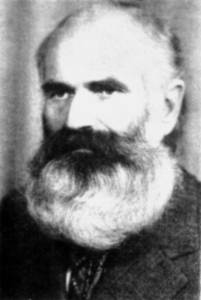
Petro Sichko (1926-2010)
On 10 July Stefania Sichko announced that her husband was in an investigations prison and her son had been sent to the Lvov Region Psychiatric Hospital for diagnosis.
In connection with the dispatch of Vasyl Sichko for psychiatric diagnosis, the Working Commission (to Investigate the Use of Psychiatry for Political Purposes) sent a statement to the hospital’s head doctor:
“The dispatch of V. Sichko for diagnosis immediately after his arrest reveals in this case the desire of the investigating organs yet again to use psychiatry as an instrument of punishment. This desire is particularly obvious when you bear in mind that the charge brought against Vasyl Sichko is of a political character, and that people who know Sichko well, and his relatives, are in no doubt about his mental health …“
*
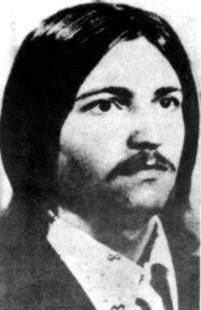
Vasyl Sichko (1956-1997)
Vasyl Sichko (b. 1956) was expelled in 1977, during his second year of studies, from the Faculty of Journalism at Kiev University [correction CCE 54.24], apparently in connection with his father’s public activity. He renounced his Soviet citizenship and asked the authorities for a visa to go abroad, where he would be able to continue his education.
On 17 January 1978, Vasyl Sichko was compulsorily hospitalized in the Ivano-Frankovsk Psychiatric Hospital, although he had had no previous contact with psychiatrists. A deputy head doctor at the hospital stated that no normal person would renounce his citizenship. Sichko was released after two weeks.
*
Petro Sichko (b. 1926) was arrested in 1947 for forming an underground student organization. He was sentenced to death, but the sentence was commuted to 25 years imprisonment. He was released in 1957.
*
On 5 July the Procuracy conducted another search at the home of Vasily Streltsov. At the same time a search was conducted at the home of another inhabitant of Dolina, 80-year-oId Vladimir Gorbovoi [Ukr. Horbovy]. V. Gorbovoi, a D.Sc. (Philosophy & Law), was sentenced in 1945 to 25 years imprisonment. He was released in 1970 [6].
V. Gorbovoi’s memoirs, The Weather of Conscience, were confiscated during the search. The reason for the search was Gorbovoi’s ’contact’ with the Ukrainian Helsinki Group.
*
[7]
The Arrest of Monakov
In summer 1979 Mikhail Viktorovich MONAKOV was arrested in the town of llichevsk (Odessa Region).
Monakov is a school-teacher who, until January 1979, worked in School No. 99 in Odessa. On 16 July a search was conducted in connection with his case at the Odessa home of Leonid Sеry (Sery’s daughter was taught by Monakov). Sery’s correspondence with acquaintances and the authorities was confiscated.
On 16, 17, 19 and 20 July Sery was interrogated in connection with the Monakov case. The investigator said that Monakov had founded (or was founding) ’a new workers’ Party’, and he had been charged with Anti-Soviet Agitation & Propaganda. Since the search, Sery and his family have been blatantly shadowed.
*
[8]
Exiles on Holiday
Stepan Sapelyak (CCE 51.10) went on holiday on 13 March.
He had been staying for a while at the home of Irena Zisels when he was taken to a police station and escorted out of the town. He was also detained in Kiev and stopped from travelling to Lvov. On arrival in Moscow, he was detained at the Kievsky Railway Station and taken to the police station, where he was ordered to return to his place of exile the same day.
*
In April Viacheslav Chornovil left for a holiday in Olkhovtsy village (Zvenigorodka district, Cherkassy Region). He was intending to break his journey in Kiev for a few hours.
On 8 April the aeroplane from Irkutsk to Kiev in which he was flying arrived over the airport in Kiev on time, and the landing announcement was made. However, the passengers were unexpectedly forbidden to disembark and the plane was sent to Simferopol. The plane landed at Simferopol Airport and stayed there for some time.
It eventually landed in Kiev six hours late. On arrival at Borispol Airport, V. Chornovil was taken off the plane by the police, put into a car, and driven to the bus station to catch the bus to Zvenigorodka.
His wife, who was waiting to meet him at Kiev’s Borispol airport, was told that he had not arrived on the flight: Chornovil was told that his wife would meet him in Zvenigorodka.
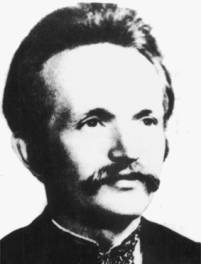
Viacheslav Chornovil (1937-1999)
The guests who then came to visit him in Olkhovtsy were literally hunted.
On their way back from Olkhovtsy, Pavel Stokotelny, Mykola Horbal, Yury Badzio and his wife (all from Kiev), were detained — each of them separately, and each was informed that he or she was suspected of taking part in a robbery, “a raid on a shop”.
L. Vasilev from Moscow, who was also on his way back from Olkhovtsy, was detained at a police station for six hours, also ‘suspected’ of taking part in the raid.
*
KGB officials ‘chatted’ to Chornovil in Zvenigorodka. He was not allowed to go and see his wife and son in Lvov. The KGB agents said: “If we let you go to Lvov, in two weeks’ time you’ll have issued a journal.”
On 12 May, when V. Chornovil, his sister and his son were travelling through Zvenigorodka on their way to Kiev, they were detained and subjected to an interrogation which lasted from morning till evening, by when the last bus for Kiev had left. They were interrogated in connection with the case of the arrested Yury Badzio (above, item 4).
The next day, at 5 am, Chornovil was taken to the airport in a police car and not given the opportunity to go to Kiev. Chomovil’s friend Ivan Svetlichny had just arrived for a holiday in Kiev from his place of exile.
*
A search was conducted at the airport and papers were confiscated.
The search record notes that Chornovil was asked to “show any dangerous packages or objects” and that “a 52-page notebook containing a draft report was discovered and confiscated during the examination”.
Chornovil wrote an Open Letter describing all these events to the UkSSR Minister of Internal Affairs, I. Kh. Golovchenko. He also sent him a protest in which he demanded
“the immediate return of my illegally confiscated notebook, and, as a minimum, a written apology for this and the other incidents which I have listed.“
Chornovil writes:
“.. the incident at the airport is part of a series of tyrannical actions, and shows that these actions were the work of KGB agents using your obedient instruments, more precisely:
“1. My abduction at the airport and the illegal escort with the purpose of preventing me travelling via Kiev, as was specified on my travel documents.
“2. The ban on my officially prearranged visit to Lvov to have medical treatment and see my family.
“3. The acts of detention, interrogation and searches — including body-searches …
“4. The day-long interrogation, which was ridiculous as regards both content and method ..,
“5. My illegal removal by the police from the airport bus …
“6. The incident at the airport and the illegal confiscation of my ‘dangerously explosive notebook’.”
*
[9]
Malva Landa in Ukraine
On 12 April 1979, member of the Moscow Helsinki Group Malva Noyevna LANDA was taken off a bus on the way from Olkhovtsy village to Kiev.
She was searched and then driven to the police station at Zvenigorodka. the district centre. Here she had to remove all her clothes to be searched again.
During the first search they were looking for ‘documents’ which had disappeared ‘from a certain house’ which she, Landa, “had just left.” At the second search they were looking for ‘gold watches and other valuable items’ because “a shop was robbed in Olkhovtsy and she was given the bag of stolen goods”. They found: Moscow Helsinki Group documents, notes, and a copy of V. Chornovil’s letter to the UkSSR Minister of Internal Affairs.
*
Malva Landa was detained overnight at the police station.
In the morning the head of the station demanded ‘an explanation’ of what she was doing in the district. He expressed indignation at the ‘anti-Soviet materials’ Landa was carrying, and said that whatever was being done to Chornovil was an internal affair which there was no point in publicizing. He was also indignant that Landa had visited Chornovil, since the latter had been given permission for a holiday to see his parents, not to see her. There was no further talk of robberies and raids.
Landa refused to give ‘explanations’ and instead wrote a statement of protest against her illegal detention and the searches on false pretexts, and against the intrusion of the authorities into her personal life.
*
On 30 April 1979, Landa again arrived in Kiev. She was detained at the station and taken to a police station, where she was again searched and again had to strip.
They were looking for ‘a purse containing a large sum of money’ which Landa “had stolen from another passenger”. They found several handwritten and typewritten texts and personal letters. Among them was a letter from A. D. Sakharov, which was used in the newspaper The Week [Nedelya] on 25 June (this issue CCE 53.30 item 9).
She was then taken, or so she was told, ‘to Konotop, for identification’. However, she was in fact taken back to Moscow.
At the Kievsky Railway Station in Moscow she was again detained by KGB officials — at least, that is how one of them introduced himself — and told that she was wanted for a talk ‘on the subject of the incident’. Landa was taken to a car and driven to the town of Petushki, where she is registered.
At the Petushki Police Station she was again undressed and searched. Landa gave the people who were searching her her opinion of the Soviet system. She described it as “nothing less than fascist” and promised them a Nuremberg Trial. In response a record was drawn up which stated that Landa had called the people present ‘reptiles’ and said that they ‘ought to be hanged’.
Then Landa was taken from the police station for a talk with the district Procurator. The head of the Petushki KGB department joined in the talk.
The Procurator said that the police record was sufficient basis to institute criminal proceedings against her and put her in prison for a year for insulting officials. However, he would ignore this record if Landa would promise not to leave Petushki over the holiday period, 1-10 May. She gave him her promise.
After this Landa wrote a sketch entitled ‘Kiev-Moscow-Petushki’. In the sketch the events of 30 April to 1 May are described as ‘a micro-model of the rights of the individual under real developed socialism’.
============================================
NOTES
- The photo of Melnik (and his corrected date of birth) come from the Dissident Movement in Ukraine, a compilation by Vasyl Ovsienko and others on the KHPG website.
↩︎ - In April 1979 Melnichuk was sentenced to four years in strict-regime camps.
↩︎ - CCE 27.1-2 and CCE 28.7 indicate that Badzio’s wife worked at the Institute of Philosophy. CCE 27 spells her surname Kyrychenko, as at that time transliteration was done from Ukrainian, not Russian forms. CCE 28 wrongly altered the spelling of her name to ‘Klushchenko’.
↩︎ - Photo by Taras Shevchenko Prize organisation.
↩︎ - OUN = Organization of Ukrainian Nationalists (founded in 1929).
↩︎ - As Gorbovoi claimed Czechoslovak citizenship, he served part of his 25 years in Mordovian Camp 5, which holds foreigners. Here he became friendly in the late 1960s with the London lecturer Gerald Brooke.
↩︎
==============================
 A Chronicle of Current Events