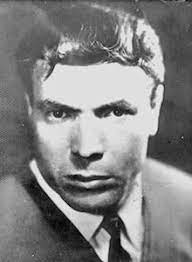
On 20-21 June the Mogilyov Regional Court, in an assizes session presided over by Deputy Chairman of the Court M. Ivanov, in the building of the Bobruisk people’s court, examined the case of M. Kukobaka, charged under Article 186-1 (Belorussian SSR Criminal Code = Article 190-1, RSFSR Code).
*
Mikhail Ignatievich Kukobaka was born in 1936 in Bobruisk.
His father was killed in 1939 in the Russo-Finnish War. His mother joined the partisans in the Patriotic War and was severely wounded; she died in a nursing home in 1946. Mikhail lived with his grandmother after the outbreak of war, but in 1944 she had to give her grandson to a children’s home (he wrote a story, A Meeting with My Childhood, about this). In 1953 Kukobaka completed a course at a craft training college and subsequently worked as an electrician and a turner, served in the Army, and finished secondary school.
On 30 September 1968 Kukobaka went to the Czechoslovak Consulate in Kiev to express his sympathy and his outrage at the occupation. He did not join a trades union; he refused to participate in elections and ignored the ‘working Saturdays’ [days when people work without pay ‘for the State’ ed.]. The KGB started to collect ‘material’ on him.
On 12 April 1970 Kukobaka was arrested in Alexandrov (Vladimir Region), where he was then living, and charged under Article 190-1 of the RSFSR Criminal Code. Held against him were an open letter he had written to the English writer L Montagu (in defence of the emigrant A. Kuznetsov) and ‘slanderous’ conversations with working people. The investigation had already finished when an official of the Vladimir KGB, Major Evseyev, asked Kukobaka, in exchange a secretary from the West German Embassy called Muller.
Kukobaka refused and was sent for psychiatric diagnosis to the Serbsky Institute. There he was ruled not responsible. Diagnosed as a ‘paranoid schizophrenic’, Kukobaka was interned in the Sychyovka Special Psychiatric Hospital, where he spent about three years. He was then transferred to the Vladimir Regional Psychiatric Hospital, from which he was released on 10 May 1976 (CCE 40.15).
*
Kukobaka lived in Bobruisk after his release, and worked as an electrician and a loader. He was twice forcibly hospitalized: in November 1976 for circulating the Universal Declaration of Human Rights (CCE 43.8) and in October 1977 for refusing to take down from the wall above his bed in a hostel an icon and photographs of Sakharov and Grigorenko (CCE 47.12).
In April 1977 he wrote to the Presidium of the USSR Supreme Soviet renouncing Soviet citizenship and asking to be allowed to leave the USSR (CCE 47.12). On 19 October 1978 Kukobaka was arrested and sent for psychiatric diagnosis (CCE 51.8).
*
In January 1979 Leonard Ternovsky, a member of the Working Commission to Investigate the Use of Psychiatry for Political Purposes, sent a letter to the Director of the Serbsky Institute, giving him the following warning:
‘If M. Kukobaka is again ruled not responsible, the Working Commission will consider this an instance of the use of psychiatry for political and repressive purposes …’
From 12 February to 10 April Kukobaka remained in the Serbsky Institute. In spite of the fact that he behaved extremely defiantly and demonstratively ignored the doctors (as he relates in his samizdat account, Story of a Diagnosis [note 8]) a commission of experts under Bobrova ruled him responsible:
‘There are signs of developing psychopathy. Since 1968 disturbances of affect: a seeking of conflict; overvaluing of his own personality, combined with emotional blunting; a pathological interpretation of his surroundings and thought disorders; all of this pointed to a schizophrenic condition.
‘As a result of treatment the development of the schizophrenic process has been arrested. He is responsible.’
*
TRIAL
On 20 June Kukobaka stood before the court. The charge was supported by Procurator Alexeyenko from Mogilyov.
Moscow lawyer E. A. Reznikova was due to defend Kukobaka. In the recent past she defended Yury Shikhanovich, Moscow 1973 CCE 30.3, and Mark Nashpits, Moscow 1975 CCE 36.4. Since 1975 she has conducted the ‘supervisory case’ of Sergei Kovalyov (CCE 46.10 and this issue CCE 53.19-1); in 1977 she defended Felix Serebrov CCE 47.1 and Svetlana Pavlenkova, CCE 47.3-1; in 1978 she represented Vladimir Khailo, CCE 48.16-2, and in 1977-1978 she was Alexander Ginzburg’s defence lawyer (CCE 48.2, CCE 49.6 & CCE 50.3). In spite of her telegram saying ‘Defence counsel Reznikova can come to the hearing of the case against Kukobaka any day after 22 June…’, the Judge refused to postpone the hearing.
Kukobaka submitted a petition asking for V. Nekipelov, who was present in the courtroom, to defend him. After consultation the court resolved:
‘… the Judicial Board considers it impossible to permit Kukobaka’s representative Nekipelov to defend him in court, since Nekipelov, in 1974, was prosecuted for an analogous crime. The court cannot be sure that Nekipelov, given the right to defend, would use this right in good conscience to the advantage of the case.’
Kukobaka categorically refused the lawyer nominated by the court, and said that he would defend himself. The court agreed.
*
The indictment charged Kukobaka with writing and sending to the West the article ‘Détente and Human Rights are Indivisible’ (CCE 45.20 item 1) and the essay ‘Stolen Motherland’ (CCE 51.21 item 14); with making tape-recordings from Western radio broadcasts and acquainting his friends with them; with writing and giving to one of the witnesses ‘An Open Letter to the USSR Minister of Health, Academician Petrovsky’ (about psychiatric repressions); and with disseminating ‘slander’ in spoken form (there is no freedom of speech, of the press or demonstrations in the USSR; people are subjected to criminal prosecution for their beliefs; the authorities have brought the country to destitution).
Kukobaka petitioned for two supplementary witnesses to be summoned: Yury Belov (CCE 48.12) and MVD official V. I. Pinyas. He asked for all the documents which had been confiscated from him and were called ‘slanderous’ in the case to be attached to the case files. He declared that the indictment accused him only of actions taking place between June 1977 and October 1978; he asked for the period to be extended to cover the years from 1968 to 1979. All his petitions were rejected. Kukobaka pleaded not guilty. He explained that everything he had said and written was a result of his beliefs, which he was not intending to change.
Six witnesses were examined in court: O. Borisov (CCE 51.8), S. Novikov (CCE 51.8) and his sister T. Sagatova, N. Bolkhvadze, L. Kisel and A. Burd. Novikov. Sagatova and Kisel gave testimony only under pressure from the Judge, after he put leading questions or read out passages from the records of the pre-trial investigation.
Judge: What is your attitude to Sagatova’s testimony?
Kukobaka: You call that her testimony? That was the KGB’s and the investigator’s testimony. Their invention.
Judge: And where were you writing out the article, in whose house?
Borisov: The local policeman told me the house number. I didn’t know it.
Judge: And in whose house did he ask you to write the article?
Borisov: That place where they were selling beer.
Judge: What did the local policeman have to do with it?
Borisov: No, I’d forgotten. It was at the KGB they told me the number of the house. A dark fellow.
*
FINAL SPEECHES
In his prosecuting speech Procurator Alexeyenko asserted that no one is persecuted in the USSR for thinking differently: ‘Think for a hundred years if you like, but don’t act!’ He asked for three years’ ordinary-regime camp for the accused.
Kukobaka concluded his defence speech as follows:
‘My convictions are absolutely opposed to communist ideology. These convictions are not subject to any correction through labour. How is that possible — to correct convictions through labour? I’ve already served seven years for my convictions. Isn’t that enough?
‘I renounced my citizenship: to tie someone by force to citizenship of a particular country is an act of unparalleled sadism. If a man is ashamed of his citizenship, it is immoral to keep him in the country. I don’t want to, and I can’t, change my convictions. But if they don’t suit you, then deport me from the country, and that’ll be that.’
From his final speech:
‘The first and most important human right, or rather, obligation to oneself, is to stand by one’s convictions.
‘I am frightened of prison, of camps, of lunatic asylums… but I am more frightened of lies, base behaviour and my own participation in either of these, than of any prison. I am not ashamed to be called a prisoner. But I am bitter at having been born in this country and I am ashamed that until I was nearly 30 I myself was an obedient cog in the system. But my convictions changed a long while ago. I want to live according to my convictions, to read what I want, to look at what I want. And you are trying me for this desire!’
All the episodes on the indictment were included in the judgment. Kukobaka was sentenced to three years’ ordinary-regime camp. The Belorussian Supreme Court, presided over by Zaitsev, rejected Kukobaka’s appeal.
*
F. Serebrov, member of the Working Commission to Investigate the Use of Psychiatry for Political Purposes, issued an appeal:
‘Let Mikhail Kukobaka live outside the barbed wire of the great socialist camp! I ask everyone who believes in God, everyone who can still suffer for the persecuted, everyone who is sickened by injustice, to take action to secure the release of Kukobaka and allow him to leave the USSR.’
On 21 June A. D. Sakharov called on trades unions throughout the world and Amnesty International to come to Kukobaka’s defence.
========================================
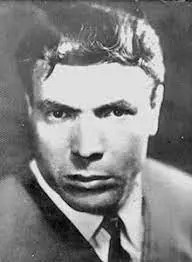
Mikhail Kukobaka (b. 1936)
 A Chronicle of Current Events