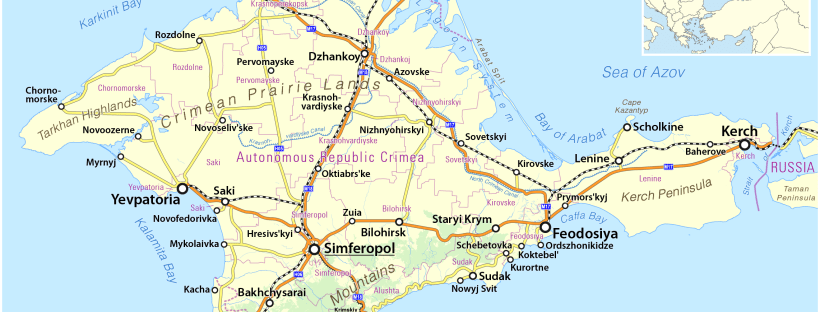
- 9-1. Resolution No 700; Deportations from the Crimea
- 9-2. Crimean Tatars delegations in Moscow. Arrests: Seidamet Mememtov, Mustafa Dzhemilev
*
Resolution 700.
The Chronicle has already mentioned (CCE 51.13) the USSR Council of Ministers’ unpublished Resolution No. 700 (dated 15 August 1978), “Additional Measures to Tighten Residence Regulations in the Crimean Region”.
The following extract from the Resolution has now become available:
“The USSR Council of Ministers has resolved that, as a temporary measure, commencing on 15 October 1978:
“Persons arriving in the Crimean Region in unapproved ways and living there without passports [ID documents], with expired passports, without residence permits and registration, despite the administrative penalties imposed on them for violation of the residence regulations, will, by decision of the executive committees of the city, district, and urban district Soviets of People’s Deputies, be DEPORTED from the Region by the internal affairs agencies.
“If they have been subjected to administrative penalties more than twice in one year, citizens who own houses, who rent or sublet accommodation, or who live in hostels where people without passports, with expired passports, without residence permits or registration are permitted to reside, are to be EXPELLED beyond the boundaries of the Crimean Region for a term not exceeding two years by decision of the executive committees of the city, district and urban district Soviets of People’s Deputies.”
During the visit to the USSR Procuracy by Crimean Tatars in February 1979, reception official P.I. Dergachev confirmed that the above extract is accurate.
*
Overriding several other laws, Resolution 700 has actually brought about an extraordinary state of affairs in the Crimea.
According to Articles 336 and 338 of the RSFSR Civil Code (and corresponding Articles of the UkSSR Civil Code), the eviction of citizens as an administrative measure is permitted only in connection with those “arbitrarily occupying living space”, i.e. occupying it without the permission of the owner. The measure of ‘expulsion from the Region’ is not prescribed by civil law: it may be ordered by a court only as a form of criminal punishment.
Although there is no mention of the Crimean Tatars in Resolution 700, the way it is being applied leaves no doubt that it is aimed exclusively at preventing the return of the Crimean Tatars to the Crimea.
*
POLICE AND SOLDIERS
A Ministry of Internal Affairs (MVD) battalion, in the guise of police, is stationed in Simferopol. Its members are sent to evict people.
During the past few years evictions have been conducted, as a rule, by groups of police and vigilantes numbering 15-20. Neighbours who gather at the scene often manage to prevent the eviction. For evictions under Resolution 700, substantial forces of police, vigilantes, soldiers and fire brigades (up to several hundred people) are now being mustered. A large number of vehicles, including fire engines and buses, are also used. The act of eviction is directed on the spot by the district police chief and local leaders; occasionally a KGB representative is present.
Without their owners’ participation, personal belongings are loaded into vehicles and taken to the railway station (resulting in loss, breakage and plunder of property). Sometimes those evicted are first taken to the Special Detention Centre in Simferopol, where families are kept apart for a day or two. Sometimes they are brought directly to the rail station, where they are forcibly put on a train. The escort guard usually leaves them at the first station beyond the boundaries of the Crimea.
In general, the families being evicted are those which have settled in the Crimea since 15 October 1978.
*
One application of Resolution 700 has been described in the 27 December 1978 issue of the newspaper Crimean Pravda. An article tells the story of A. M. Reunov, who sold his house to a family just arrived in the Crimea. The contract of sale was not registered by a notary. The buyers began to live in the house without a residence permit.
The family, it is said, was dispatched to its previous place of residence while Reunov, by decision by the district soviet executive committee, was himself deported from the Crimea.
*
Deportations from the Crimea
Between November 1978 and February 1979, in accordance with district soviet executive committee decisions based on Resolution 700, about sixty Crimean Tatar families were deported from the Crimea.
(Between January and October 1978 about twenty families were deported: CCE 48.14-3, CCE 49.12 and CCE 51.13.)
The Chronicle has learned more details of some of the latest deportations.
*
December 1978
11 December. Krasnogvardeisky State Farm (Soviet district).
The family of work invalid Enver Khalilov was deported. The eviction was carried out by over sixty people. The family returned to their home, but a week later they were again deported. This time the village was surrounded by armed soldiers.
*
18 December. Novozhilovka village (Belogorsk [Ukr. Bilohirsk] district).
The family of Seitveli Abdudzhelilov, consisting of six people, including four children, was deported.
The eviction was directed by two regional officials — a police major who did not give his name (in Crimea they call him “the Major from the Centre”) [1] and KGB Lieutenant-Colonel Zhitov — and by several local officials: Chernikov[2], Head of the Belogorsk district internal affairs office (OVD); Pisklova, head of Belogorsk district passport office; and Serdyuk, chairman of the village soviet.
Over eight hundred people took part in the eviction. Seitumer Mustafayev and Elmira Aliyeva, who intervened on behalf of the evicted family, were arrested. The children were taken away from school during lessons, in their indoor clothes, and driven away.
The parents were put on a train from Simferopol to Sverdlovsk in the Urals. They found their children on the train. The family returned. On 18 January 1979 they were again deported.
*
19 December. Voinka village (Krasnoperekopsk district).
Mukhsim Kurkumetov was deported with his sick wife and three small children.
The Kurkumetovs were summoned that day to the district passport office ‘for residence permits’. When they realized they had been deceived and returned home, the invasion had already taken place: their belongings were in the vans. The Kurkumetovs were bundled into a police car and driven out of the Crimea.
*
22 December. The “Major from the Centre” turned his attention to war veterans.
Dzhafer Mustafayev and Rustem Tellyabayev and his wife (he is an Uzbek, but his wife is a Crimean Tatar) were taken to Belogorsk district police station. Medzhit Chobanov and his wife also came in response to a summons.
‘Chatting’ with each in turn, the Major showered them with threats and insults. He forbade them to mention their war service: Chobanov fought in the Malaya Zemlya campaign; Mustafayev took part in two wars. He prohibited them from referring to Lenin’s decrees or to the Constitution: “There is now a resolution from the Council of Ministers,” he said, “the Crimea will be cleared of Crimean Tatars.”
That same day the Chobanovs and the Tellyabayevs were taken to Simferopol Prison, Special Detention Centre. They were kept there for 48 hours and then driven out of the Crimea. The Major gave Mustafayev three days in which to leave of his own accord, “otherwise we will throw you out by force.”
*
26 December. Zuya settlement (Belogorsk district).
The Medzhitov family was deported.
Alie Medzhitova was pregnant. She and her four-year-old daughter were sent by train to the Syrdarinskaya Region (Uzbek SSR), while her husband was taken away separately and sent to Uzbekistan by air. In Uzbekistan Alie gave birth and all four returned to the Crimea. They were staying with relations.
*
BORSEITOV FAMILY
27 December. Tribrezhny State Farm and Technical School (Saki district).
The family of the communist Seitnafi Borseitov was deported.
The operations were directed by three men: the “Major from the Centre”; F. Boiko, chairman of the Saki district Soviet executive committee; and Captain Plyuta, head of the Saki district OVD. Goncharenko, director of the State Farm and Technical School, put a bulldozer, lorries, buses, a store and some students at their disposal.
The house was surrounded and the door broken down. Borseitov’s wife and child and father were bundled into a police car and driven away. Then the loading of household possessions began. Things were broken and spoiled and much was looted.
Students, some aged 15-16, also took part in the pillage. Seeing the indignation of the local people who had fought their way to the house, the students left — but not before drinking the vodka and brandy they found in the house.
Buses and cars arrived, transporting a large police unit.
They began to grab angry local inhabitants trying to unload things from the cars. They were driven to the district police station. Halfway through the night they were all released, except for Gulzar Yunusova. She was charged under Article 188 pt. 2 (UkSSR Criminal Code: “Resisting a Police Officer …”) because she had struck the “Major from the Centre”.
The head of the household was seized during the night and taken to Ostryakovo rail station. There he saw his family and he learned that his wife had been searched: her money was taken and used to buy tickets. The family were put on a train and taken under escort to Uzbekistan. As soon as the escort was removed, Borseitov, his wife and eight-year-old son got off the train. Later Borseitov travelled to Moscow with the Crimean Tatar delegates (CCE 52.9-2).
*
The following day a group of Crimean Tatars, incensed by the pogrom, went to the district soviet executive committee. When they arrived, they were surrounded by police and vigilantes. The committee chairman, Boiko, told them:
“We shall continue to act as we have done, perhaps with more severity. We have sanction from above for this — a Decree from the Council of Ministers of the USSR … We will evict and deport until there is not one Crimean Tatar left in the Crimea.”
Neskromny, First Secretary of the Saki district Party committee, to whom the Crimean Tatars then turned, said: “I have been told not to interfere.”
*
28 December. Belogorsk [Ukr. Bilohirsk].
The family of Idae Lyatifova was deported: Lyatifova, her husband and two small children (their eldest son is in the Army). Over seventy people took part in the eviction. Later the family returned. On 17 January they were again deported.
*
29 December. Kalinovka village (Lenin district).
At 2 am the family of Emirsen Zeipaliyev, consisting of seven people, was evicted. The eviction was carried out by a detachment of police, over eighty in number, directed by district OVD head Chelyshkin.
*
The same day the family of Ebazer Yunusov was deported from the village of Mazanka (Simferopol district). Yunusov, his wife Zeleikha Akosmanova and their schoolboy son.
On 1 October the Yunusovs had bought a house and a cow. On 2 December they moved in, but their attempts to register the purchase of the house in the village soviet, and to obtain residence permits, were unsuccessful. On 5 December the Yunusov family were promptly fined 10 roubles. Their son was refused admission to school for three weeks.
On 29 December Akosmanova was summoned to the passport office with her documents.
Her husband was in hospital and her son at school. All three were picked up and bundled into a police car with their arms twisted and their mouths covered. On the way the pregnant Akosmanova fell ill. The family was put on a train at Ostryakovo station and given a police escort to Krasnaya Strela rail station, beyond the Crimean border.
On their return, the Yunusovs learned that their cow had been appropriated by the collective farm and their belongings removed from the house, although the police had not managed to get help from the inhabitants of Mazanka in loading the Yunusovs’ things. The Yunusovs were unable to obtain an inventory of their removed belongings from the village soviet.
*
1979
January 1979
18 January. The Yunusovs were again deported.
They were taken to the Simferopol Special Detention Centre, and the last of their money was taken and never returned to them. The three were kept apart.
Then they were put on a train and taken beyond the Crimean border. The Yunusovs came back again, but another family had settled into their house.
*
YUNUSOV & AKOSMANOVA
22 January. Ebazer Yunusov was arrested.
After this his wife went to Moscow to take part in the protest lobbying of the Central Committee (CCE 52.9-2). She also appealed to the USSR Procuracy in connection with her own case. When a commission from the Central Committee came to the Crimea, she went to Simferopol and tried to get the commission chairman to see her and to find out what had happened to her husband.
15 February. Akosmanova and her son were picked up on the street and detained for three days in prison: she at the special detention centre and her son in a children’s detention centre. Then they were once again deported from the Crimea under guard. Where Ebazer Yunusov is, and what he is charged with, she was not told.
Akosmanova wrote to Rudenko, USSR Procurator-General, describing what had happened and demanding the punishment of those guilty of lawlessness and the restoration of justice.
On 29 December a group of Crimean Tatars from Belogorsk district had gathered outside the district Soviet executive committee building to express their indignation. A detachment of police dispersed the assembled crowd. E. Osmanova, L. Osmanova, A. Cherkezova, A. Bekirova, Sh. Ablyakimov and S. Kurtasanova were arrested. A rumour went round the town that “the Tatars are rebelling”. Orlovsky, Deputy Chairman of the district Soviet Executive Committee, stated: “Crimean Tatars are not permitted to live in the Crimea. There is only one fate awaiting you all: deportation from the Crimea.”
Then Chernikov, Head of the district OVD, received two delegates and told them:
“There is a resolution of the USSR Council of Ministers, dated 15 August 1978. On the basis of this resolution we will evict all Crimean Tatars from the Crimea … If there are not enough police, we have 2,000 soldiers, dressed in police uniforms, here in Simferopol.”
*
12 January. Zaitsevo village (Chernomorsky district). The Sogandzhiyev family with four children aged between 10 and 17 years was deported.
They were dragged out of the house at 5 am, given no time to dress properly, driven to Simferopol, put on a train and taken to Bekabad in Uzbekistan, 1,500 miles away. The journey took seven days and they went hungry. On 6 February the Sogandzhiyev family returned.
13 January. October village (‘First of May’ [Pervomaisky] district), The family of the communist Lenur Memetov was deported.
In 1978 the Memetovs bought a house. Although they went round all the official bodies they were unable to register the purchase officially and obtain residence permits. Since 11 November a container with the Memetovs’ belongings had been retained by the local authorities.
During the eviction Lenur was handcuffed and household items were damaged. The Memetovs returned to the village. On 16 January a second eviction took place. Neighbours tried to intervene. In a special car there was a cine-camera, which filmed all the villagers who turned up.
The authorities did not succeed in catching Lenur Memetov. Tatyana Memetova and her children were taken away to the Simferopol Special Detention Centre. She and the children were beaten up: ‘Get a divorce and we’ll give you a residence permit!’ they shouted at her [3].
Lenur Memetov wrote to V. S. Makarenko, First Secretary of the Crimean Region Party Committee, describing what had happened and asking for help. Memetov was one of the delegates to the Central Committee in January (CCE 52.9-2).
*
MUZHDABA ASANOV
16 January. Grushevka village (Kirov district). The family of Muzhdaba Asanov was deported. The Asanovs bought a house on 1 December. Since then they have been summoned 12 times by the authorities and ordered to leave.
On the day of the eviction Muzhdaba went to the police station in Stary Krym in answer to the usual summons, while his wife was summoned to the village soviet; from there she was driven away by local policeman Slizyuk. The children (there are three) were taken away from school. They were called out of their lessons by head teacher N. I. Zhukova, who told them that their relatives had come to collect them. On seeing the policemen the children instantly tried to run away, but were caught. They were taken care of by another pedagogue — L. V. Baranova, inspector of the children’s cell at the police station. She ordered a free ticket for the whole family from Vladislavovka Station to Tashkent.
At the house they broke down the door and loaded up the Asanovs’ belongings. The operation was directed by Major Voloshchenko, Stary Krym city police chief (CCE 44.23) and Captains Yakobchuk and Nekhayev. A lorry full of soldiers stood by in readiness. Dureyev and Ivanov, drivers from the local State farm, were summoned to the eviction but were not told the purpose of their journey. When they arrived at the scene, they refused to take part in the eviction. They had their driving licences annulled. Two other drivers refused to leave the garage.
*
The deportation of the Asanovs caused anger in the village. At school there were practically no lessons for two days.
Someone nailed a poster to the Asanovs’ house: “The Soviet Constitution in action: A disgrace.” The KGB conducted an investigation into this and many people were interrogated. The culprits were not discovered. Nevertheless, Ridvan Useinov and Rustem Dzhaparov were jailed for 15 days. One of the charges against them was disrupting school lessons and organizing a demonstration.
On the second day after his arrest Useinov (CCE 42.7) informed the Kirov district Procurator that the record drawn up by local policeman Slizyuk was false and the witnesses named in it were false. The Procurator refused to listen. Ridvan then declared a hunger-strike in protest, which he continued until the end of his sentence.
Usein Krosh, a Party member who received medals for outstanding work, was charged with organizing the events in Grushevka. He was fined 20 per cent of his salary for two months and on 30 January was expelled from the Party. Tolyat Memetov was also fined.
*
17 January. Zelenogorskoye village (Belogorsk district). The family of Dzhafer Ibragimov was evicted.
Ibragimov is a war veteran recommended in 1944 for the ‘Hero of the Soviet Union’ award. In the end he did not receive it: 1944 was the year the Crimean Tatars were deported from the Crimea.
30 January. Lokhovka village (Sovetsky district). The family of Server Ablyakimov (he has three dependent children aged between 18 months and six years and an 80-year-old mother) was evicted and deported to the Krasnoyarsk Region (Siberia). A Russian family occupied their house and took possession of the Ablyakimovs’ cow, sheep and food store.
*
FEBRUARY 1979
1 February. Kurskoye village (Belogorsk district). The family of Nariman Ramazanov, consisting of six people, was evicted.
Over twenty vehicles (police cars, fire engines, buses, trucks) drew up to the Ramazanov house. About 130 police and some ten vigilantes evicted the family. Ramazanov and his wife were put in a Black Maria; the children were taken out of school, their belongings were loaded up and they were taken away. The following people took part in the eviction: Major Pisklov, deputy head of the Belogorsk district OVD (CCE 49.12 & CCE 51.13); Lieutenant Dutov, and Senior Lieutenant Kharchenko (CCE 42.7); KGB Major Ilinov [4], KGB Captain Kiselev; Shramkov, chairman of the village soviet; Smolnitsky, chairman of the collective farm and Zatolokin, collective farm agronomist.
3 February. Nekrasovo village (Krasnogvardeisky district). The family of Sadyk Usta, made up of six people, was deported.
The children were taken away from school. During the ‘operation’ the police arrested 20 people. Eight of them were fined between 40 and 50 roubles each and released. The rest were given jail sentences ranging from 10 to 15 days. Four — Lyutfi Bekirov, Izzet Usta, Seiran Khyrkhara and Yakub Beitullayev — were later charged under Article 188-1 pt. 2 of the Ukrainian Criminal Code.
The village was surrounded by a large military detachment of internal troops with guard dogs.
20 February. Voinka village (Krasnogvardeisky district). Zore Ramazanova and her two adult children were evicted.
They were deported from the Crimea. Another daughter, who has a residence permit, was imprisoned for seven days. Soldiers were brought into the village and stationed outside every Tatar home.
*
MOSCOW & CRIMEA
At the beginning of January 1979 Enver Ametov [5] and Mamedi Chobanov [6] came to Moscow.
They gave an interview to Western journalists about the intensified persecution and Resolution No. 700, and described the harassment to which they themselves had been subjected. Immediately after their meeting with the journalists they were detained at Kursk Railway Station and searched (nothing was found).
On 12 February Ametov and Chobanov were taken to the Crimean Region KGB offices and after a long ‘chat’ about the interview (interpreted as “contact with the CIA”) they were cautioned in accordance with the Decree of 25 December 1972. Both had received similar warnings before.
*
In February 1979 all Crimean Tatars in the Belogorsk district without residence permits were summoned to the district Soviet Executive Committee and given a week to leave ‘voluntarily’.
On 20 February Enver Ametov and the wife of Murat Voyenny (in Moscow at the time) were warned that they would be deported. That same day Ametov sent a telegram to USSR Procurator-General Rudenko, protesting against lawless actions with regard to his family.
*
Appeal by Sakharov
‘To the Presidium of the USSR Supreme Soviet.
To L. I. Brezhnev, Chairman of the Presidium of the USSR Supreme Soviet’
OPEN APPEAL
“Deeply Esteemed Leonid Ilych!
Deeply Esteemed Members of the Presidium of the USSR Supreme Soviet!
On the basis of secret Resolution No, 700 of the USSR Council of Ministers (dated 15 August 1978), mass harsh acts of deportation of Crimean Tatars are now taking place in the Crimea.
The houses they have bought are being demolished or confiscated, their property is being appropriated. Crimean Tatars without residence permits because of the illegal discriminatory policy of the authorities are being prosecuted. Children and old people are being taken to the open steppe in the depths of winter without warm clothing. Many Crimean Tatars are being sentenced to varying terms of imprisonment. Official notices are displayed, announcing that the sale of houses to Crimean Tatars carries the penalty of deportation from the Crimea.
These actions violate the human rights of many people and they have no justification.
I call on you, I call on the highest agencies of the authorities in this country to intervene and firmly put right not only the lawlessness prevailing at the moment, but also the injustice perpetrated 35 years ago against the entire nation by Stalin’s administration. If the petty cliquish interests of the local authorities and the false fears of some of your advisers stand in the way of these decisions — the only ones possible — then ignore them.
Only by so doing can this stain of disgrace be wiped from the USSR and a cause of ceaseless unrest in our country be uprooted.
Respectfully, Andrei Sakharov, Academician.
31 January 1979
*
(CCE 52.9-2)
Delegations of Crimean Tatars in Moscow;
Arrests of Seidamet Mememtov & Mustafa Dzhemilev
======================================
NOTES
- The “Major from the Centre” was Police Major Krivolapov (see “The trial of Gulizar Yunusova” CCE 53.22-2).
↩︎ - Spelled ‘Chernyakov’ in CCE 49 and CCE 51.
↩︎ - Apparently Tatyana Memetova was Russian, not Tatar.
↩︎ - KGB Major Ilinov appeared in reports about the Crimea from October 1976 onwards: CCE 42.7, CCE 44.23, CCE 46.15, CCE 49.12 and CCE 51.13.
↩︎ - Enver Ametov figured in Chronicle reports from June 1969 onwards: CCE 8.5, ///CCE 32.9-2, CCE 34.11, CCE 40.11, CCE 42.7, CCE 47.7, CCE 51.13 and Name Index.
↩︎ - There were also reports about Mamedi Chobanov from April 1969 onwards: CCE 7.7, CCE 31.6, CCE 33.9, CCE 38.15 and Name Index.
↩︎
===============================
 A Chronicle of Current Events