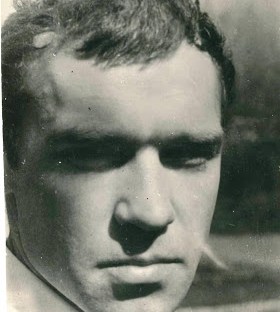
On 14 February 1975, after one and a half years of forcible treatment in Kazan Special Psychiatric Hospital, Pyotr Starchik returned home to Moscow; he had been arrested in April 1972 (CCE 28.5, CCE 35.10 [9]).
Soon afterwards Pyotr Starchik began to hold weekly concerts in his flat. Accompanying himself on the piano, guitar or zither, he sang his own songs, taken from verses by poets of many lands. Chief among these were Russian poets: his favourite, Marina Tsvetayeva, Khomyakov, Mandelstam, Fet, Klyuyev and Khodasevich … As the father of two small children, he also sang children’s songs.
Fridays were declared ‘open days’. Any decent person knew that he would on that day find a warm welcome at Starchik’s flat and a whole evening of songs.
The authorities did not like these unlicensed evenings, the repertoire of which was not sent to them for approval; the members of the audience were partly unknown to them, partly people they hated. They began to ‘warn’ Starchik to stop singing. Warnings were issued at a police station. He was also warned by Dr Sapozhnikova, head doctor at the psychoneurological clinic attached to the Solovyov psychiatric hospital: stop singing or you’ll only have yourself to blame.
Pyotr Starchik, while fully taking into account the unpleasant consequences threatening him, went on singing.
*
On 31 August 1976, the anniversary of Marina Tsvetayeva’s death [correction CCE 43.18] when Starchik’s flat was full of guests, two policemen entered and began to write down the names of those present; however, the concert continued.
On 15 September he was asked to come to the police station ‘for a minute’. There a ‘psycho-van’ was waiting for him. Starchik was forcibly taken (although he did not resist) to Psychiatric Hospital No. 15.
In the ‘psychiatric report-card’ made out on Starchik at Hospital No. 15, it was stated that the reason for his hospitalization was his composition of anti-Soviet songs and his organization of assemblies of shady characters. The card was marked ‘socially dangerous’.
On 18 September Starchik was transferred further away from his friends, to the Moscow Regional Psychiatric Hospital No. 5 (Stolbovaya Station on the Kursk line). Only his wife, Saida Starchik, is allowed to visit him. The doctor in charge of his treatment is Boris Vasilevich Novikov, head of section 7.
On 21 September Starchik’s friends and acquaintances, the many people who admired his talents, drew up a protest against his forcible hospitalization on non-medical grounds. 112 people signed the protest.
On 27 September T. Velikanova, A. Ginzburg, T. Khodorovich and G. Yakunin wrote a letter to the USSR Minister of Health, B. Petrovsky, demanding the release of Starchik and declaring their intention to set up a committee which would aim at obtaining this.
Although Starchik had still not been seen by the commission required according to the ‘Directives on urgent hospitalization’ (CCE 28.9), on 6 October his ‘treatment’ with haloperidol commenced. [note 41]
*
G. Pomerants has written an article, ‘The Songs of Pyotr Starchik’, which has been combined with a recording of the songs themselves and widely distributed in ‘tape-recorded samizdat’. Pomerants analyses the essential characteristics of Starchik’s creative work and personality, which have attracted many listeners to him, and describes the latest twist in his fate.
Starchik’s basic emphasis is on spiritual themes which have no clear answers, not on political argument… However, certain authorities have decided to cut off Starchik’s songs, why, we do not know… It is difficult to understand what this is; vulgar bungling, like the destruction of pictures by bulldozers? Or a step backwards, to the last years of Stalin’s reign? He reacted to the hospitalization with his usual meekness. ‘You have to accept it, like the climate,’ he said, comforting his relatives. ‘And whoever can’t stand it can emigrate.’
======================================
 A Chronicle of Current Events