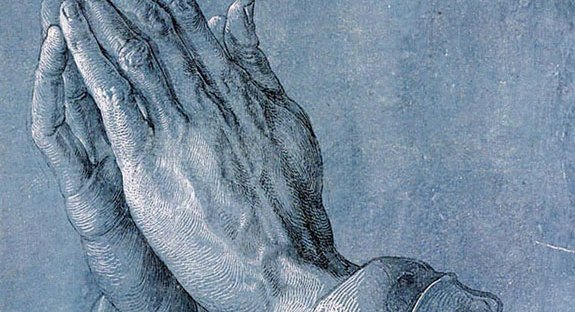
FATHER DUDKO
Parishioners of Father Dmitry Dudko have appealed to the executive committee of the Orekhovo-Zuyevo district soviet for an explanation of the reasons for the termination of his employment (CCE 38.17). At the executive committee they were told that the order for Father Dmitry’s dismissal had come from Moscow, but were refused information as to exactly from whom.
The parishioners of St Nikita’s church have sent petitions in defence of Dudko: to the chairman of the Orekhovo-Zuyevo district soviet executive committee; to Trushin, the Moscow Region commissioner of the Council for Religious Affairs (USSR Council of Ministers); to V. A. Kuroyedov, chairman of the Council for Religious Affairs; to Metropolitan Serafim of Krutitsa and Kolomna; and to Patriarch Pimen of All Russia.
Kuroyedov stated in an article “Soviet Law and Freedom of Conscience” (Izvestiya, 30 January 1976) [1] that “the parishioners of St Nikita’s church … have renounced the services of the priest Dudko, driving him out of their church for preaching sermons of an anti-social nature”.
The Moscow intellectuals Felix Svetov, Igor Khokhlushkin, Igor Shafarevich, Vadim Borisov and Zoya Krakhmalnikova have come to the defence of Father Dmitry. On 12 January they sent an appeal to the heads and hierarchies of Christian churches and to the World Council of Churches.
*
BORIS ZDOROVETS
536 Evangelical Christian-Baptists from the Kharkov Region (east Ukraine) have sent a declaration dated 9 February 1976 to the USSR Procurator-General about their fellow-believer Boris Maximovich ZDOROVETS [2] who is in a strict-regime camp in the town of Perevalsk.
‘The camp administration’, they write, ‘is inciting criminals to physical violence against Zdorovets. At the same time, they are recruiting prisoners to follow him and give compromising evidence against him. The administration has deprived him of the opportunity to correspond with his friends by confiscating his list of addresses.’ The signatories to the letter support Zdorovets’s request that a commission be set up to investigate illegalities.
In a declaration to the Procurator-General of the same date Zdorovets’s family (his wife and three children) report that Zdorovets is in the cooler and is on hunger-strike.
*
IGOR VOLOSHCHUK
In a declaration to Brezhnev and Podgorny dated 10 January 1976 Alexander Alexandrovich and Lyubov Yakovlevna VOLOSHCHUK (Gorky, 14 Bogorodskogo St., flat 15; CCE 45.10 [2]) describe how, at school No 24, pupils and teachers (including the class teacher Galina Borisovna Redina, senior teacher K. V. Smirnova and the headmaster V. Ya. Server) mock their son Igor — in the second class — because he is a believer. The declaration ends as follows:
“We, his parents, are very worried that our son is in danger of his life.
“In appealing to you by means of this declaration, we ask you to intervene immediately and stop this discrimination against our child, as the present situation is a threat to our son’s life.
“At present, we have to keep our son home from school, until we are convinced that such persecution, mockery, insults and threats will end, and until we are given full guarantees backed up by action on your part.
“We, as parents, are very concerned for the life and health of our child and for the fate of our two younger sons, who will soon have to go to the same school.
“If our declaration is not thoroughly investigated and effective measures are not taken, full responsibility in the future for our son’s life and health will fall on you. We did not send our son to school to be mocked, beaten and jeered at.”
*
On 2 January 1976, in the Ukrainian town of Novomoskovsk (Dnepropetrovsk Region), F. E. Sagan, the presbyter of an unregistered Pentecostal congregation, was fined 50 roubles.
He has previously been fined many times and often been summoned to the KGB office. In 1971 his home was searched and religious literature was confiscated; in 1973 he was tried by a communal court. Now Sagan faces criminal prosecution.
*
On 19 January the police seized five people on a street in Dnepropetrovsk; they were members of the registered congregation of Baptists and Pentecostals who were on their way to a religious service. They were taken to a police station and detained there all night.
The Dnepropetrovsk newspapers Zarya [Dawn] and Dnepr Vecherny [Evening Dnieper] published an article on 26 January, which announced that a public meeting in the village of Taromsky had called for an end to the activities of the Pentecostal congregation.
*
Electricity has been installed for all the residents of the Ukrainian village of Vyazovets in Belogorsk district, (Khmelnitsky Region) with the exception of Baptist believer Antonina Petrovna VELMA.
==========================================
NOTES
- Kuroyedov’s article was translated into English and published in Religion in Communist Lands, 1976, No. 2 (pp. 41-46).
↩︎ - On Zdorovets, see CCE 7.4 [5], CCE 29.11 [8], CCE 30.14 [2] and Name Index.
↩︎
============================
 A Chronicle of Current Events