FORTY-TWO ITEMS
[1]
KIEV. On 25 March the Supreme Court of the Ukrainian SSR heard the appeal against the verdict in the case of Mikhail Shtern (CCE 34.5) and confirmed the sentence.
*
[2]
TALLINN. On 13 December Kiirend, Mattik, Soldatov and others [correction CCE 38.22], whose names are unknown to the Chronicle, were arrested here.
In connection with their case, which is known in Tallinn as “the case of the Estonian Democratic Movement”, a search was carried out on 25 March at the home of former political prisoner Erik Udam; on 26 March a search took place at the home of his friend Endel Rotas.
In 1969 Soldatov was subjected to interrogations and interviews with a psychiatrist in connection with the case of the Baltic Fleet officers (Gavrilov, Paramonov, Kosyrev, see CCE 11.5).
*
[3]
TALLINN. In March 1975 Georgy Davydov (CCE 29.2) was transferred here from Vladimir Prison. He had been taken to Vladimir from Perm camp 36 in November 1974 for a three-year term under prison regime, and arrived in Vladimir Prison the same month.
*
[4]
MOSCOW. On 20 February 1975, a search was carried out in connection with Case 38 at the Moscow flat of Father Dmitry Dudko (CCE 32.20 [7]).
The warrant was signed by Lieutenant Yevseyev, head of the KGB investigation section in Vladimir Region. The search was carried out by Senior Investigator Lieutenant Yu. P. Chuprov, Major A. D. Shilkin (Moscow KGB) and Major L. N. Chistyakov. Books, manuscripts and a typewriter were confiscated.
Father Dmitry described the events of 20 February in an extensive article, “An Appeal to Public Opinion”, which is circulating in samizdat. It should be noted that Father Dmitry is clearly mistaken when in this article he equates Major A. D. Shilkin with the well-known A. Shilkin, the author of anti-religious pamphlets: the anti-religious activist is called Aleksei, and the KGB man Andrei.
At the beginning of the year Father Dmitry Dudko, Mikhail Agursky, Leonid Borodin, I. Ovchinnikov and ??A[lexei] Dobrovolsky were interrogated in connection with Case 38. It is known that Dobrovolsky is giving evidence and actively cooperating in the investigation.
*
[5]
KRASNOYARSK (central Siberia). In November 1974 a search was carried out at the home of Arkady Sukhodolsky, on suspicion of his having manufactured false work allocation slips. Issues 1 and 2 of a Chronicle of Human Rights in the USSR were confiscated; these were typewritten copies [1].
A. Sukhodolsky was released in 1965 after 13 years in the camps, convicted under Articles 58-1 and 58-11 (“Counter-Revolutionary Crimes”, 1926 RSFSR Criminal Code).
*
[6]
ODESSA. Vyacheslav Vladimirovich IGRUNOV, 28, was arrested on 1 March 1975.
Igrunov was charged under Article 187-1 (UkSSR Criminal Code). During the search Chronicle No. 32, an index to the Chronicle, “Minutes of the 18th Conference of the All-Russian Communist Party (Bolsheviks)’”and other materials were confiscated. At the same time a search took place in the city of Kalinin [Tver] at the home of Oleg Kursa.
*
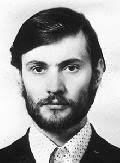
Vyacheslav Igrunov, b. 1948
*
In Odessa four searches took place the same day, followed by two more a few days later: at the homes of Leonid Tymchuk, Anatoly Katcho, Pyotr Osherovich and others. On 11 March a search took place at the home of A. Rykov in Moscow.
The searches and interrogations of Igrunov, Kursa and others in August 1974 were reported in CCE 34.7.
*
[7]
LENINGRAD. In the autumn of 1974 Alexander Georgievich ABRAMOV (about 30 years old), a fifth-year student at Leningrad State University, was detained and jailed for 15 days.
After six days in police custody, Abramov was transferred to Liteiny Avenue (the KGB Prison). There he gave the names and addresses of 57 people, including his father, who had in their possession manuscripts written by Abramov that the investigator termed ‘anti-Soviet’ (the philosophical works “Man in the World” and “Marxism, a Stage in the Spiritual Development of Man”) and tape recordings of readings from The Gulag Archipelago. All those in possession of these manuscripts and tapes surrendered them when asked to, without any search warrants being presented.
On the last day of his detention on Liteiny Avenue, Abramov wrote four reports, at the investigator’s suggestion:
- “The Role of Leningrad Cafes in the Formation of Anti-Soviet Views among Young People” (i.e., the so-called ‘Podmoskovye’, ‘Olster’ and ‘Sphinx’ cafes);
- “The Ideological Situation in Leningrad State University”;
- “The People who Led me to anti-Soviet Views”;
- “My Path to these Views”.
(The titles are inexactly quoted.)
Among the people who “led him to anti-Soviet views” Abramov named his teacher, the philosopher M. Kagan.
It is known from Abramov’s own words that he sent his father a note, through other 15-day detainees, asking him to destroy the manuscripts and tapes at home. It is possible that his transfer to the KGB prison had something to do with this. After 15 days there, he was released.
*
[8]
V. N. Nikitenkov (CCE 19.11 [1], CCE 24.11 [2]) has been transferred from the Kazan Special Psychiatric Hospital to the Taldom psychiatric hospital in the Moscow Region.
*
[9]
On 14 February Pyotr Starchik was released after 18 months of compulsory medical treatment. He was arrested in the spring of 1972 (CCE 28.5).
*
[10]
In 1972, Anatoly Dmitrievich PONOMARYOV (CCE 26.5) was released from the Leningrad Special Psychiatric Hospital. He had been held for compulsory medical treatment there in connection with charges under Article 190-1.
Recently, in September 1974, Ponomaryov sent a letter to the Presidium of the USSR Supreme Soviet asking to be allowed to go abroad, as he could not obtain employment anywhere in his specialised field. (Ponomaryov graduated from an Army Mechanics Institute.)
On the same day he was summoned to a psychiatric clinic and forcibly incarcerated in a psychiatric hospital. He is now in the Skvortsov-Stepanov Psychiatric Hospital No. 3 (Leningrad) in the eighth wing, reserved for the most serious cases. He is not being subjected to medical ‘treatment’.
*
[11]
The story of A. P. Kozlov in CCE 34.17 broke off in May 1972.
It has since become known that in September 1972 Kozlov was under psychiatric examination in the Serbsky Institute, Moscow, He was declared to be not responsible, but compulsory treatment was recommended for him in an ordinary hospital. After the diagnosis Kozlov was taken back to Tomsk in west Siberia.
*
[12]
MOSCOW. Yury Petrovich BROVKO (b. 1939), a physicist and a junior research scientist at the All-Union Research Institute on Pipeline Construction [VNIIST], managed to get into the Swedish embassy, on 25 January to ask for advice on the possibility of renouncing Soviet citizenship.
On emerging from the embassy, he was grabbed and taken to the Kashchenko Psychiatric Hospital. He had never had any psychiatric treatment before this and was not on any psychiatric register.
*
[13]
YEREVAN (Armenia). On 4 December 1974 Alexander Malkhazyan was forcibly placed in a psychiatric hospital. Malkhayzan is known to have been contemplating leaving the USSR.
*
[14]
MOSCOW. On 14 February 1974 Nikolai Nikolaevich KRYUCHKOV (son of the well-known film actor) sent a statement to the Presidium of the USSR Supreme Soviet asking for permission to emigrate.
After the Visa & Registration Departyment (OVIR) refused to consider his request — because he had received no invitation from abroad — Kryuchkov sent another statement on 2 April to the same address: “I ask to be deprived of my Soviet citizenship and allowed to emigrate to the United States of America.” There was no answer from the Presidium.
However, on 17 May 1974 Kryuchkov was asked to come to the district psychiatric clinic for a talk with a doctor. On 22 June, during Nixon’s visit, he was forcibly incarcerated in the Kashchenko psychiatric hospital. The report which accompanied him stated: “Reason for hospitalization — his wish to emigrate from the USSR.” On 5 July 1974, Kryuchkov was discharged from the hospital.
*
[15]
VINNITSA (Ukraine). Baptist Nikolai Mashnitsky is trying to obtain permission from the authorities to emigrate to Canada with his family. He is now having difficulty in finding a job. It is reported in this connection that he may be in danger of prosecution for ‘parasitism’.
Mashnitsky has eight children, five of whom are still minors. He himself was recently released from imprisonment after serving a sentence for his religious activities.
*
[16]
VALERY BUIKO
RIGA (Latvia). Valery Buiko (33), an engineer and mathematician, has been trying for about two years to get permission to emigrate to Israel with his family.
In August 1972, before he had even applied for an exit visa, he tried at the Riga branch of OVIR to clarify the legal basis of the tax then introduced on education. Soon afterwards he was dismissed from the Latvian SSR Institute of Electronics ‘because it had been discovered that he was unsuited for his job’, for which he had only recently been chosen by competition. After he had tried for eight months to obtain work in his specialized field he got a job as a stoker, and later as a consultant coach. He was dismissed from this job for non-existent absenteeism.
In June 1973 Buiko and his wife applied for exit visas, but in September their application was turned down on the grounds of opposition from their parents. V. Buiko’s father, a retired lieutenant-colonel, insists that his son should pay compensation: 10,000 roubles to himself (return of allowances) and 12,000-15,000 roubles to the government (for his education and training). He has also asked the authorities in any case not to allow V, Buiko to leave, so that he can honourably pay back by work the education he has received and because his profession is so necessary for the country.
V. Buiko’s father-in-law, a retired colonel and a Hero of the Soviet Union, protested against his daughter’s emigration with her Jewish husband. He demanded that they be brought to criminal responsibility for Zionism and lack of patriotism.
In October 1973 V. Buiko was arrested, together with a group of Jewish activists, while taking part in a protest demonstration at the TASS building in Moscow. A month later he was detained again. On 6 December 1973, the day before a Jewish meeting to commemorate the victims of fascism at Rumbuli (near Riga) which was broken up by the authorities (three people were arrested and detained for 15 days), V. Buiko was taken away from his place of work by the KGB. They tried to obtain from him a statement about the circumstances which led to his ‘criminal activity’, and also denunciations (in particular of Ladyzhensky, who was arrested on the same day).
After V. Buiko had refused to take part in such a ‘discussion’, his flat was searched. At the end of February 1974 a second search was carried out at his place of work (i.e., at the stoking-hold). Both searches were connected with the case of Ladyzhensky and Korovin (CCE 32.20 [4]).
In May 1974 Buiko received two summonses from the military commissariat, asking him to report to a medical board. Buiko refused in writing to report, referring to the fact that the Law on Universal Military Obligation does not require a reserve officer to attend a medical board.
On 26 May Buiko was told by the military commissariat that ‘the Soviet Army has no need of him’. However, in the autumn Buiko again received a summons,
(On Buiko see also “Samizdat Update” in this issue CCE 35.12 [12].)
*
[17]
RIGA (Latvia). For the last four years Moshe Eidelman and his wife Feige have been refused permission to emigrate to Israel on grounds of the ‘secrecy’ of his former employment. (Until 1971 Eidelman was captain of a merchant ship.)
Eidelman is 59 years old; he spent four years in a Nazi concentration camp. His wife was on active service during the Second World War; at the present time she is seriously ill.
The Eidelman family applied for emigration in 1971. Since then, M. Eidelman has either had to work as a loader or has been unemployed. The Eidelmans’ only daughter and their grandchildren are in Israel.
On 29 March 1975 Moshe Eidelman appealed ‘to all the world’s Jews’. In his appeal he says: ‘I have exhausted every possibility of appeal in the USSR. I have also appealed to world public opinion. I now appeal to my own people … Help me to emigrate to Israel — to my daughter, to my Homeland, to our people.’
*
[18]
At the end of February Victor Krasin (CCE 30.2) and his wife Nadezhda Yemelkina (CCE 23.2) left the USSR.
*
[19]
NIKOLAYEV (Ukraine). A search was held in October 1974 at the home of Victor Utkin. No warrant was displayed. After the search was over, KGB officials talked to several staff members at the Southern Turbine Factory, where Utkin works: all had to promise in writing not to reveal what was said.
The search took place, it is thought, because of rumours that Utkin had sold or was about to sell a copy of Solzhenitsyn’s novel August 1914.
*
[20]
GATCHINA (Leningrad Region). Vladimir Antonovich SHVARTSMAN (b. 1945), was dismissed from his job in the city of Gatchina (pop. 73,000; 1976) after two ‘prose poems’ by Solzhenitsyn (“Segden Lake” and “In Yesenin Country”) were found in his work-table.
The district soviet executive committee is preventing Shvartsman, it is reported, from obtaining another job.
*
[21]
TALLINN (Estonia). Three lecturers in the Russian Language Faculty at the Pedagogical Institute — Boris Maslov, Vitaly Belobrovtsev and his wife, Irina Gazer — was dismissed in January 1975 for reading Solzhenitsyn’s story “The Right Hand”.
*
[22]
ODESSA (south Ukraine). Anna Golumbievskaya, earlier dismissed as a schoolteacher for sympathizing with Solzhenitsyn (CCE 34.15 [2]), is being threatened with a psychiatric examination. This was said to Golumbievskaya’s colleagues on 4 January in the district Party committee.
*
[23]
MOSCOW. In the autumn of 1974 Tsapenko, a 5th-year student of Moscow University’s biological faculty and a Party bureau member, was expelled from the Party and from the university because he had tried to send through the post a parcel containing works by Solzhenitsyn.
During the investigation of his case he said that he considered the dissemination of Solzhenitsyn’s works to be a communist’s duty.
*
COMMUNIST PARTY (24-25)
[24]
At the beginning of March closed Party meetings took place in many Moscow Party organizations, at which the necessity for increased vigilance in connection with the intensification of the ideological struggle was discussed.
Any samizdat which found its way into the hands of a Party member had to be taken immediately to the district committee.
*
[25]
On 19 February a meeting of the activists of the Party organization of the State Committee for All-Union Radio and Television was addressed by Boris Dmitrievich VINOKUROV, head of the cadres section for the technical services given to the Committee’s organizations and enterprises.
Things were in a bad way, he said, not only with regard to propaganda but also in the economy: our society was close to collapse, he said. The only means he could see of rectifying matters was the establishment of a two-Party system. Vinokurov announced his intention of organizing a second political party and renounced his membership of the CPSU. He ended his speech by saying: “After all, someone’s got to make a start!”
Of those present the well-known columnist Valentin Zorin reacted most surely: “This man is a class enemy, we must dissociate ourselves from him!” After him Agapov, an official of the Central Committee, spoke, saying that this was most likely not a provocation but something else, and that those present would merit the Party’s confidence by their behaviour (i.e. by their silence, Chronicle). Lapin, the chairman of the State Committee, spoke in similar vein.
On 24 February Vinokurov was taken to a psychiatric hospital.
At the beginning of March, at the next meeting of Party activists, it was announced that Vinokurov, along with his wife and daughter, was mentally ill. Vinokurov’s life story was outlined: he was a senior member of the Party; during the war he commanded a partisan battalion, and was awarded many medals and decorations. Recently, the rapporteur stated, Vinokurov’s state of health had deteriorated; he gave the name of the doctor who had come to this conclusion.
*
WEST UKRAINE (26-29)
[26]
WEST UKRAINE. On 14 January 1975 a car containing three men in civilian clothes and a local policeman drove up to a house inhabited by three old nuns (Lyubenki village, Peremyshlyansky district).
They carried out a search, confiscated prayer-books, took down embroidered blinds from the windows and threatened the nuns, saying they would be sent to Siberia.
*
[27]
On 22 December 1974 the apartment of the priest Vinnitsky in Lvov was also visited by men who drove up in a car and made out a list of all those present (33 people).
They fined each person present 10 roubles, and Vinnitsky 50 roubles, for holding an illegal church service in a home; they confiscated a chasuble and other garments, books and clerical cuffs.
*
[28]
The priest Bilinsky, sentenced in 1946, lived in the Lvov Region after his return from the camps. He was registered in the Odessa Region, however, as he had been refused registration in the western Ukraine.
In June 1974 Bilinsky was arrested and sentenced to three years imprisonment for conducting services in a church whose closure had been ordered in the autumn of 1973.
*
[29]
UKRAINE. In the autumn of 1973 the priest Dmiterko was arrested in Kolomiya. He was suspected of being a bishop.
The priest Ivan SIezyuk also faced the same suspicion. (Slezyuk died at the end of 1973, soon after the arrest of Dmiterko.) At the same time, the priest Petro Chuchman was arrested for conducting services at his home.
(Evidently the above reports refer to priests and believers belonging to the Uniate church, Chronicle).
*
[30]
INDEPENDENT EXHIBITIONS
MOSCOW. After the well-known Izmailovsky Park exhibition, two more exhibitions by independent artists have taken place: in December 1974 at the Central Hall of Russian Art, and on 19-25 February 1975 in two galleries in the ‘Bee-Keeping’ Pavilion at the All-Union Exhibition of Economic Achievements (VDNKh).
The latter exhibition was the subject of “The Avant-Garde of the Petty Bourgeoisie”, an article in Vechernyaya Moskva [Evening Moscow], 10 March 1975, signed by V. Nekhoroshev, chief editor of the Creation [Tvorchestvo] magazine. Nekhoroshev severely attacks ‘avant-gardists’ in general, and those who took part in the exhibition in particular. However, the author expresses the noteworthy idea that such exhibitions should be held, even in future — so that the people become convinced of the worthlessness of such art.
A similar exhibition was held in Leningrad in December 1974. It is reported that the authorities imposed as a condition for the holding of this exhibition the exclusion from it of “anti-Soviet material, religious propaganda and pornography”.
*
[31]
MOSCOW. Lev Bruni has been prosecuted for refusing to give evidence in the case of the artist Mukhametshin (CCE 34.7 [3]).
*
[32]
GASTEV
MOSCOW. In November 1974, 11 lecturers in the Philosophy Faculty of Columbia University (USA) sent a letter to Academician Keldysh (head of the USSR Academy of Sciences), asking him to defend Yury Gastev, the Moscow mathematician and philosopher, from the pressures being exerted on him.
Twenty-three Canadian mathematicians sent a telegram to the same address protesting against the persecution of Gastev and the cybernetician Grigory Rozenshtern. At the end of January the management of the ‘Orgenerstroi’ Institute, where Gastev works, informed him of these communications and asked him to explain the reason for them and to describe his situation. In a memorandum addressed to the institute director, written at the latter’s request, Gastev explained that the letters in his defence by Moscow scholars, and later from scholars abroad, had been provoked by “the unfounded actions of the investigative authorities”, searches and interrogations in connection with the Veche case (CCE 32.16).
Gastev stated that his working conditions at the institute were normal. On 20 February Gastev sent letters to the authors of both appeals, thanking them for their intervention and informing that at present there was no cause for alarm.
*
[33]
MOSCOW. During a search in December 1974 (CCE 34.7 [10]) the KGB confiscated from Andrei Tverdokhlebov, among other things, a typewriter belonging to someone else. The owner of the typewriter brought an action against Tverdokhlebov, demanding that the latter should return his typewriter to him.
In February 1975 a people’s court ruled that the defendant was required to return to the plaintiff either his typewriter or its value (with depreciation taken into account). Tverdokhlebov appealed against this decision to the Moscow City Court.
At the beginning of March the appeal hearing began. Tverdokhlebov explained to the court the reason why he had not returned the typewriter and tried to get extracts from the search record admitted as evidence, together with his letter to the Lithuanian KGB asking for the immediate return of the typewriter, and the reply from Vilnius stating the impossibility of fulfilling his request until the investigation had been completed. The Court refused to admit these documents as evidence and upheld the decision of the people’s court.
*
[34]
AEROFLOT. Before entering aeroplanes, passengers are subjected to a search of their hand baggage.
A decree of 19 March 1971 allows this procedure “where there is sufficient reason to suspect passengers of intent to take with them objects constituting a threat to the safety of the aeroplane or the passengers”. At Moscow Airport, during one such search, a copy of the 1908 collection Vekhi [Landmarks] was confiscated; at another, Nadezhda Mandelstam’s memoirs.
*
[35]
TBILISI (Georgia). A. Inauri, head of the Georgian KGB, made a personal telephone call to the Tbilisi Collegium of Barristers and forbade them to accept David Koridze, former assistant to the procurator of Kirov district, for employment as a barrister.
Koridze had been dismissed (on a pension) from his job for attempting to investigate the thefts and corruption in the Patriarchate, in which KGB officials were involved (CCE 34.13).
*
[36]
MOSCOW. The engineer Alexander Gorlov, dismissed from his job in February 1973, has decided to leave the USSR following eleven unsuccessful attempts to obtain employment in his specialized field.
Gorlov is a friend of the Solzhenitsyn family. In 1971 he witnessed by chance a clandestine search at Solzhenitsyn’s dacha and was beaten up by the agents carrying out the search (CCE 21.4).
*
[37]
LVOV (West Ukraine). Former political prisoner Mykhaylo Gorin [Ukr. Horyn] is being refused a residence permit for Lvov, where his wife and two children (12 and two years old) live. (Sentenced to six years imprisonment in 1965, under Article 62 of the UkSSR Criminal Code, he was released in 1971, CCE 21.10 [11]).
Horyn, a psychologist and author of a number of published academic works, is currently working as a stoker. He is about to be dismissed from this job as well, however, because he has no residence permit.
*
[38]
TARTU (Estonia). The zoologist Mart Niklus (CCE 13.10 [15], CCE 15.1), who served eight years in the Mordovian camps (he was released in 1967), is still not being given work in his specialized field.
Niklus completed translations of three works by Charles Darwin while in the camps but they are not being published. These are the first translations of Darwin into Estonian.
*
[39]
TOBOLSK (Siberia). In February the five-year exile of Boris Vail ended. (For his trial and that of Revolt Pimenov, see CCE 16.2.)
*
[40]
UST-ABAKAN (town in Khakassia). The term of exile of Sergei Khakhayev has ended. (Member of a Marxist circle in Leningrad, he has spent seven years in the camps and three years in exile [2].)
*
[41]
MOSCOW. On 5 December 1974 the traditional ‘minute of silence’ was held on Pushkin Square.
*
[42]
NEW YORK. Khronika Press has published Nos. 11 and 12 of A Chronicle of Human Rights in the USSR (CHR) in English. It has also issued No. 32 of A Chronicle of Current Events (in Russian) and announced the imminent appearance of No. 33.
Khronika Press has printed Andrei Tverdokhlebov: in Defence of Human Rights, a collection compiled by Valery Chalidze.
======================================
NOTES
- As this publication is edited by Valery Chalidze and others in New York, these copies must have been typed out from printed originals.
↩︎ - See “The Bell Affair”, Joffe Foundation, 2015: Valery Ronkin, Sergei Khakhayev, Vladimir Gayenko, Venjamin Joffe and Valery Smolkin.
↩︎
===========================
 A Chronicle of Current Events