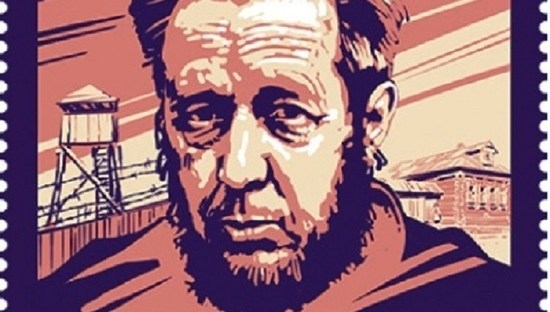
- 20-1. “Letter to the Soviet Leaders” (Solzhenitsyn, 1973)
- 20-2. From Under the Rubble (1974)
*
“From Under the Rubble”: A collection of articles
Moscow, Samizdat; Paris, YMCA Press, 1974 [1]
The introduction to this volume (dated 14 November 1974) is written by Igor R. Shafarevich. He states that the original idea for it was Solzhenitsyn’s. His enforced exile held up the last stage of the work.
Shafarevich explains thus the aim of the volume:
“To formulate those spiritual questions, the answers to which would give us a firm foundation in life; to take the first steps towards discussing these questions, and to investigate their links with social and economic problems — this is what the authors were trying to do.”
Taking as examples four problem-areas — the rural village, religion, the labour camps, emigration — Shafarevich shows that “the problem of any concrete aspect of human freedom is bound up with the question of spiritual life”.
There are 11 articles in the collection. Some notes on these follow:
(15 entries)
*
[1]
Alexander Solzhenitsyn
“As Breathing and Consciousness Return”
An article polemicizing with Sakharov’s treatise Reflections on Progress, Peaceful Co-Existence and Intellectual Freedom.
*
[2]
Igor Shafarevich, “Socialism”
The author argues on the basis of wide historical research that socialism is not a product of the last few centuries. The socialist ideology has been a powerful moving force throughout the history of mankind. It has inspired influential social movements and has been applied in a number of governmental systems.
The basic characteristics of the socialist ideal which are common to the various schools of socialist thought are: (1) equality, the destruction of hierarchy; (2) the abolition of private property; (3) the destruction of religion; (4) the destruction of the family. All these can be reduced to a basic goal — the destruction of individuality, which is equivalent to the death of Man. “The organic bond between socialism and death is subconsciously or consciously perceived by its adherents, but they are not repelled by this: on the contrary, it is precisely this that creates the attraction of socialist movements and constitutes their motive force.”
*
[3]
Mikhail Agursky
“Contemporary Socio-Economic Systems and Their Future Prospects”
He lists the shortcomings of the modern capitalist and communist systems and outlines an optimistic picture of a future society based on the premise that man will in future be governed by spiritual and moral values.
*
[4]
Igor Shafarevich
“Individualization or Standardization? (The Nationalities Question in the USSR)”
The intensification of nationalism which has taken place everywhere in the 20th century is linked with the concrete realization of socialist ideas in the form of socialist states. In order to seize power the proponents of socialist- Marxist ideology encourage patriotic feelings among small and dependent nations: having established themselves in power, they oppose the tendency to national individualization by their hostility to the very idea of a nation.
The truly worthy aim is not the partitioning of humanity into national atoms, but the spiritual development of all nations and their determination to learn to live together without oppressing each other.
*
[5]
V. Borisov, “Personality and National Self-Awareness”
The Christian conception of national self-awareness as a recognition of the unique identity of each nation is here seen in opposition to the ideologies of both universalism and nationalism, which arc born of atheistic and rationalist doctrines.
*
[6]
Alexander Solzhenitsyn
“Repentance and Self-Limitation in the Life of Nations”
Social groups such as nations and states can and must be subjected to ordinary moral assessment and classification. The formation and establishment of a moral ideal is the basis of every nation’s life, its spiritual health and self- awareness.
In order for Russia to experience a renaissance, the most important conditions are repentance and the transition from outward expansion and endless quantitative progress to a new national aim of self-limitation and inner spiritual development. This could be the basis both for resolution of the country’s most difficult inner problems and for the normalization of its international relations.
*
[7]
F. Korsakov: “Russian Destinies”
To the memory of Father Pavel Florensky. Concerns each man’s unique path in life.
*
[8]
Yevgeny Barabanov, “The Church and the World”
On developing trends in the Russian church and Christian consciousness.
*
[9]
A.B., “The Direction of Change”
“The author observes a gradual return to Christianity and “a rejection of positivist philosophy”. Now is the moment of choice, the breaking point. The only road that leads to liberation for man and society is the road of inner spiritual renewal.
*
[10]
Alexander Solzhenitsyn, “The Smatterers”
The author compares the Russian intelligentsia of today with that of the pre-revolutionary era, as evaluated in the collection Vekhi (1908). The historical stages by which the intelligentsia was diluted and lost its identity among the educated classes in general, among the “smatterers”, is investigated.
Solzhenitsyn polemicizes with Altayev, S. Telegin, Grigory Pomerants and Gorsky (in their samizdat works and those published abroad). “The habit of thinking” and “spiritual self-consciousness” are not yet signs of belonging to the intelligentsia.
Spiritual purity, self-sacrifice and non-complicity in mendacity are the only qualities which denote the core of the intelligentsia, around which the spiritually amorphous masses will crystallize. Such people should perhaps be named “the duty-conscious elite” or “the just men”. Their appearance cannot be described as a phenomenon in terms of class or social origin.
*
[11]
Igor Shafarevich, “Does Russia Have a Future?”
The article opens with the statement that for a great country life means having a mission in the world. Disagreeing with Amalrik, who prophesied only death and disintegration for Russia, the author points to a way out — the spiritual rebirth of the country. This can only come about through the efforts of individuals.
The experience of history does not contradict such a possibility. Its realization will begin with rejection of pseudo-values, by which the majority of people in our society now live, in favour of freedom and spiritual purity. This is the path of sacrifice, but only seeming sacrifice. Russia’s advantage is that our historical experience makes clearer the unique necessity of this path.
***
[12]
Nikolai Bokov
“Contact with the KGB as a Psycho-Sociological Phenomenon” (8 pp.)
Normal behaviour allows one to avoid contact with the KGB as a defendant or a suspect. This normal behaviour is conditioned by fear and is a product of the ethical climate of Soviet society. The chief characteristic of education for normal behaviour is prohibition of free expression of one’s opinions or wishes.
The author emphasizes the contradiction between the common morality of humanity, which emphasizes the importance of conscience and individual freedom, and Soviet morality, where the most important thing is individual survival. “Physical existence is perceived as the supreme value and drives from the consciousness the purpose of existence.”
The particular position of the KGB in Soviet society gives its officials an elevated sense of their own importance and allows them to identify themselves with the State: a self-centred view of the State emerges, which psychologically excludes the possibility of an independent court or an independent interpretation of the law.
The author hypothesizes that the spreading of education and a raising of the importance attached to human intellect will lead to a change in the ethical climate and the disappearance of this self-centred view of the State. In the field of legislation this will be expressed in a greater concern for detail and formalism in legal concepts.
*
[13]
Alexander Solzhenitsyn
“To the Third Assembly of the Russian Church Abroad”
On the suggestion of Metropolitan Filaret A. I. Solzhenitsyn has spoken out on the theme “How the non-persecuted part of the Russian Orthodox Church can help her persecuted, captive part”. Describing the Church’s situation in a State which, in spite of the concessions and promises made in 1943, continues to repress it and tolerates it only to the extent that “it is needed as political decoration”, Solzhenitsyn notes that because of an unforeseen spiritual movement, “the Church has begun to gain in power — not as an organization, but as a spiritual body — a power not sanctioned by the authorities but no longer fully controllable by them”. The contemporary Russian Church, having endured cruel persecution, and restricted in regard to all civil rights, is alive and strong in the spirit of the believers and new converts.
Turning to the situation of the Russian Church abroad, Solzhenitsyn says that “here one is once again amazed at the depth of dissention in our Orthodox Church”. It is hard to justify the mutual antagonisms of the free Russian Orthodox churches abroad.
Solzhenitsyn’s main appeal to the Russian Orthodox Church, both free and captive, abroad or in the homeland, is “to admit its own sins and mistakes, not those of others”, to repent of them and to develop “through self-discipline and self-limitation”.
*
[14]
Letter of Father Gleb Yakunin to the Rt. Rev. Pitirim,
Chief Editor of the Journal of the Moscow Patriarchate, 20 November 1974
The author writes on the subject of an interview given by Pitirim which was broadcast in a BBC religious programme on 3 November 1974. He regards as a deviation from Orthodoxy Pitirim’s answers to questions about the religious education of children and about whether the Church should organize charitable work.
*
15]
EGO: “On the Problems of a Social Movement” (30 pp.)
This work is dated 1972. It contains an analysis of the democratic movement from 1966 to 1972, at least of one part of this movement. References are made to the declaratory nature of the democrats’ demands and to the fact that these are known to be impractical, both on account of the opposition of the authorities and the unpreparedness of society and also because of the lack of capacity for practical action shown by members of the movement. They have limited themselves to the fight for liberties, but have not been able, and have not tried, to make use of them, and have had little influence on the growth of an inner spiritual culture. These circumstances, and also the uncompromisingly legal nature of the opposition, have led to the destruction of the movement itself.
The positive role of the democratic movement lay in the fact that it united the forces of opposition. But the time for intuitive actions and for defining moral positions has gone; it is now time for planned activity. The author speaks of the necessity for dissenters to co-exist with the existing State system — while retaining their independence of thought and trying gradually to re-educate society. At the same time, it is essential for them to form a new spiritual culture of their own — not opposed to the State but existing independently of it. Thus, a threefold oppositional structure will emerge; a cultural opposition, within that a social opposition, and at the very centre a political opposition. Such a structure will make the opposition less vulnerable, while raising its general spiritual level and thereby preserving it from dangerous extremes.
In a supplement, the author suggests a few practical measures for storing and distributing samizdat.
==========================================
NOTES
- From under the Rubble end note
↩︎
 A Chronicle of Current Events