SEVEN ITEMS.
ANDREI SAKHAROV (1-4)
[1]
On 9 July 1974 Academician Sakharov made an appeal to the scientists of the world.
He called on them to come to the defence of Valentin Fyodorovich TURCHIN (D.Sc., Physics and Mathematics) [1],
“who has now had all possibility of scientific and pedagogical work barred to him; he has been condemned to unemployment and privations . . . because in a statement published in the West in September 1973 he defended and explained my views on international problems.”
*
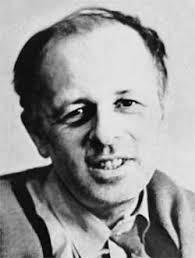
Andrei Sakharov (1921-1989)
*
[2]
On 17 July 1974 Academician Sakharov and Igor R. Shafarevich, a Corresponding Member of the USSR Academy of Sciences, appealed to ‘the world scientific community’ in a similar letter in defence of Yury Fyodorovich ORLOV [2], Corresponding Member of the Armenian SSR Academy of Sciences.
*
[3]
On 2 August 1974 Academician Sakharov appealed to the participants in the World Mathematical Congress of 1974 (in Canada), calling on them to adopt a resolution in support of Leonid Plyushch and to make every possible effort to save him.
*
[4]
On 2 August 1974 A. D. Sakharov issued a ‘Statement for the Press’ in which he called the attention of world public opinion to the fact that yet another foreign journalist, Julian Nundy, a Reuters correspondent, had been effectively expelled from Moscow.
In his statement Sakharov said:
“I knew Nundy personally. I wish to attest that … he always fulfilled his duties as a journalist accurately and honestly. This person could be relied on. It was precisely because of this that Nundy turned out to be persona non grata for the Soviet authorities.”
*
On 22 August 1974, in connection with the publication of Sakharov Speaks in the West, Sakharov gave an interview by telephone to the BBC’s Russian section.
During the interview he said:
“In the course of these years (1968-1974) my views have, I believe, acquired more depth, in the sense of a clearer understanding of the spiritual, social and economic crisis of the socialist system …
“I believe that there can be no question of disarmament, of reducing the dangers of armed conflict, of aid to underdeveloped countries or of preservation of the world’s food supply, if at the same time the problem of trust between different countries is not resolved. But this trust is inseparable from a free exchange of information, free speech and the defence of individual rights, I attach particular significance to the question of free choice of one’s country of residence. I am not calling for an overloading of the ship of detente, as some have accused me of doing. But I am convinced that if this ship does not have a solid cargo of universal human values on board, it will be in danger of overturning.”
Asked ‘Are you an optimist?’ A. D. Sakharov replied:
“I am an optimist in the philosophical sense: I believe in the power of the human spirit over even the most tragic of circumstances, I believe in the power of good.
“As to more concrete views of the future — I avoid such prophecies; about this I am an agnostic.”
*
[5]
On 16 April 1974 Oksana Meshko, the mother of Alexander Sergiyenko (CCE 30.8), sent an appeal to the authorities in which she outlined in detail the lack of evidence on which her son was convicted and referred to her son’s serious health condition (Ukr. Oleksandr Serhiyenko).
She asked the authorities to “help obtain a review of A. F. Sergienko’s case and the redefinition of his crime under Article 187-9 (UkSSR Criminal Code = Article 190-1, RSFSR Code) on the basis outlined by his defence lawyer,” and to “annul his three-year period of prison regime”.
*
[6]
On 2 December 1974 in an Open Letter, Malva Landa appealed to “Defend Soviet prisoners of conscience!”
*
[7]
On 14 November Mikhail Agursky made a statement at a Moscow press conference about the publication of the collection of essays, From Under the Rubble.
In spite of the ostensible incompatibility between the aims of the Russian and Jewish national movements, he said
“we are united by many common ideals of humanity, by the grave national crises we are both experiencing, by the task of choosing national aims.”
These aims were not antagonistic to one another.
“On the contrary, in our concern for the future we are both also trying to define and solve many cultural, social and economic problems, while at the same time we believe that the basic problem is one of spiritual renaissance.”
===========================================
NOTES
- A founding member of the short-lived Soviet section of Amnesty International (1973-1976, CCE 34.18 [1]), Valentin Turchin left the USSR in October 1977 (CCE 47.8-3).
↩︎ - Yury Orlov later headed the Moscow Helsinki Group from its foundation in May 1976 until his arrest (CCE 44.7) in 1977 and conviction in May 1978 (CCE 50.1). In October 1973, he was a founding member of the Soviet section of Amnesty International.
↩︎
=======================
 A Chronicle of Current Events