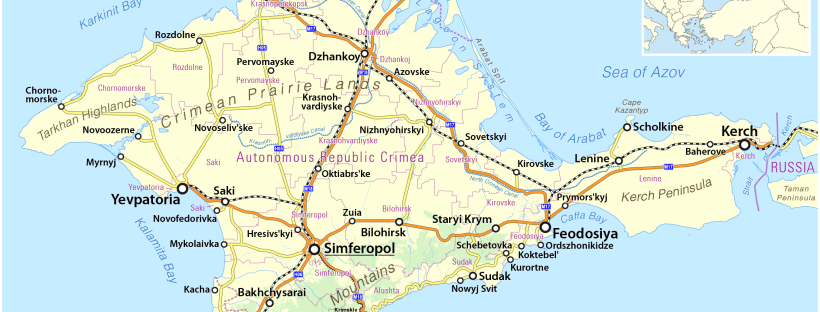
The summer-autumn 1976 campaign of repression in the Crimea, involving trials and evictions, see CCE 40-43 [1], finished, for the most part, in November 1976. Since February 1977, the authorities have begun to register Crimean Tatars. Registration ‘of all’ has been promised: more details of this are given at the end of this report.
***
An incomplete list is available of those convicted for “violating the residence rules” (Article 196, UkSSR Criminal Code), for the most part in 1976.
The list includes 46 people:
- 29 were sentenced to terms of exile (the majority for two years, but three convicted in 1975 for five years);
- nine people were given suspended sentences, but with compulsory labour as directed by the Ministry of Internal Affairs (MVD), almost all for a period of two years;
- Three people received suspended sentences. Three men were sentenced to imprisonment: Enver Reshatov, (CCE 41.9, the surname is misspelled there), Musa Mamut (CCE 51.13) and Zubeir Kalafatov (55 years), sentenced in November 1976 to one year’s imprisonment.
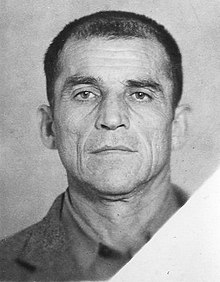
Musa Mamut (1931-1978)
*
As far as is known, the last trial took place on 3 January 1977.
Khalid Bilyalov, from Stary Krym, a Group II invalid and father of three children, was sentenced by the Kirov district court to three years in exile. On appeal the Regional Court replaced the sentence with a 50-rouble fine.
*
More detailed information is known about some of the trials.
*
Mukhsim Osmanov lives with his family in Belogorsk. He is a Group I invalid, being blind; he lost his sight at work.
The institution of a criminal case against him under Article 196 was reported in CCE 42.7. The trial was fixed for 27 September 1976, Osmanov refused to travel to the trial, declaring that he had filed a complaint about the illegal way in which his case was conducted. A group of policemen led by V.Ya. Babich, head of the Belogorsk district office of internal affairs, took him to the trial by force. When they seized Osmanov an indignant crowd gathered. Lieutenant-Colonel Babich hit one of the protesters, Servet Mustafayev, in the face.
At the trial it was confirmed that the investigation had been conducted with a violation of the law, specifically, the police investigator Captain Ozhegov did not let the blind Osmanov use the services of a lawyer. Osmanov was not able even to study the case against him. The court remitted the case for further inquiry. The second hearing took place in November under the chairmanship of Judge Kordyukov. Osmanov was given a suspended sentence of two years’ imprisonment.
*
At the trial of Enver Ametov on 18 October 1976 (sentence, two years exile from the Crimea, CCE 43.11) the Crimean Tatars present in court handed in a statement with 41 signatures to the judge.
They demanded that the court reveal the real reasons for the violation of the residence rules. “The court should not avoid the question of who is not registered and why they are not registered.” Otherwise, it says in the statement, it will be clear that “it is not a trial of Enver Ametov that is taking place, but judicial tyranny penalizing his membership of a nation. Today, 18 October, is a significant day for the Crimean Tatar people, the day of the signing of the Decree on the Formation of the Crimean ASSR by the great Lenin. So we hope that Soviet justice will not allow lawlessness and tyranny to be perpetrated.” The statement was handed to Judge Kordyukov.
*
At an appeal hearing, the Regional Court changed the punishment of Shevet Arnautov, sentenced on 1 September 1976 to two years of strict-regime camps (the court took into account his previous conviction for a car accident) to a two-year suspended sentence with compulsory labour.
In this way he got the same as those sentenced at the beginning of September by the same court — Abibulla Khalilov, Ridvan Useinov, Ablyakim Yagyayev and Reshat Shabanov (in CCE 42.7 their sentences were given inaccurately). At the end of November 1976, they were sent to building sites in the Kharkov Region. Their fingerprints were taken beforehand.
***
A Procurator Speaks
The day after the eviction of the family of Refat Nafeyev (an excerpt from a statement by his wife Zulfiyur was given in CCE 43.11), which took place in November 1976 in the village of Voinka, the procurator of the Krasnoperekopsk district, Fedchenko, met the Crimean Tatar inhabitants of the village.
He told them (the words of the Procurator are quoted here verbatim, Chronicle):
“For those who come here on, let’s say, an impulse, there are limitations for this category.
“In all such cases of unplanned arrival — until the government permits mass immigration — we bring lawsuits, annul these contracts [on house purchases] and put the parties back into their original positions. It was like that not only with Refat Nafeyev and his family: there are a mass of other families who have come of their own accord, bypassing the permission of the relevant bodies. Then there were court rulings to evict them.”
After this Procurator Fedchenko explained the relevant judicial procedure. In the case of Nafeyev, he added, the house had been sold by the mother of the real owner, who was living in Yalta, without his consent. He continued:
“… all this was done within the framework of the law. If anyone does not agree, in particular the Nafeyevs, I do not think that it should lead to a breaking of glass and violation of public order, because you will bring things to such a point that you will be deported in one evening, as in the fateful year of 1944.
“… Both police officers and the court are aware … that children have been thrown out on to the street; we understand this, but we had no other way. You can complain wherever you like, but we have no other way. If we appease these families and don’t touch them, don’t grab them, then a terrible number will come here. Do you see? Then it would be — give us schools in our native language, kindergartens in our native language, and so on …”
(Interjection: “So that’s what you’re afraid of!”)
“Up to now the authorities have not decided on a mass resettlement…
“As for the allegedly illegal actions by police officials, an investigation will be carried out in this matter… we will summon the vigilantes and question them … If there were illicit, illegal methods … But they were in the right — after all, it was forcible eviction — you take people by the arms and lead them out.”
Someone cried out: “Sinyavsky [the local policeman] hurled children over a fence.”
Zulfiyur Nafeyeva then spoke herself:
“We said: ’Let us in, we want to warm ourselves,’ but Sinyavsky said: ’You’ll die, then we’ll bury you. There’s lots of earth, so we don’t grudge it’.”
The Procurator: “Well, if he said that he’s a fool… we’ll check with him.”
In the argument that ensued the Procurator said once again that the authorities were forced to act.
“If we don’t touch them, then it will start like in September last year when 15-20 families were coming at once, en masse; we won’t allow that.”
From the hall: “They’ll come anyway!”
The Crimean Tatars reminded Procurator Fedchenko that the 1967 Decree said that they could settle throughout the territory of the Soviet Union. and demanded: if there really was a law which said they did not have the right, as the Procurator said, to come to the Crimea of their own accord, then let him state it and give it a name.
The Procurator: “There are laws that are not published. For example, Korolyov was twice awarded the title of Hero of Socialist Labour [2], and these decrees did not appear anywhere.
“There are such decrees which are not made public and are only for official use. Decrees that don’t need to be trumpeted over there on the Voice of America … If there was a decree that allowed you to go to any comer of the Soviet Union, then no one would have started all this trouble … Look, you’ve been appealing to Moscow, Kiev, the Regional Soviet Executive Committee …”
(Interjection: “We have no one else to complain to!”)
The Procurator: “You don’t know how to complain? There are those who travelled to Sakharov and all over the place… We know where they went. Many of you know that Decree by heart.”
The assembled company continued to try to find out what laws there were besides the 1967 Decree. The Procurator stated that there was an official interpretation attached to the Decree which he was not obliged to show, and according to which [the return of Crimean Tatars to the Crimea] is permitted only if this forms part of a planned resettlement. Is that really not clear?
An elderly woman said: “In the newspapers it was very clear, that was why we came.”
They asked the Procurator how many Crimean Tatars could be settled each year.
“I don’t know, I do not receive that information. If we are given 200 families as part of a planned resettlement, then by all means 200 can live here.”
Procurator Fedchenko supposed that the number of persons of Tatar nationality to be allowed into any district was decided by the agencies of the Council of Ministers which manage labour resources; such information might be received by District Soviet Executive Committees.
The Procurator reproached ’his own’ Tatars for complaining, when there were already 500 of them in the district, and for not appreciating the better attitude to them here than in other districts like Bakhchysarai and Belogorsk, He said:
“Why don’t you go to Bakhchysarai? Because there they really persecute people, with no joking… There order reigns, and everyone knows there’s order, so no one goes there. Whilst in Perekopsk district, it’s like a wave of you have descended on us here.”
“We’re not treated as human beings,” said the Tatars. “You remove Tatars from their jobs so that they feel under pressure the whole time.” And, “There are 500 Tatars, but is there a single teacher of the Tatar language?”
Fedchenko: “32 nationalities live in Krasnoperekopsk and none of them demands teaching in its native language. Here you have the Ukrainian republic, not the Tatar republic, and the basic language is Russian.”
***
On 21 October 1976 the family of Rustam Nafiyev, a war veteran who took part in the defence of Sebastopol, was evicted from the Grushevka village in the Kirov district.
The operation was carried out by a detachment of 30 policemen led by Major Voloshchenko, police chief of Stary Krym. On the instructions of Volkova, the chairman of the village soviet, 20 State Farm workers were assigned to help them, who had been withdrawn from vine-clipping for the purpose. The workers at first refused to carry the things out into the street in the rain, but Volkova threatened that if they didn’t, they would not be paid for the day.
The neighbours of the Nafiyevs were warned that whoever let them spend the night at their house would receive a 15-day jail sentence.
*
Enver Ametov sent a complaint to the USSR Procurator-General, saying that his house had been demolished, his family had been evicted from another house and his property stolen (CCE 40.11, CCE 42.7).
In a reply dated 22 September 1976, V.K. Belogurov, deputy Procurator of the Crimean Region, admitted that the eviction was illegal but “the theft of money and valuables has not been confirmed”. It was promised that those guilty would be brought to trial. Belogurov proposed that Ametov bring a civil suit for compensation for damages as a result of their actions. The court would not accept the suit. After lengthy enquiries Procurator Grechikhin received Ametov and informed him that for evicting his family Ruban, chief of the fire-watch brigade of the Gorny Collective Farm, had received a reprimand, and Telny, chairman of Bogatoye village soviet, had been given a severe reprimand.
***
*
On 30 January 1977 Refat Asanov (CCE 43.11) received a letter from the Crimean Regional Procurator’s Office:
“Your complaints addressed to the Central Committee of the Communist Party on the question of the illegal eviction of your mother and sisters from the house bought by private transaction in a village of the Bakhchysarai district, and also of the administrative proceedings brought against your sisters for petty hooliganism, have been checked by the Crimean Regional Procurator’s Office.
“As a result, the facts mentioned in the complaint have been partially confirmed. In this connection representations have been made by the Regional Procurator’s Office to the executive committee of the Bakhchysarai district soviet of workers’ deputies, where the question has been raised of instituting proceedings against the guilty parties.
“The resolutions of the Dzhankoi district people’s court of 13 December 1976 on the institution of administrative proceedings against your sisters for petty hooliganism were appealed against by the Procurator of Dzhankoi district on 19 January 1977.
“Chief of the section of general supervision
“B.N. Yevsayev, Counsellor of Justice”
*
On 6 March 1977 Reshat Asanov again wrote to L.I. Brezhnev.
He repeated his demands: to return the house to his mother and sisters, to recompense the damage inflicted, and to punish the guilty parties.
***
Crimean Tatars, even when registered in the Crimea, are experiencing restrictions when moving to a new place.
Besides the incident with the Asanov family, a few other such incidents are known. Niyazi Dagdzhi, registered in Razdolnoye district, after moving to the village of Kurskoye, could not register for a period of a year, and in October 1976 was sentenced to two years of exile. Usein Konsul cannot get registration of his purchase of a house in the village of Nikolayevka, where he is registered. Refide Aliyeva, a widow with three children, has been unable for two years to transfer her registration from one village to another.
*
Without registration pensions are not paid. War veterans Bilyal Ametov and Seitmemet Umerov do not receive pensions. Osman Sofu, who died in 1975 at the age of 83, lived in the Crimea for his last four years without receiving a pension.
*
Crimean marriage registration offices are refusing to register marriages of Crimean Tatars if even one of the spouses is not registered in the Crimea.
Rustem Metelkiyev, registered in the village of Krymka (Dzhankoi district), and Anife Emirova have not been able to register their marriage since June 1976. Asan Bekirov and Seiyara Adzhiyeva, who is registered in the village of Pushkino, had to go to Uzbekistan to register their marriage. Lesian Bilyalov and Elmaz Kemalova, who were married in October 1976, have been unable to register their marriage in Stary Krym (Lesian’s father was convicted under Article 196, see above).
*
***
In Belogorsk a notice was hung up: “House for sale in Belogorsk. Enquiries after 5 pm at 2(a) Nizhnegorskaya Street, flat 5. The house will be sold to Russians only.”
The chairman of Simferopol district soviet executive committee, I.D. Tarasyuk, declared to a resident of the village of Sofievka, Sviridov: “If you sell your house to any Crimean Tatars, we’ll find you, bring you in and lock you up. One like you didn’t listen: he’s been in prison for three months already.”
At the sitting of a court which on 28 October 1976 examined the civil suit of the procurator’s office against Murat Voyenny concerning the recognition of his purchase of a house as invalid, the written explanation of V.A. Molokoyedova, the daughter of the former owner of the house, was read out and filed: “Verkholobova [chairman of the Kurskoye village soviet, Chronicle] told Mummy that she mustn’t dare sell her house to Tatars, but she didn’t listen and sold it. Mummy said to Verkholobova that Tatars were people like anyone else.”
*
Yu.N. Fedulov sold his house in Stary Krym to Uzret Suleimanov and moved to Kherson Region.
In Fedulov’s new place of residence, they will not register him. His letter about this to the editorial staff of the television programme “The Individual and the Law” was forwarded to the Kirov district of the Crimea. Alexeyev, chairman of the district soviet executive committee, replied to him on 16 November 1976. He accused Fedulov of violating the rules on the sale of homes and of “gratifying a citizen of doubtful reputation …”
Suleimanov, a father of five children, has worked for more than thirty years and has numerous expressions of gratitude for his work.
*
Sadykh Kharakhady and Shevket Kemalov, who bought a house in Stary Krym (pop. 8,891; 1979), sent a declaration to [Soviet ‘president’] N.V. Podgorny on 30 September 1976.
They report that when they went to the police for registration on 23 September, the head of the passport desk drew up a record to institute criminal proceedings against them. Major I.V. Voloshchenko, head of the town police, joined in the conversation. He read them some letter on the “atrocities of Crimean Tatars” and said:
“You should all have been shot [in 1944] instead of being deported. The blood of the Russians shot by your fathers has still not dried, and you have got rich and are coming here and illegally buying houses.”
The letter to Podgorny says further:
“Dear Nikolai Victorovich
“My father Ali Kharakhady went off to fight in 1941, returned an invalid in 1946, and died in 1952 in exile in Uzbekistan. My brother Abdurah Kemalov… died in the war, and my father and mother died of starvation in Uzbekistan. Now… Major Voloshchenko is defiling the blessed memory of our relatives and near ones … We ask you to protect us from the tyranny of unbridled chauvinists.”
*
On 25 October the head of the Kirov district internal affairs office, Captain A.G. Shevchenko, replied to them:
“…the facts mentioned in the letter have been partially confirmed… Comrade I.V. Voloshchenko has been severely warned for exceeding his powers … In respect of your registration … we can report nothing new …”
Uzret Suleimanov (see above) and Gulnar Khalilova wrote about the same Voloshchenko to Podgorny:
“U. Suleimanov asked the chief of police to show his instructions that Crimean Tatars should not be registered in the Crimea. Voloshchenko stated in reply: ‘What, do you decide on your own laws here? … Maybe you’ll come tomorrow and say that my place belongs to you. No, nothing will come of it. As long as the Soviet regime exists, you will not be registered here. Exile awaits you, so don’t say you haven’t been warned.”
***
On 3 October 1976 an appeal was handed in to the Presidium of the USSR Supreme Soviet which said:
“We are deprived of the right to work and feed our children … None of us is guaranteed that our families will not be rounded up, forcibly thrown into police cars and chucked out of the Crimea.”
*
On 7 October 1976, seventy-six Crimean Tatars from the Kirov district, who had been subjected to various forms of repression, sent a complaint to the USSR Procurator-General. They requested that a commission from the USSR Procurator’s Office be sent to the Crimea to investigate the facts of discrimination, “… In no way can we trust the comrades in either Simferopol or Kiev to investigate the facts in this letter …”
They received this reply:
“To the Kirov district procurator, Jurist 1st class, Comrade Skvortsov G.A.
“Copy to citizen Chalbash S., Stary Krym, Kirov district, 68 Liebknecht Street.
“5 November 1976, 7-2265/76
“I am sending you for verification and the taking of appropriate measures a collective complaint about the violation of citizens’ rights to register and acquire dwellings. Inform the complainants of the results of your verification and the measures taken.
“B.N. Yevstafyev, Head of General Supervision section,
“Crimean Regional Procurator’s Office Counsellor of Justice”
Susanna Chalbash, wife of Shevket Arnautov, who was convicted in September 1976, gave birth to a third child in the autumn. She has been summoned to the procurator’s office several times and threatened that criminal proceedings will be instituted against her.
*
On 15 October 1876, thirty-nine Crimean Tatars from Belogorsk district sent a telegram to the USSR Procurator-General:
“… Trials of Crimean Tatars by kangaroo courts are continuing without any guilt having been incurred and without grounds, allegedly for violation of the residence regulations.”
They also requested that a commission be sent and “the violators of socialist legality be restrained”.
In December and January dozens of people went weekly to the Belogorsk district soviet executive committee, while others travelled weekly from various districts to Simferopol. On 22 December 1976 a statement with 77 signatures was handed in to the Regional Soviet Executive Committee in Simferopol:
“We, the undersigned, Crimean Tatars without work and without rights, have been addressing all agencies of the Crimean Region for months and years on the subject of getting work and registration … We demand, and will seek to achieve by every means, the observance of the USSR Constitution:
“(a) the right to work (Article 118);
“(b) national equality (Article 123);
“(c) inviolability of the person (Article 127);
“(d) the guarantee of the inviolability of our dwellings (Article 128).
“We demand the observance of Article 130 of the USSR Constitution by officials of the Crimean Region.”
*
Belogorsk Tatars sent a telegram to Brezhnev on 27 December 1976; on 28 December about one hundred people who had assembled in Simferopol dispatched a telegram to Podgorny: both were sent to Moscow by express post. In the latter telegram it was reported that instead of officials receiving them the police had dispersed them.
*
On 25 January 1977 about fifty people gathered at the Regional Executive Committee. A detachment of police and KGB again dispersed them, and KGB officers photographed those who had assembled. Three people were arrested: two were fined, and Tair Abdurazakov from Belogorsk was given 10 days in jail.
*
On 18 February 1977 Tair Azdurazakov, Murat Voyenny, Seiyar Murakhas, Reshat Refatov and Lemur Emirveliyev were summoned to the Belogorsk district KGB. District head Ilinov demanded that the collection of signatures under the appeal ‘For the 60th Anniversary of the Great October Socialist Revolution’ be stopped. Mukhsini Osmanov was also summoned to the KGB. It was proposed to him that he influence the young people to stop their ‘agitation’ and the collection of signatures.
On 23 February Eldar Simbanov was summoned from work to the deputy chairman of the Belogorsk district soviet executive committee. Shabanov was brought together with the head of the mechanized division of the construction administration, where he works as a driver.
In reality the ‘chat’ with him was conducted by the same Ilynov, an officer of the Regional KGB, Zhitov, and district Procurator Grechikhin. A resolution was read aloud to Shabanov which contained a warning ‘for anti-Soviet fabrications and actions’. He is threatened with criminal prosecution for actions he took in 1969-1973 in order to acquire the right to live in the Crimea (CCE 31.4).
The following day the head of the building site, Mitushin, made a speech attacking Shabanov at a planning meeting.
In February 1977 Izet Yunusov from Saki, Ebazer Seitvaapov from Simferopol, and others were also summoned to the KGB.
*
In February, when Crimean Tatars visited district soviet executive committees, they began to be received individually.
KGB officers took part in the conversations. Many were allowed to legalize the ownership of their houses and to register their own residence. They were promised that soon everyone who already lived in the Crimea would be registered. KGB officers did not conceal that this concession was connected with the 60th Anniversary of the October 1917 Revolution and also, evidently, with the fear of collective action timed for the anniversary.
And indeed, in February and March about 40 families were registered in Belogorsk (three unregistered families remained), as were many in the Belogorsk district.
In the neighbouring Kirov district, in the village of Zhuravki, 17 families out of 20 are being registered. The director of the local State Farm made a condition, however: members of these families must before registration hand in a statement about their acceptance for a job, moreover the job could be only in those sectors which he had designated (these, of course, were the most unattractive jobs).
In the village of Grushevka (Kirov district) the family of Abibulla Khalilov, then serving his term of ‘compulsory labour’ (see above), received an answer from the Regional Procurator’s Office on 4 February 1977 to their complaint to the USSR Procurator-General. The reply said that verification had shown the legality of the refusal of registration and the lawfulness of the conviction of the head of the family. However, taking into account that they were in fact living in the house, and the legal owner refused to return to it, it had been proposed to the district police that they reconsider the question of their registration.
After delays caused by Grebenyuk, director of the Grushevka State Farm, which lasted another month, the Khalilovs legalized the purchase of the house and registered their residence.
*
In other districts where many Crimean Tatars also live, registration has not apparently begun.
====================================
NOTE
- On the summer-autumn 1976 campaign of repression, see CCE 40.11, CCE 41.9, CCE 42.7 and CCE 43.11.
↩︎ - A reference to Sergei Korolyov (1907-1966), former Gulag inmate, who was secretly recognised for his contribution to the Soviet space programme.
↩︎
=============================
 A Chronicle of Current Events