- 17-1 Vladimir Prison. Mordovia. Perm. Other Camps
- 17-2 Letters and Statements of Political Prisoners
- 17-3 In Defence of Political Prisoners; Releases
- 17-4 Political Prisoners in Vladimir Prison
*
9 ITEMS
[1]
Kronid Lyubarsky
“Political Prisoners Day in the USSR” (30 October 1976, Vladimir Prison)
“This is already the third year that you [on the outside] and we are celebrating political prisoners’ day in the USSR … Who then are we, the political prisoners? …
“We are very various … And despite all this variety we are one.
“We are all political prisoners in the USSR … But of course, this is not the only and not the main thing that unites us. Far more important is the fact that we … represent an integral part of the resistance movement which is coming into being throughout the whole country, both on this and on the other side of the barbed wire. And it seems to me that despite all the external incompatibility and contradictoriness of our aspirations, a common platform can now be formulated on which we will all be agreed …
“First comes… the provision of basic civil liberties: freedom of speech and of the press, of meetings and associations, freedom to move about inside the country and beyond its boundaries. Then … the cessation of judicial and extra-judicial repression for political motives, a complete amnesty for political prisoners and freedom of return for political emigres. Then … the easy availability to every citizen of all topical information on the situation in the country, that is, complete openness regarding domestic and foreign policy … This is the minimum on the basis of which, it seems to me, we are now all united, whatever ‘confession’ we ascribe ourselves to …
“Of course, a movement which puts such tasks before itself is, in the first place, a political movement. And we declare ourselves to be precisely this. But it is also, to no lesser a degree, a moral movement. Those who take part in such a movement — and here political prisoners are in the front line — put before them yet another important task: to overcome the inertia of fear, which is inherent in our society and has accumulated over decades; to educate a new generation of free people — inwardly free, in order that they can conquer for themselves external freedom!
“… Besides the tasks which you and we have in common, the political prisoners also have their own specific tasks, which derive from their special situation. I have singled out five such tasks.
- One, the task of example …
- Two, the task of learning …
- Three, the task of information…
- Four, the task of resistance …
- Five, is the task of mutual aid …
“We are trying to fulfil these tasks to the limit of our strength. And the awareness of our own rightness gives us this strength …
*
***
VASYL STUS, STATEMENTS & DECLARATIONS (2-5)
[2]
Vasyl Stus
“Statement to the USSR Procurator-General” (4 April 1976)
Stus asks that criminal proceedings be brought against Shorin, the Commandant of Camp ZhKh-385/3, “as a man who wreaks a wild chauvinistic vengeance on Ukrainian political prisoners”. He accuses Shorin of inciting prisoner Sidelnikov, who attacked Stus with a knife on 16 July 1975 (CCE 37.5); of intentionally inflicting harm on Stus’s health (Shorin sent back to Stus’s wife a package with a medicine that was vital to Stus (CCE 36.6); and of illegally using bugging apparatus (CCE 39.2-1).
Stus cites facts about the persecution of other political prisoners. He writes, in particular, of the terrorization of Stefaniya Shabatura (CCE 42.4-3): “Citizen Shorin told her cynically, ‘We don’t shoot people now: we have other ways of seeing to it that you don’t get out of camp alive’.”
*
[3]
Vasyl Stus
“To the Presidium of the USSR Supreme Soviet” (15 July 1976)
Stus begins with the real reason for his conviction (CCE 27.1-1):
“I spoke up for democratization: this was regarded as an attempt to slander the Soviet system. My love for my native people and my anxiety about the state of crisis in Ukrainian culture were classified as nationalism. My non-acceptance of the practices which nourished Stalinism and Beria’s tyranny and other similar phenomena was perceived as an especially malicious slander. My verse, literary-critical articles, and my official appeals to the Central Committee of the Ukrainian Communist Party, to the Union of Writers and other official bodies were deemed to be evidence of agitation and propaganda.
“The investigation and trial effectively cancelled out all my hopes of any participation in the literary process, and deprived me of human rights for a long time. All my works — as a poet, critic, translator and prose writer — were placed outside the law; all my 15 years work was confiscated and, probably, most of it has already been destroyed.
“In conditions of captivity, I have experienced even greater humiliations.
Reluctantly, for a long time, I refrained from the natural step of rejecting my citizenship, in the hope that in the near future my rights and those of my comrades in captivity would be restored, and that the adopted course of hardening the political climate would be reconsidered — if only because of its clear lack of successful prospects. It turned out that I was mistaken. The repressive acts of 1972 showed that the authorities in their disputes with Ukrainian dissidents could find no more convincing arguments than the application of force.
“And life in a camp convinces me that the scope for the application of this force knows no limits.”
The letter concludes:
“Today I have come to the conclusion that I have been consciously reduced to the position of a unit of property accredited to the department of the KGB. Above all, to be a Ukrainian patriot in the USSR is simply forbidden, and in such a situation I am guaranteed the lifelong care of the investigation services.
“And so I declare: I no longer consider it possible for myself to remain a citizen of the USSR, and I therefore request that I be deported from the country in which my human rights are trampled on in such unceremonious fashion.
“To decide on such a step is not easy, but to refrain from it in such conditions is even harder.”
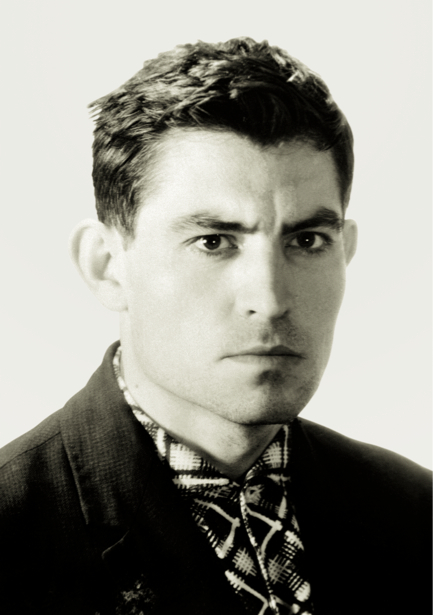
Vasyl Stus (1938-1985)
*
[4]
Vasyl Stus
“Statement to the Chairman of the Presidium of the USSR Supreme Soviet” (1 August 1976)
“On the anniversary of the Helsinki conference …
“I invite you to think about whether it is just to call fighters for democracy ‘criminals’. I invite you to think whether the presence in the USSR of the institution of political prisoners brings much glory. And can Pinochet be fully denied a feeling of justice if recently he has so energetically evicted beyond the boundaries of his country persons with brains dangerous to the State? I consider that it is hopelessly late for an amnesty of political prisoners in the USSR, and every day of its postponement costs too dear for the prestige of our country in the world.
“Freedom to Soviet political prisoners!
“Bring the perpetrators of repression to account!”
*
[5]
Vasyl Stus
“Appeal to the PEN Club” (11 August 1976)
“I am a Ukrainian writer, arrested in January 1972 together with other Ukrainian writers.
“It was then that the KGB, using the bogey of Ukrainian bourgeois nationalism and the totally fabricated ‘Dobosch affair’, carried out its newest reprisals against representatives of the Ukraine intelligentsia and, in the first place, the creative intelligentsia. For its goal is to destroy that literature which does not confine itself within the Procrustean bed of socialist realism, to punish writers who decisively refuse to be modest officials in government service.
“At my arrest the books of Karl Jaspers, Carl Jung and K. Edimid (?) were confiscated from me, and the works of many Ukrainian writers — E. Andrievskaya, V. Vovk, L. Kostenko, V. Korzun, M. Vintrenovsky, V. Simonenko, I. Kalynets, G. Chubar and M. Kholodny.
“The manuscripts of all my verse were arrested, likewise the collections of poetry in manuscript ‘Zimovy derevya’ and ‘Vesyoly tsvintar’, the unfinished tales ‘Poezdka v Schastevsk’, ‘Dnevnik Petra Shkoda’, and the draft variants of several other stories and tales. Among the confiscated items were about two dozen literary-critical articles devoted to the work of P. Tychina, V. Svidainsky, Heinrich Boll, Brecht, Goethe and Rilke, Enzensberger, P. Tselyan, I. Bazman and Bobrovsky.
“Altogether, about five hundred original poems were taken from me, about 10 ‘printer’s sheets’ [16 pages each] of prose, the same volume of socio-political journalism, about 30 ‘printer’s sheets’ of poetry translations; my literary-critical articles could fill a large book.
“That’s to say, practically everything written by me in 15 years of literary activity was confiscated. Only a small part of what I had written had seen the light up to that time — for I had constantly been refused the right to publish.
“In the camps I have written several hundred poems, translated about two hundred poems of Goethe and about one hundred poems of Rilke, thereby continuing the work begun before my arrest on the translation into the Ukrainian language of the works of the late Rilke (elegies, sonnets to Orpheus, etc.). Today everything written by me in camp is under threat of extinction. For a long time, I have been refused the right to send my verse in letters to my relatives. The local KGB censorship, agreeing that the verses do not have a political character, arrest them only because the very existence of an author in captivity could lend a lyrical text a political nuance.
“Reduced to despair by the gloomy prospect of losing all my literary work for the years 1972 to 1976, I decided on 4 August 1976 to hold a hunger-strike in protest. However, this produced nothing. All letters containing verse are mercilessly confiscated as before. Recently I inserted a few sonnets by Charles Baudelaire in a letter: they were confiscated for containing ‘concealed messages’.
“I have repeatedly appealed to government bodies in the USSR. This has changed nothing. Therefore, I’m appealing to you to use all your authority to defend my literary work from destruction. Help me save my verse from the fire!”
***
*
[6]
Dmytro Basarab, D. Grinkov, Dmitry Demidov, Mark Dymshits, Vulf Zalmanson, Sergei Kovalyov, Josif Mendelevich, Kalju Mattik, Petras Plumpa, Stepan Sapelyak, Yevhen Sverstyuk and Mykola Slobodyan
“To the Commission of the US Congress for Verifying the Implementation of the Helsinki agreements” (November 1976)
The authors, political prisoners in Perm Camp 36, request the Commission to do everything to be able to study on the spot the living conditions of political prisoners. They request that every means be used to alleviate these conditions.
*
[7]
Paruir Airikyan
“To Citizen of France, Jean-Christian Tirac” (21 October 1976)
“Dear Jean-Christian Tirac — yesterday mister, today citizen!
“A political prisoner of the USSR, I am writing this letter of mine with great contempt, I want you to know what political prisoners in the USSR think of you.
“I read your confession in Izvestiya on 20 October — a disgrace!
“… You have already forgotten that you were arrested just for bits of paper, for propaganda, and now you justify this arrest? Is not your arrest a violation of the UN Declaration of Human Rights? Is anyone in France arrested for leaflets? …”
*
[8]
Ivan A. Hel (Gel)
“To the commandant of Kharkov Transit Prison” (20 November 1976)
“On 18 November 1976 I was transported on the Lvov-Kharkov train from the KGB Prison in Lvov to the transit Prison in Kharkov …
“In the yard of Kharkov Transit Prison, while we were getting out of our ‘Black Maria’ one of the officers with the rank of Major (he concealed his name, refusing to say who he was), in front of a group of about forty criminals, began maliciously to incite these people against me, creating an atmosphere of hatred towards a political prisoner, thus directly instigating violence and robbery.
“Here are some of his utterances in front of the line of criminals: ‘Look, he’s loaded himself up, why have you got empty sacks, there’s nothing to stop you unloading him; you, they say, are criminals, so they don’t want to be held with you,’ etc., etc.
“When I declared that such actions were serious violations of legality on the part of a person whose direct duty was to supervise the observance of established norms during the transportation of convicted, especially political prisoners; when I declared that taking the initiative in malicious attacks, forming an open alliance with criminal prisoners, humiliated his honour as an officer (for by so doing he put himself on the same level as they) and when I demanded to know his position and name — the major replied with threats, and then disappeared.
“On 20 November, preparing for departure, a warder… dealt me a blow in the back with prison … keys, and then hit me several times over the head, and I fell…
“During the check of a prisoner’s identity against his personal file, this formal dialogue took place: ‘Name, first name, patronymic, article, sentence’, the warders ask. I reply. ‘Ah! An anti-Soviet,’ they yell at the warder. ‘Put him over there. Let him try to convert the close-stool.’
“And they threw me in a box with windows tightly bricked up, without ventilation, with no close-stool in there, but instead a sewer in a concrete gutter which passed under the floor. Fumes, stuffiness, a terrible stench and not a breath of air in the place. After being there for some time, I was soaked in sweat and gasping for breath; gradually I lost strength. I banged on the door for a long time before they opened up.
“I warned them that I have a bad heart, headaches, asthma. I demanded to see a doctor. ‘Nothing will happen to you. If it does, we’ll write you off,’ said the warder calmly and, closing the door, he said, ‘It’s time to get rid of this damned Ukrainian language.’ The door closed, and no one reacted a second time to my banging.
“And this unconcealed sadism, open tyranny and chauvinistic cynicism reigns in the Ukrainian city of Kharkov, the former [Soviet] capital of Ukraine, where the Ukrainian language is legally considered to be the official language, although in practice it is scoffed at… With this document I declare a decisive protest against the cited instance of tyranny …”
*
[9]
Sergei Soldatov, Mikhail Kheifets, Maigonis Ravins, R. Semenyuk, Viacheslav Chornovil, Vasyl Stus, P. Sartakov
“Address to the National United Party of Armenia” (December 1976)
“The ideals of the National United Party of Armenia, the members of which aim to acquire state independence for their people by means of using rights guaranteed by the All-Union Constitution, cannot but arouse our great sympathy.
“The desire of every nation to have its own home, not contented with the communal flat [1] of Soviet togetherness, is completely natural. Not only does this desire not hinder the friendship of the nations that now make up the USSR: but, we are deeply convinced, it is the only guarantee of achieving it. For real friendship is possible only between worthy partners. Only the de-imperialization of the USSR can return to every nation the inalienable feeling of its own worth; only that can free it from the constant feeling of its incompleteness: it is a process that will cleanse the psychology of a certain part of the Russian people from imperial complexes, which are strangely combined with a national inferiority complex.
“We think the opinion is mistaken that Russia, having lost the Ukraine, the Baltic states, the Caucasus or Central Asia, will be a loser: this mistaken opinion is just as insulting to Russians as it is to Ukrainians, Lithuanians and Armenians.
“The path to social progress lies only through further democratization which will guarantee all rights to every individual and every nation. The democratization of Russia itself is impossible without the satisfaction of the age-old aspirations of many nations to acquire their own independence on a governmental level.
“The democratic movement in the USSR cannot count on success if it ignores the national issue; whilst any patriotic movement cannot do without a thorough programme of democratic transformations. Armenian political prisoners, members of NUP, were arrested — just as members of the Ukrainian Workers and Peasants Alliance (the Lukyanenko group) were deported to Armenia [2]. The one and the other were both convicted for attempting to use the law guaranteed by the all-Union [1936] Constitution.
“Every such trial cuts to ribbons the text of that document, every such deportee is a living reproach to the Constitution.
“We support the hunger-strike of protest being held by our Armenian comrades on 5 December 1976, and we ask you to consider each one of us a member of the NUP.
“Our act of solidarity is an act of respect for the ancient history of the Armenian nation, a sign of deep respect for members of the NUP, and a sign of our agreement with the democratic, non-violent course adopted by the NUP.
“By taking part in the Ukrainian, Jewish, Lithuanian and Estonian patriotic movements, and in the Democratic Movement of the Soviet Union, we are following the same path as members of the NUP, to achieve justice on the basis of full respect for the rights of the individual and the rights of all nations.”
=====================================
NOTES
- A reference to one form of enforced close living quarters in the post-revolutionary USSR. Existing apartments were divided between many families or individuals, sharing common facilities and having a room — or part of a room — for each family.
(Another later and yet more widespread Soviet form of collective habitation were the barracks next to factories, mines, etc.)
↩︎ - Deportation of Ukrainians to Armenia. A typist’s error? Should read ‘Russia’?
↩︎
===========================
 A Chronicle of Current Events