9 ENTRIES
[1]
On 5 December Vladas LAPIENIS (CCE 54.13-1) arrived in his Siberian place of exile: Krasnoyarsk Region (krai), Severo-Yeniseisk district, Teya settlement, 4 Pervomaiskaya (‘1st of May’) Street. His term of exile ends in July 1981.
*
[2]
On 1 December 1979, on the orders of the Dnepropetrovsk Region Procurator’s office, searches were conducted in connection with the case of Petro ROZUMNY (CCE 54.11) at Yevhen SVERSTYUK’s two homes (CCE 54.11), his east Siberian place of exile in Bagdarin (Irkutsk Region) and his home in Kiev, “where Ye. Sverstyuk also lives, together with his wife” (the actual wording of the warrant). All Sverstyuk’s manuscripts and several books in English were confiscated in Bagdarin; each one of them was returned once they had been checked.
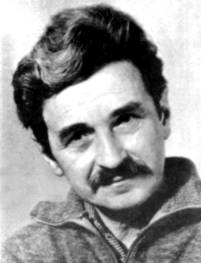
Yevhen O. Sverstyuk (1928-2014)
Sverstyuk applied for permission to visit his seriously-ill, 86-year-old mother. Unexpectedly an answer arrived from F. Naglayev, the Minister of Internal Affairs for the Buryat ASSR, granting permission. The head of the local internal affairs department gave Sverstyuk a travel warrant: he then bought an air ticket and cabled his mother about his arrival. At the last moment, however, Kosinov, the head of the Bagdarin expedition, refused to give Sverstyuk leave of absence, because he had been “late for work once without good reason”.
In a letter to the Buryat internal affairs department Sverstyuk writes:
“I received your answer to my statement.
“There is no longer any doubt that your letter was the main component in a hideous scenario.
“Do you know what struck me most of all? That I had not expected such blatant deceit at ministerial level. I had thought that at ministerial level there existed such a thing as professional self-respect.”
*
[3]
CHORNOVIL
Since 1969, Viacheslav CHORNOVIL [1] has been ill with chronic atrophic pharyngitis and (since 1972) with arthritis of the left shoulder joint. In the camp these diagnoses were confirmed every year by medical commissions, which placed Chornovil on a limited work routine — no heavy labour, no work in damp or cold places.
When Chornovil arrived at his place of exile in March 1978, doctors at the Lenin district clinic in the Yakutia ASSR (Nyurba settlement) confirmed these diagnoses and identified a further illness. Chornovil was given a certificate exempting him from heavy physical labour.
The police and the KGB did not like this. The district’s chief surgeon, who headed the commission which examined Chornovil, was summoned to the police and to the KGB. In April 1978, a letter was sent to the clinic from the Lenin district internal affairs office: Chornovil was abusing the clinic’s decision, it said and asked them to make a new diagnosis. Doctors at the clinic signed a new certificate, dated the day in March when the commission was held, which mentioned only one illness (arthritis) but still exempted Chornovil from heavy work.
In August 1979 the Lenin district internal affairs office sent Chornovil to yet another medical commission. In a letter to the Yakutia ASSR Ministry of Health, dated 23 August 1979, Chornovil writes:
“It is as if they have replaced the polite and correct doctors of eighteen months ago. These ones treated me like an enemy and insulted me to my face.
“They completely ignored my complains that on account of the severe climate and the fact that I have been working in a basement for a year and have not received treatment (there are not even physiotherapy facilities at the Chapanda Village Hospital) my throat has become significantly worse, I have a constantly sub-febrile temperature in the evenings and spasms in my respiratory tract. My temperature at the examination (37.8 degrees) was deliberately not written down because it proved that my illness had got worse. My coughing, because of a permanent sensation of having a lump in my throat, was called ‘unnatural’ by the chief doctor F. Popova, i.e., she accused me of simulation.
“They also ignored the fact — confirmed on my medical card — that as well as several bad attacks of my chronic illnesses I had also suffered from bronchitis and sciatica over the past year. “We all have sciatica,” commented the ‘doctor’-neurologist (almost like a character in Ilf & Petrov [2]) [note 1].They laughed when I complained that I have periodic spells of weakness, almost to the point of fainting. They paid no attention to the X-rays and my complaints of permanent pain in my shoulder even when I am not carrying anything, and the ‘doctor’-surgeon mockingly suggested that I take up wrestling,
“As a result of this scandalous ‘commission’ a diagnosis was reached that
“(1) I suffered from mild pharyngitis with no bad attacks. A little over a year ago the same commission diagnosed chronic atrophic pharyngitis. One does not have to be a doctor to understand that the idea of such a radical improvement after a year’s ‘treatment’ in a damp cellar is fantastic. “(1) I suffered from mild pharyngitis with no bad attacks. A little over a year ago the same commission diagnosed chronic atrophic pharyngitis. One does not have to be a doctor to understand that the idea of such a radical improvement after a year’s ‘treatment’ in a damp cellar is fantastic.
“(2) I also suffered, they said, from mild arthritis, i.e., an illness which had been progressing for six years suddenly made a U-turn. From which they concluded:
“(3) I am basically healthy and “physical labour is not contra-indicated”: no mention of exemption from heavy work …
“Since the persecutory medical commission of 9-10 August 1979 was put together on the initiative of the ‘special services’, I have no alternative but to use my own initiative and ask you to send me to Yakutsk for an objective examination by qualified doctors, and also for the treatment of which I am completely deprived in this village in the forest.”
*
[4]
In summer 1979 after seven years in camp Yevgeny PRONYUK (CCE 27.1-2, CCE 52.5-2, CCE 53.19-2) arrived for his five years of exile at: 743134, Karakalpak ASSR, Leninabad district, the “22nd Party Congress” [1961, 3note 2] State farm [sovkhoz]. Pronyuk, a philosopher, has a job as a metal-worker in a construction unit. Until 1 December 1979, he was doing ‘metal-work’ in the cotton fields.
The Presidium of the Uzbekistan Supreme Soviet has responded to a petition of unknown origin and started to investigate the possibility of pardoning Pronyuk. The Presidium requested a petition from Pronyuk himself, which he refused to submit.
*
[5]
On 26 November Oles SERGIYENKO (CCE 54.14 [4]) returned to Ayan from Khabarovsk (Soviet Far East). In Khabarovsk he was given this diagnosis: atrophy of the gastric mucous membrane with achlorhydria and atrophy of the mucous membrane of the stomach and the intestinal tract [i.e. pernicious anaemia]. He was ordered to stay in bed and, even if his illness takes a turn for the better, he is forbidden to undertake heavy physical labour. He must also follow a special diet.
On his return to Ayan, Sergienko was dispatched to finish his 15 days in the cells: before he left for Khabarovsk he had completed only two days of his sentence there.
On 11 December 1979, his mother 0ksana Meshko again (CCE 54.23-1) appealed to the USSR Ministries of Internal Affairs and Health and to the USSR Procurator-General:
“… I am making a strong request for you to designate a place with more auspicious climatic conditions and geographically nearer the territory’s hospitals.
“On the basis of the concrete and irrefutable facts which I have described above showing abuses of power with respect to my son, allow me to hope that you will confirm my belief in justice by resolving the question of the political exile O. Sergienko according to the law.”
*
[6]
On 26 November 1979, Zinovy ANTONYUK was summoned to a police station.
There he was asked to read the answer which Lt Col A.D. Vladimirov — head of the 5th section, Irkutsk department of internal affairs — had given to the letter to USSR Minister of Internal Affairs Shchelokov dated 3 October 1979. Antonyuk would stay in exile in Bodaibo, he had already been allowed to leave the area once; concerning medical treatment he should apply to the Ministry of Health. After Antonyuk had read the letter Captain E.I. Blinov, head of the Bodaibo Town internal affairs office, told Antonyuk to start work: “Drs Melnikov and Volkov consider you fit to live and work in Bodaibo.”
On 3 December 1979, Blinov told Antonyuk that he could go back to Irkutsk for a medical examination, but first he must find a job, any job. “It’s important for me that you should be working. When the doctors have made out all your documents, then we can decide the question of your making a trip. Find yourself a job.” Antonyuk had hoped that, even if only during his holiday, he would be allowed to go to Kiev to be examined by good specialists. A telegram arrived from him on 30 December 1979, however, which said: “Leave refused today because unemployed.”
*
[7]
Some of the literature confiscated from S. GERMANYUK (CCE 53.29) during a search on 22 March 1979 has been returned to him. This happened, he writes in a letter, “after a protest by fellow-believers” — Germanyuk is a Baptist.
*
[8]
V. DOLISHNY (CCE 52.5-2) is working as a labourer in a state farm garage.
*
[9]
Pyotr GLADUN (b. 1938), a Jehovah’s Witness, is serving his term of exile in Yakutia (Zyryanka settlement, Verkhne-Kolymsky district).
In 1962 he finished a term of imprisonment for refusing to serve in the Army, on religious grounds. In 1974 he was sentenced in Ivano-Frankovsk (west Ukraine) to four years in strict-regime camps and three years in exile under religious Article 209 (UkSSR Criminal Code = Article 227 of the RSFSR Code). He described the circumstances of the second arrest as follows:
“In 1974, after I had refused to be recruited by the relevant organs, a search was conducted in my flat. On finding nothing, they took 60 roubles out of my wife’s purse (for examination) and linked me to the case of three women who were already being held for investigation. They found three witnesses, which was not very difficult…”
Gladun was working as a lathe-operator, but in March 1979 he had an accident at work in which he broke his right arm. The bone at the elbow has still not healed.
==========================================
NOTES
- On Chornovil, see CCE 5.4, CCE 7.13, CCE 23.9 [3], CCE 24.3 and Name Index.
↩︎ - Ilf and Petrov, natives of Odessa, were famous in the 1920s and 1930s for their humorous stories and reports: the Twelve Chairs (1928) and The Golden Calf (1931) satirical descriptions of post-revolutionary society, and One-Storey America (1937), an account of their travels around the USA. ↩︎
- 22nd Party Congress, 1961. This gathering continued the work of the preceding Congress and resulted, notably, in the removal of Stalin’s embalmed body from (and reburial next to) the Mausoleum on Red Square in Moscow.
↩︎
=====================
 A Chronicle of Current Events