In the late 1970s, the Chronicle reported (“News in Brief”, CCE 44.26-1) that the Novosti Press Agency was preparing a book, On the Deportation of A.D. Sakharov.
Now it’s happened.
*
On 22 January 1980, at 2.00 pm police stopped the Academy of Sciences’ car in which Andrei Sakharov was being driven to work. KGB officers got into the car and ordered the chauffeur to drive to the USSR Procurator-General’s Office. There Sakharov was taken to a room where he was met by A.M. Rekunkov, the First Deputy of the USSR Procurator-General, and three other people, one of whom was introduced as a representative of the Presidium of the USSR Supreme Soviet.
Rekunkov read Sakharov a Decree of the Presidium of the USSR Supreme Soviet:
“In connection with the systematic acts committed by A.D. Sakharov, which discredit him as an award-holder, and in the light of numerous proposals from members of the Soviet public, the Presidium of the USSR Supreme Soviet, under Article 40 of the ‘General Statutes on Orders, Medals and Honorary Titles of the USSR’, decrees:
“That Andrei Dmitrievich SAKHAROV be divested of the title of Hero of Socialist Labour [Sakharov has been awarded this title three times, Chronicle] and all the USSR State awards conferred on him.”
*
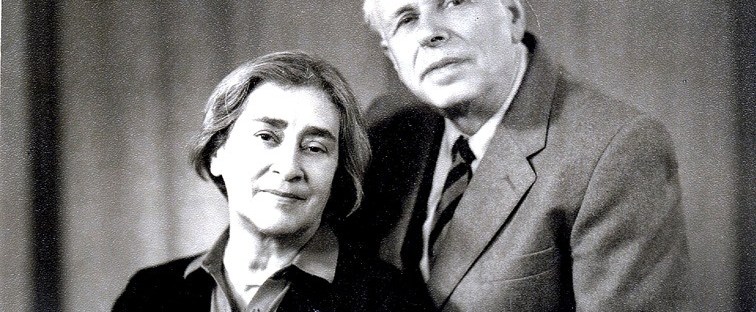
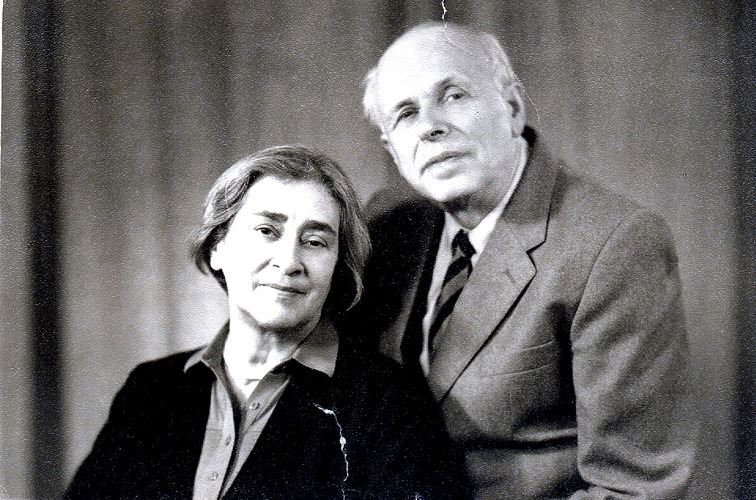
Yelena G. Bonner (1923-2011) and Andrei D. Sakharov (1921-1989)
*
The decree was published in the Gazette of the USSR Supreme Soviet (No. 5, 30 January 1980). It was dated 8 January. From the date and the number below the decree one can see that it was meant to have been published in the Gazette’s third issue (16 January) this year. As Sakharov’s family notes, his mother-in-law Rufa G. Bonner was granted permission on 7 January 1980 to travel to the USA to visit her children and grandchildren.
Rekunkov requested Sakharov to return his awards and award documents. Below the text of the decree as presented to him, Sakharov wrote that he refused to do so: he felt he had deserved his awards.
*
Phones cease to work
Rekunkov then said that a decision had been taken to exile SAKHAROV to Gorky (Nizhny Novgorod), a town closed to foreigners.
Sakharov’s wife, Yelena Bonner, could go with him if she wished to do so. Rekunkov gave Sakharov permission to phone home. After this call, the telephone in his flat was immediately cut off.
To tell people what was happening, Sakharov’s family had to use a public call-box. For some reason all the nearby call-boxes were out of order. After a few calls the one they managed to find, some way from home, also stopped working.
Sakharov’s flat in Moscow was immediately cordoned off. Foreign correspondents who came racing to the scene were told: “Go and look for him in Sheremetyevo,” i.e. the international airport.
Sakharov was in fact taken to the Domodedovo airport. Yelena Bonner went there, as well.
A special plane, with a doctor on board and luxury food, flew Sakharov and Bonner to Gorky. When they landed, Sakharov learned from the conversations of people around him that “Tsvigun himself” (KGB Chairman Andropov’s deputy) had accompanied them from the Soviet capital.
*
In Gorky, Deputy Regional Procurator Perelygin informed Sakharov of the conditions that were to be imposed on him:
he would be under open surveillance and have to “report” to the police station every ten days;
he was forbidden to leave Gorky, meet foreigners or ‘criminal elements’ or correspond with, or hold conversations with, people abroad.
When Sakharov asked whether this ban included his children living abroad, he was told that it did.
Sakharov was introduced to the people responsible for keeping him under surveillance.
He was given the use of their office telephone. Sakharov was provided with three rooms of 10, 12 and 18 square metres in size in a four-room flat (address: 603137, Gorky, Shcherbinki-2, 214 Gagarin Avenue, flat 3). A woman who said she was the “owner of the flat” occupied the fourth 14-square-metre room. She offered them her services: “I always look after the lodgers”.
It was a furnished flat. There was a supply of food in the refrigerator (payment was requested later). There was no telephone.
On 23 January 1980, Sakharov’s mother-in-law Rufa Bonner phoned the KGB duty-officer to ask where Sakharov was (see Notes, below). Mentioning the USSR Procurator-General’s Office, he answered that A.D. Sakharov had been
“asked to change his place of permanent residence from Moscow to Gorky”.
*
Soviet newspaper coverage
[1]
IZVESTIYA
On 22 January 1980, the Moscow evening edition of Izvestiya published a short report, “Concerning A.D. Sakharov“:
“For a number of years A.D. Sakharov has conducted subversive activities against the Soviet State. Accordingly, he has been issued repeated warnings by representatives of the Soviet authorities and of public organizations and by prominent Soviet scientists, regarding the inadmissibility of such activities.
“Paying no heed to these warnings, Sakharov has recently started making open appeals to reactionary circles in imperialist states to interfere in the internal affairs of the USSR.
“In the light of numerous proposals from members of the Soviet public, the Presidium of the USSR Supreme Soviet has divested A.D. Sakharov of his title of Hero of Socialist Labour and all his USSR State awards; the USSR Council of Ministers has divested him of the USSR prizes awarded him (TASS news agency).”
*
[2]
IZVESTIYA
On 23 January 1980, the Moscow evening edition of Izvestiya published an article by K. Batmanov entitled “A Just Decision”.
It stated:
“In addition to removing Sakharov’s title and awards, the competent agencies have decided to remove him by administrative means from Moscow.”
The article maintains that Sakharov once made a statement: “about the beginning of an ‘era of consolidation and rebirth’ in Chile when the bloodthirsty, fascist clique headed by Pinochet was in power”; and that Pravda referred to this statement on 25 September 1973:
“The newspaper Humanité [French Communist Party daily] has published a report stating that Sakharov appealed to the military junta in Chile ‘to protect the freedom and safety of the poet Pablo Neruda’.
“This time one might indeed think this verbose herald of “freedom” has hit the mark,’ writes the author of the article Serge Leyrac. Imagine his surprise when he discovered the real reason for Sakharov’s action. In his appeal to the junta, Sakharov writes [1]:
‘The loss of this great man [Neruda] would cast a long shadow over the era of rebirth and consolidation proclaimed by your government.’ ”
*
[3]
PRAVDA
On 29 January 1980, Pravda carried a short news item, “In the Presidium of the USSR Academy of Sciences”:
“The Presidium of the USSR Academy of Sciences has examined the matter of Academician A.D. Sakharov’s anti-Soviet activities… The Presidium … condemns the activities of Academician A.D. Sakharov as being directed against the interests of our country and the Soviet people, aimed at aggravating international tension, and as bringing discredit to the high calling of a Soviet scientist.”
*
(4-6)
[4]
LITGAZ
On 30 January 1980, Literaturnaya Gazeta published an article by V. Borisov titled “Slanderers and Pharisees”.
[5]
KOMSOMOLKA
On 15 February 1980, Yelena Bonner’s birthday, Komsomolskaya Pravda printed an article by A. Yefremov and A. Petrov entitled “There Was No Caesar”.
[6]
NEW TIMES
An article in New Times (No. 5) by N. Tolin entitled “The Usual Splash of Official Hypocrisy”, stated among other things that
“Sakharov has information about a number of matters that constitute State Secrets. This is not the first time he has taken it into his head to divulge such information to foreign agencies.
“Recently, it has been reliably shown that he sent or tried to send abroad items of information about the most important issues affecting our national defence capabilities.
“Recently, also, he has made attempts to set up some sort of organization of so-called ‘dissidents’, involving not only Soviet citizens but, even, foreigners …
“Sakharov is now living in Gorky. He has been given a four-room flat.”
*
Visitors
At first, anyone wishing to see Sakharov was allowed to do so.
Admittedly, visitors were detained on leaving his flat and taken to a neighbouring building where, in a flat used as a “base for keeping the peace”, an “anti-Sakharov headquarters” had been set up. Sakharov’s visitors were ‘advised’ to stop coming to see him. One visitor was fined 30 roubles for “disobeying the authorities”.
After that, only two people from Gorky were allowed to see him: Mark Kovner, a refusenik and Doctor of Mathematics (CCE 54.2-2 [9]), and a worker called Felix Krasavin, an old friend of the Bonner family.
As Kovner was setting off for Moscow on 25 January 1980 he was detained at the railway station “on suspicion of stealing a rucksack”. He was searched and locked up. On 26 January at 2 am in the morning he was released, but ordered not to appear again at the railway station.
After receiving a telegram from Gorky, Sakharov’s family made preparations to go there. The refusenik Yevgeny Tsyrlin (CCE 50.8-8) intended to accompany them on 25 January 1980, the date set for the journey. On the morning of the 25th, however, the Visa & Registration department (OVIR) informed Tsyrlin that he had been granted permission to leave the USSR and had five days in which to make the necessary preparations. He had to withdraw his offer to accompany Sakharov’s family.
On 25 January, in the afternoon, Sakharov’s family left Moscow for Gorky in a passenger car. They were accompanied by Natalya V. Gesse, an old friend from Leningrad.
Later that day, in the evening, Yelena Bonner was on the point of leaving Gorky for Moscow. When she got into the train, she was asked to leave the carriage. “In 40 minutes your mother will be arriving in Gorky,” she was informed.
Gesse spent three weeks in Gorky. In March, at Yelena Bonner’s request, she again made preparations to go there. On 22 March 1980, she was summoned to the Kuibyshev district office of the Leningrad KGB. She was forbidden to return to Gorky, Captain Kulakov told her, because she occasionally received foreign visitors in her home, and her son was living in the USA (he emigrated in 1978). If she disobeyed, she would be taken off the train by force.
On 14 April 1980, Gesse sent a complaint to KGB Chairman Andropov:
“… I request you to examine my complaint and grant me permission to go to Gorky to see a family whom I love dearly. I want to help them in a purely practical, domestic way: Sakharov and his wife both have serious health problems and sometimes are in need of the most ordinary care and attention.”
On 15 February 1980, Yury Shikhanovich [2], a friend of Sakharov’s family, arrived in Gorky together with Yelena Bonner.
They were detained in the entrance hall of the building, where a police squad and a KGB officer were on duty round the clock. The two of them were escorted to the ‘support point’ where their passport [ID document] details were noted down. Then they were then taken to the airport and flown to Moscow on the next plane, for which they had to wait in the office of the airport police. Shikhanovich refused to pay for the ticket.
“You mean you want to travel at the State’s expense?”
“Of course not, I want to go at my own expense. I have a return ticket for the evening train. I want to travel by train at my own expense.”
The subject of money was then dropped.
In a statement to the head of the Gorky Internal Affairs department, Sakharov writes:
“…When my wife and I went to the ‘support point’ to explain the misunderstanding, we were taken out of the room, on the instructions of Captain Snezhnitsky, and thrown to the floor.
“My wife, who is officially disabled because of her poor eyesight, was struck across the eyes. We were then kept by force in the corridor while Yury Shikhanovich was taken out and escorted somewhere else. Captain Snezhnitsky told us to go home as Shikhanovich was waiting for us there. This turned out to be a lie. I have heard that people are beaten up in police stations, but until it actually happened to us, neither my wife nor I believed it.”
Almost all attempts made to visit Sakharov have met with failure.
A taxi taking Sarra Babyonysheva from the station was stopped halfway: “We’ve been waiting for you here for ages!” (The taxi had made a diversion to drop off a second passenger.) The cake she had brought for Sakharov was, however, passed on to him. After she had been ‘thrown out’ of Gorky, Maria Petrenko went to the USSR Procurator-General’s Office and to the USSR KGB Reception Office, trying to obtain official permission to visit Sakharov. Only close relatives were being allowed to see him, they told her, and she herself was an ‘anti-social elemet’.
On 17 March 1980, two 7th-form schoolchildren managed to get through the police cordon to visit Sakharov. They did not believe the newspapers, they said, and had come to find out the truth. They left after a half-hour conversation and were escorted to the ‘support point’: there they were held for several hours of ‘chats’. Afterwards the ‘Sakharov post’ was moved from the hall to the outside door of his flat.
On 29 March, A. Babyonyshev (Babyonysheva’s son) managed to climb through the window to see Sakharov: the flat is on the ground floor. After talking to Sakharov, Babyonyshev left the same way and boarded a bus to the railway-station. On the way the bus was stopped. Babyonyshev was made to get out and was taken back to the same ‘support point’. Because of the resulting ‘chats’ he missed his train.
On the evening of 10 April 1980, the ‘Sakharov post’ was moved back to the entrance hall.
*
On 11 April, Sakharov received a surprise visit from Academician Vitaly L. Ginzburg.
Ginzburg [3] heads the Pure Physics Department at the Lebedev Physics Institute (USSR Academy of Sciences) [PIAS] where, until recently, Sakharov was a senior researcher. With Ginzburg was a member of the seminar in which Sakharov took part and the scientific secretary of one of the PIAS departments. The day before, it turned out, they had been urgently instructed to go to Gorky ‘today’. (Admittedly, the PIAS people had been trying to obtain permission to visit Sakharov for a long time.)
Ginzburg and the scientific secretary left after a short while, but Sakharov and his seminar colleague worked together all day. In the evening the visitors left for Moscow. After this the ‘post’ was once again moved back to the outside door of the flat.
Roughly one month after being exiled, Sakharov found that he could no longer listen to Western radio broadcasts in his Gorky flat. Only a few yards away from the building such radio programmes could be picked up with only ‘normal’ interference.
*
Sakharov describes his plight
On 28 January 1980, at a press conference for foreign correspondents organized at her Moscow flat, Yelena Bonner read out a statement drawn up by A.D. Sakharov on 27 January. (On 30 January, the USSR procurator’s office cautioned her “in accordance with the Decree” [16 November 1972] about giving this press conference.)
In the statement, in which Sakharov describes his exile, he continues:
“These repressive measures against me have been taken at a time when the international situation is growing more serious and the persecution of dissenters in the USSR, more intense. The aggravation of the international situation is due to the part played by the Soviet Union. In particular the USSR is:
Conducting an extensive demagogic campaign in Europe to strengthen its military advantage;
Endeavouring to destroy the possibilities of peace now emerging in the Middle East and Africa;
Supporting terrorist regimes in Ethiopia and several other countries;
Maintaining military units in Cuba;
Supporting the activities of Iranian quasi-governmental terrorists, who have violated the basic principles of diplomatic work;
The culmination of this dangerous policy was the [December 1979] invasion of Afghanistan, where Soviet troops are waging a merciless war against the Afghan insurrectionists and the people.
“In the USSR itself the authorities have taken further action against the core of the human rights movement.
“Those arrested include Tatyana Velikanova and Victor Nekipelov; Malva Landa is threatened with arrest. The journal Poiski [Searches] is also under threat, and Valery Abramkin, Victor Sokirko and Yury Grimm have been arrested.
“The movement for freedom of religious belief is being persecuted: Fathers Dmitry Dudko and Gleb Yakunin have been arrested, as has Lev Regelson. Trials and arrests are taking place in the Ukraine and the Baltic republics.
“Repression against the Crimean Tatars has been stepped up and Reshat Dzhemilev has been sentenced to a term of imprisonment.
“The aim of the authorities’ actions against myself in this context is to make it totally impossible for me to continue my public activities, to denigrate and discredit me, thereby clearing the way [i] for all the repressive measures in store for all dissenting groups within the country (for the world will have fewer opportunities to find out about such repression) and [ii] for further international adventures.
“On 24 January 1980, Izvestiya carried an article slandering me and deliberately distorting my position.
“My position is unchanged: I support an open, pluralistic society, one which is democratic and just. I support convergence, disarmament and peace, and the defence of human rights world-wide — including the USSR and Eastern Europe. I am trying to work for a universal amnesty for prisoners of conscience and for the abolition of the death penalty; I support the view that preserving the peace and preventing nuclear catastrophe are the most urgent problems facing the world today.
“The Izvestiya article shows clearly that the main reason in these alarming times for the repressive actions against me was my condemnation of our intervention in Afghanistan, which placed the entire world under threat: I demanded that Soviet troops be withdrawn from Afghanistan and, possibly, replaced by UN peace-keeping troops (see my interview with the New York Times and for US television), and my association with the relevant Moscow Helsinki Group document.
“I am totally isolated and very concerned about the members of my family, my mother-in-law [Rufa Bonner] and Liza Alexeyeva [fiancée of Yelena Bonner’s son]. I can no longer afford them any protection. Therefore, I demand that Liza Alexeyeva be allowed to leave the USSR at once, together with my mother-in-law, R.G. Bonner, who has already been granted permission to visit our children and grandchildren in the USA. Although my wife is officially free, I will, of course, be afraid not only for her health but for her life even, if she is forced to travel constantly to Moscow to see them. (We know, unfortunately, that the KGB sometimes employs Mafia-like methods.)
“The measures taken by the Soviet authorities are a flagrant violation of my basic right to receive and impart information (‘Article 19’ of the Universal Declaration of Human Rights). Representatives of the Soviet authorities are attempting to assuage world public opinion by convincing it that I am able to carry on my scientific work and am not threatened with criminal prosecution. But I am ready to appear before an open and public court. What good is a golden cage to me? What I need is the right to fulfil my public obligations according to the dictates of my conscience.
“I am grateful to all those who have spoken out in my defence. My fate has proved fortunate: I have been able to be heard. But I ask you not to overlook the fate of others who have selflessly served and continue to serve the defence of human rights. I am referring in particular to those whom I have already mentioned in this letter, but also to all those of whom I have said nothing.”
On 3 February 1980, Sakharov wrote a further statement:
“On 28 January [1980] I was summoned to the Internal Affairs department, where KGB officers talked with me. They complained that certain people were getting past their barriers.
“For my part, replied that I needed a telephone to keep in touch with my family in Moscow, my wife needed a phone to talk to our children and grandchildren in the USA, and that Liza Alexeyeva, our son’s fiancée, required permission to emigrate from the USSR, If she and my mother-in-law emigrated, my wife would be able to stay with me all the time.
“That same day two men claiming to be workmen and pretending to be drunk came to the flat. One of them started playing around with a Makarov pistol. He said that they were crack shots from any angle and threatened to ‘devastate the flat and turn it into Afghanistan’. They went on: ‘Don’t get the idea you’ll be here much longer. They’ve already prepared you a place at the psychiatric hospital 30 kilometres from Gorky.’ Today I received a letter containing threats to murder me. It was delivered on a Sunday, when there is no postal service. In the past, on a number of occasions we have received all kinds of threats, but in the total isolation in which we are being kept, guarded by KGB officers, I regard these threats as very serious.
“On 30 January, I was summoned to see Perelygin, deputy procurator of the Gorky Region. He asked me to write an explanation concerning the statement, which I had written and my wife had made public.
“He said that I had violated the ban imposed on me by the Decree of the Presidium of the Supreme Soviet (or imposed on the basis of that Decree), and that I had been in contact with foreigners either directly or through go-betweens. This was the first time I had heard this particular formula or, indeed, the reference to the Supreme Soviet in any connection other than the withdrawal of my awards. I wrote a statement setting out the reasons why I objected on principle to the restrictions on my civil and political rights, which had been imposed without trial, and declaring my personal responsibility for all my actions. If I committed any further violations, said Perelygin, my place of exile and the regime imposed on me would change, and sanctions would be applied against my wife.
“On 31 January [1980] I sent a statement to Rekunkov, the USSR Deputy Procurator-General, who had notified me of the withdrawal of my awards and of my exile, but had not informed me of anything else since then. In my letter I demand a trial.
“I consider the regime imposed on me to be an act of tyranny on the part of the KGB, and refuse to submit to it. I am aware of the consequences this may have for myself and my wife. Any talk of humanitarianism is designed to mollify the West and is pure deceit.”
In a postscript Sakharov added:
“I fear that many people who are attempting to visit me may encounter serious unpleasantness. I do not want this to happen and would like to have this announced by radio-stations broadcasting to the USSR.”
*
The same day, Sakharov issued a statement entitled “Lev Kopelev Under Fire” in response to an article published in the Sovetskaya Rossiya (Soviet Russia) newspaper on 3 February: it was entitled “Judas in the Role of Don Quixote”.
Sakharov’s statement ends:
“I wish to express my solidarity with Lev Kopelev. Truth and moral strength are on his side. And I am certain that he also has on his side the sympathy of many, many honest people.”
On 12 February 1980, Sakharov wrote a statement entitled “Our post”:
“From the middle of last week, we started receiving mail, 20-25 letters per day. A little over half come from abroad.
“We have received many letters from Italy and the Netherlands; some from Austria, Denmark and other Western European countries; and one or two from the USA. Most letters from the West carry greetings; many are postcards with one or two words. We have not, however, received a single letter from personal acquaintances of myself or my wife, nor a single word from our children.
“The letters from inside the USSR can be divided into three categories:
“1. Those which accuse me — of stirring up war and calling on the world to oppose the Soviet people; of living at other people’s expense; and of never having worked or fought.
They level the same accusation at my wife, a Group II war invalid and a doctor with over twenty years’ experience.
“2. Letters wishing me good cheer and health and expressing total solidarity with me.
“3. What I would term ‘discussion’ letters. Their authors try to compare what the Soviet press says about me with what they have heard themselves from Western radio broadcasts. The tone of these letters is not hostile, more bewildered.
“It is interesting that almost all the many letters I have received from Gorky, where I am now living, are abusive, even cutting. None of the letters arriving these days gives the impression of being written to order. I think that they express their authors’ true feelings, but it is interesting that most of the abusive letters are unsigned, while those from well-wishers usually provide a return address.
“As I’m unable to reply to all these letters, I would like to thank everyone, both in the USSR and in the West, who has voiced his or her sympathy and solidarity with my thoughts and actions. All I can do for those who would like to understand my position better is to refer them to foreign radio broadcasts based on what I have written in the past, and also to my statement of 27 January [1980]. As for the abusive letters, I have no reply to make.
“Attached to the statement is a first-category letter: it’s signed ‘V. Bushuyev, Honoured USSR Master of Sport USSR, three times world champion and champion of the XVII Olympic Games’.”
On 23 February 1980, Sakharov sent his passport (internal ID document) to the USSR Procurator-General’s Office, together with a statement addressed to Rekunkov:
“On 29 January 1980, A.N. Glossen, an official of the Gorky City Internal Affairs department, took my passport [ID document] to register me temporarily in Gorky. The permit was returned to me in the passport office of the Prioksky district internal affairs office. My name has been struck off the Moscow register and my ‘passport’ stamped with a permanent residence permit for Gorky.
“The housing supervisor in Moscow was not notified [of Sakharov’s change of status] and I did not complete any forms relating to my departure or arrival. The head of the passport office and Glossen stated that they had nothing to do with this operation. This was sheer deception on the part of the police officials and a flagrant violation of the law. I request you to protest against the actions of the internal affairs department.
“I demand that my permanent residence permit for Moscow be restored. I demand that you inform me in writing of the decisions and original documents in accordance with which I have been exiled to Gorky and am being subjected to restrictions which have not been imposed by any court and are not based on any law. The unlawful actions of the Gorky police only confirm my belief that similar unlawful measures are being taken at a higher level, even by the USSR procurator’s office itself.
“You did not inform me exactly which competent agencies decreed my exile and residence regime in Gorky. Nor did you inform me of the names of the officials who signed these decisions, nor of the length of my term of exile. The Decree of the Presidium of the USSR Supreme Soviet published in the press relates only to the withdrawal of my government awards. Until I am given the relevant documents, I will be forced to regard the measures taken against me as unlawful acts of tyranny: I do not know at what level they originated, nor which agencies were responsible. Where are the guarantees that this tyranny will not turn into direct physical reprisals against myself and my family?
“The provocative libel in the press claims that I am an enemy of disarmament (I have always supported SALT-2); an enemy of peace (I am continually calling for an end to war); and an enemy of the people, whose son I am. Together with the constant threats issued by post or chance visits of hooligans while I am isolated from friends, and the uncertain nature and illegality of the regime imposed on me — all this makes such reprisals, for which no one will accept responsibility, an entirely real possibility.
“Once again I repeat my willingness to stand trial before an open court, in the belief that trials are the sole means of determining the degree and form of punishment in a State which respects its laws.
“I am sending you my ID document by registered post. I refuse to have it returned to me, or to use it, until my demands are met.”
At the same time Sakharov sent a telegram containing a similar statement to KGB chairman Andropov.
*
USSR ACADEMY OF SCIENCES
On 12 February 1980, Sakharov sent a telegram to the President of the USSR Academy of Sciences:
“I request an invitation to the General Assembly of the USSR Academy of Sciences, to be sent to the following address: Gorky, 214 Gagarin Avenue, flat 3. I request your assistance in enabling me to attend the General Assembly in accordance with the Constitution of the Academy.”
On 3 March 1980, the day before the General Assembly, Sakharov received a reply by telegram:
“Since it is not envisaged that you will be in Moscow while the General Assembly is being held, you are relieved of the duty of attending the session. If you have any comments to make on the agenda, please address them in writing to the Presidium.
“The Presidium of the Academy of Sciences.”
The same day Sakharov sent a telegram to the Presidium of the Academy of Sciences:
“Who does not envisage my attendance at the General Assembly? Who has relieved me of the duty of attending the session, a duty laid down in the Constitution for every member of the Assembly?
“I once again demand assurance that I will be able to take part in the Assembly. I insist that the General Assembly discuss this violation of the Constitution.”
At the same time, he issued the following statement:
“Participation in the General Assembly of the Academy of Sciences is the constitutional right and duty of every member of the Academy.
“By its reply to my request, the Presidium of the Academy of Sciences is in fact taking responsibility for depriving me of my rights, and has relieved me of my duty as an Academician, although I have not been expelled from the Academy.
“The Presidium evidently believes that the anonymous decision to exile me is quite proper, although it has no legal or, more particularly, judicial basis.
“I consider both these attitudes to be inadmissible.”
The ‘Sakharov case’ was not discussed at the General Assembly of the USSR Academy of Sciences.
(Sub-headings have been added to this long text, JC 2023.)
Andrei Sakharov remained in Gorky (Nizhny Novgorod) until mid-December 1986.
Following the death in prison of Anatoly Marchenko, he was invited back to Moscow by the then CPSU Secretary-General Mikhail Gorbachov: see 9 December 1986, 2407-CH (“Sakharov and Bonner”), and “The liberation of Sakharov and Bonner” (“Vesti iz SSSR” [R], No. 24, 31 December 1986).
*
See P. Dornan’s chapter in Rudolf Tokes (ed.), Dissent in the USSR, Johns Hopkins UP: Baltimore, 1975 (p. 406), for an analysis of the official distortions of this episode. ↩︎
Yury Shikhanovich (1933-2011) began his working life as a Moscow University maths lecturer.
After he became involved in the human-rights movement, and was convicted and sent to a psychiatric hospital, he had to take any job he could find (1972: search and arrest CCE 27.2 [1]; trial CCE 30.3; psychiatric hospital CCE 32.13).
Shikhanovich was one of the last editors of the Chronicle of Current Events, CCE 59.0 (“A Confiscated Issue”). ↩︎
On Academician Ginzburg’s earlier career see KGB report on Lev Landau (19 December 1957**). In 1950 the Ginzburg-Landau mathematical physical theory used to describe superconductivity was published.
In 2003, with two others, Ginzburg received the Nobel Prize for “pioneering contributions to the theory of superconductors and superfluids”. ↩︎
 A Chronicle of Current Events