TWENTY-THREE ITEMS
[1]
MYUGE CASE.
Irina Kristi, Tatyana Velikanova, 0lga Joffe, Irina Kaplun, Ludmila Kardasevich, Yury Kiselev, Malva Landa, Sergei Khodorovich, Tatyana Khodorovich and Nadezhda Shatunovskaya have sent a letter to the USSR Procurator-General Roman A. Rudenko.
It concerns a violation of the 28 December 1972 Decree on Amnesty [1] by the Moscow City Procurator’s Office with respect to Sergei G. Myuge (CCE 22.8 [7]).
Myuge is a war invalid with government decorations, and since Article 190-1 (RSFSR Criminal Code), under which he is being investigated, provides for a maximum term of less than five years, Myuge’s case falls within the terms of the amnesty decree.
Despite this, the case has not been quashed.
*
Among those interrogated by the Moscow City Procurator’s Office in connection with the “Myuge Case’’ were his wife, Ksenia Velikanova, Malva Landa (CCE 24.1, CCE 25.11 [7]), Alexander Galich, Sergei Kovalyov, Naum Korzhavin, N. Shcherbakova, K. Zainutdinov and E. Armand.
*
[2]
On 10 January 1973, Andrei Tverdokhlebov sent a letter to the editor-in-chief of the Vechernaya Moskva (Evening Moscow) newspaper. In it he speaks of the numerous arrests made in 1972 under Article 70 (RSFSR Criminal Code).
The nature of this law, according to the author, requires a far-reaching discussion of these arrests. There is also a need to define “what may be done and what may not be done’’ in receiving and imparting information. In his letter Tverdokhlebov lists the names and addresses of eight persons charged under Article 70.
*
[3]
Viacheslav Chornovil was arrested in January 1972 in Lvov (CCE 24.3) and tried in February 1973. He was sentenced under Article 62 (UkSSR Criminal Code = Article 70, RSFSR Criminal Code) to seven years in the camps and five years of exile.
Chornovil was previously sentenced in 1967 to three years in the camps under Article 187-1 (= Article 190-1, RSFSR Criminal Code).
*
[4]
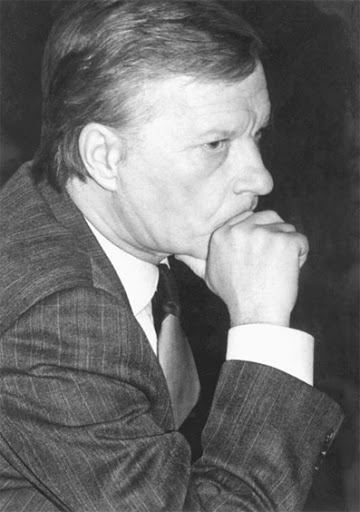
Leonid Borodin (1938-2011)
Leonid Borodin and Nikolai Ivanov were released in March 1973: Borodin from Vladimir Prison; Ivanov from Dubrovlag (Mordovian ASSR).
Arrested in 1967, they were sentenced in 1968 to six years imprisonment (CCE 1.6) for membership of the All-Russian Social-Christian Union for the Liberation of the People (ASCULP).
*
[5]
In March a face-to-face confrontation was organised, as part of his interrogation, between Yury Shikhanovich, arrested in September 1972, and typist Olga Baryshnikova.
Previously (CCE 27.2 [1]) Baryshnikova’s home was searched in connection with the Shikhanovich case.
*
[6]
On 29 March Vladimir Bukovsky was transferred in accordance with his sentence (CCE 23.1-1) from Vladimir Prison to the Perm camp complex.
Bukovsky was sentenced to seven years’ imprisonment: two years in prison, the rest in strict-regime camps, plus five years of exile (CCE 24.1).
*
[7]
Former political prisoner Yury Ivanov (CCE 10.9), released on 6 October 1971, was forcibly sent to Psychiatric Hospital No. 4 in Leningrad in April 1973.
He was sent there from the waiting room at the KGB’s Leningrad Administration, where Moscow KGB officials had suggested Ivanov should go for help in acquiring a residence permit. KGB official Nikandrov summoned the ambulance.
*
In June 1973, Ivanov was transferred to the 3rd Psychiatric Hospital, apparently to a ward for socially-dangerous patients. He was given Aminazin injections.
In summer 1972, Ivanov had rejected the suggestion of the Smolensk KGB’s investigations department that he refute “The Fate of Yury Ivanov’’, a report published in the Chronicle (CCE 10.9).
*
[8]
In mid-May the police broke up a prayer meeting of Baptists near Kharkov (east Ukraine). They detained a former prisoner in the Mordovian camp complex, Boris Zdorovets, who had already served 10 years in camps and in exile [2]. A search was made at his home.
There is information that Zdorovets is being indicted under the UkSSR Article corresponding to Article 190-1 (RSFSR Criminal Code).
*
[9]
The trial of Vaclav Sevruk (CCE 24.2, CCE 25.10 [5]), indicted under Article 63 (Lithuanian SSR Criminal Code), was held in Vilnius in January.
Sevruk was incriminated, in particular, for having contacts with the Chronicle of Current Events. He was arrested on 14 January 1972. The psychiatric commission which examined him at the Serbsky Institute found him non-responsible.
Sevruk acknowledged that he had committed a crime while ill, but so far as is known he did not give any testimony. The court ordered that he receive compulsory treatment at a general hospital in Vilnius.
Sevruk was discharged from the hospital on 9 July 1973 [3].
*
[10]
On 5 March Victor Sokirko was interrogated in connection with Case 24.
He was shown Victor Krasin’s deposition stating that the latter had used Sokirko’s camera to reproduce printed materials. Sokirko refused to answer questions. Proceedings were instituted against him under Article 182 (RSFSR Criminal Code: “Refusal to testify”).
*
In May 1973, Sokirko’s case was tried by the Moscow City Court.
The sentence was the maximum: six months of compulsory labour at the place of employment. Soon after the trial he was again called in for questioning on “Case 24” and confirmed that Krasin had received a camera from him.
The investigator told Sokirko that he had been tried under Article 182 because of the insignificance of the episode with the camera, but that other “recusants” would be tried under more serious articles.
*
[11]
Anatoly Levitin-Krasnov, a writer on religious subjects and a member of the Action Group, gained his freedom in late May.
He was arrested in autumn 1969. In summer 1970, he was released from detention pending his trial.
In spring 1971, he was tried under Article 190-1 (RSFSR Criminal Code) and sentenced to three years in the camps (CCE 20.7). He served his term in the Smolensk Region (west-central Russia).
*
[12]
In June, in connection with the case of Sergei Myuge, a search was made at the dacha of his mother-in-law, Natalya A. Velikanova.
*
[13]
Between 5 July 1972 and 11 July 1973 Victor Nekipelov was subjected to six searches at home and at work, including one at the flat of his mother-in-law.
The last search resulted in the confiscation of letters, poems, photographs, rough drafts, notebooks, tapes, Fyodor Raskolnikov’s 1939 letter [4], a typewriter and the article “They Want to Try Us, What for?”
Nekipelov was the first person to be arrested in connection with the “Myuge Case” [5].
*
[14]
The former political prisoner Boris Shilkrot [6], released in summer 1972, was arrested again on 25 July 1973 in Luga (Leningrad Region). He was indicted under Article 198-2 (RSFSR Criminal Code: “Violation of residence regulations”).
*
[15]
On 2 July 1975 Roald Mukhamedyarov [7] was ruled mentally non-responsible by the Moscow City Court. He was sent for compulsory treatment in an ordinary psychiatric hospital: Moscow Region, Stolbovaya rail station, Psychiatric Hospital No. 5.
*
[16]
In July 1973 the poet Naum Korzhavin was expelled from the Union of Soviet Writers shortly after he applied to emigrate to Israel. (His application was submitted almost immediately after the interrogation, noted earlier, to which Korzhavin was subjected by the KGB.)
Korzhavin’s poems have been published in the Soviet press and in samizdat. His play “Once upon a time, in 1920” was produced at the Stanislavsky Theatre in Moscow.
Korzhavin was arrested several times during the Stalin era.
*
[17]
Victor Nekipelov (b. 1928) was arrested on 11 July 1973 in Kameshkovo (Vladimir Region).
He has a higher education in two fields: pharmacology and literature. A small selection of his poetry was published in 1964. He has published in magazines and newspapers. At the time of his arrest, he was working as head of the Central District Pharmacy in Kameshkovo.
He was indicted under Article 190-1 (RSFSR Criminal Code), incriminated for the poems “A Not Altogether Canonical Ode” and “Tahiti” and for the article “They Want to Try Us, What for?” [8]
Nekipelov was also charged with having given V. Dvortsin, according to the latter’s testimony, one issue of the Chronicle.
*
[18]
In July 1973, Vladimir Maximov was expelled from the Union of Soviet Writers.
Maximov has published two collections of stories in the USSR and has often published in magazines. In samizdat he is known for his novels The Seven Days of Creation and Quarantine.
*
[19]
A message from Daniel Berrigan to Soviet political prisoners
A Roman Catholic priest, Daniel Berrigan is a member of the non-violent resistance movement in the USA, and a former political prisoner.
Daniel Berrigan, his brother Philip and seven of their friends burned draft documents which they had collected in a public square, as a protest against the war in Vietnam. He tells of his meeting with a delegation from the Soviet Peace Committee. Berrigan and his friend asked the Soviet delegates questions about the persecution of dissenters in the USSR.
When they replied, “… we felt in the air the brimstone odour of betrayal. One was always conscious of the corruption of language”. This meeting [9] reminded the American militants of the non-violent resistance of “their Soviet spiritual brothers”.
“In every one of those shifting glances, which met our eyes with such rancour, such moral unwillingness, such a stubborn withholding of the truth, we were able to see your direct and candid look. … So we thank the powers of the Soviet State which in sending your opposite numbers, in a most strange and authentic way sent yourselves.”
*
[20]
Concerning the Public Activities of Valery Chalidze
A letter with this title was circulated on 3 January 1973. It viewed Valery Chalidze’s activities as a publicist and samizdat publisher, as well as his trip abroad, as bold legal experiments confronting the authorities with the necessity of frankly exposing the illegal character of their own actions.
The letter was signed by:
Andrei Tverdokhlebov, Irina Kristi, I. Rudakov, Irina Kaplun, Ludmila Kardasevich, Tatyana Litvinova, Pavel Litvinov, V. Timachev, Irina Yakir, Sergei Myuge, Malva Landa, Ksenia Velikanova, I. Korneyev, Alexander Lavut, Tatyana Velikanova, Nina Bukovskaya, Nadezhda Shatunovskaya and Yury Gastev.
*
[21]
A Statement by American Dissenters
On 24 June 1973, in connection with Brezhnev’s visit to the US [10], The New York Times published this statement.
A passage in the letter reads:
“… To fight against infringements of civil freedoms in the US but keep silent when civil freedoms are being trampled underfoot in the USSR and the countries of the Socialist bloc, to protest against American policy in Indochina but tacitly go along with the Soviet occupation of Czechoslovakia, would not only be immoral but would raise justified doubts as to the sincerity of all our commitments at home.
“The statement mentions the names of political prisoners from the Ukraine and Lithuania, of Jews tried in the ‘Aeroplane Case’, of those taking part in activities for civil rights, and of political prisoners in Czechoslovakia.”
The statement was drawn up by an action committee of 14 persons. It was supported by 273 American intellectuals.
*
[22]
On 29 December 1972 Andrei Tverdokhlebov informed the Human Rights Committee that he was resigning from it for reasons that were “strictly personal”.
*
[23]
On 17 December 1972, after he was deprived of Soviet citizenship, Valery Chalidze [11] announced that he was resigning as a consultant of the Human Rights Committee [12].
*
===============================
NOTES
- AMNESTIES.
On 28 December 1972, to mark the 50th anniversary of the USSR, the Presidium of the USSR Supreme Soviet declared an amnesty. (In 1957 it also declared an amnesty, to celebrate the 40th anniversary of 1917 October Revolution, and would do so again for the 60th and 65th anniversaries, in 1977 and 1982, respectively.)
The 1972 amnesty only applied to certain categories of prisoners and detainees, e.g., first offenders serving less than five years’ imprisonment for crimes other than those listed in Articles 64-73 (“especially grave crimes against the State”).
Those convicted under Article 70 (“Anti-Soviet Agitation & Propaganda”), in other words, were excluded from this and subsequent amnesties.
↩︎ - On Zdorovets see CCE 1.5, CCE 7.4 [5], CCE 30.14 [2] and CCE 39.7.
↩︎ - In autumn 1974 Sevruk emigrated, and was now living in the USA.
On Victor Sokirko, a Moscow engineer, see CCE 7.12, CCE 20.12 [9] and Name Index. Later, Sokirko was closely involved with two samizdat periodicals: Poiski (Searches) and In Defence of Economic Freedoms. (He used the nom de plume ‘Burzhuademov’.)
↩︎ - A reference to the letter of the Bolshevik Raskolnikov (Ilyn), criticising Stalin. Dated 17 August 1939, it was first published in the Paris émigré newspaper Novaya Rossiya on 1 October 1939 (see note 1, CCE 13.3).
↩︎ - On the Myuge case, see CCE 22.8 [7], CCE 23.7 [11], CCE 25.11 [7], and CCE 27.2 [5].
↩︎ - On Shilkrot, see CCE 11.15 [19], CCE 14.11 [6], CCE 17.14-2 [7], CCE 22.4, CCE 27.12 [8] and Name Index.
↩︎ - On Roald Mukhamedyarov, see CCE 14.12 [3], CCE 15.11 [1, 7], CCE 24.2 and Name Index.
↩︎ - For a summary of Nekipelov’s “They want to Put us on Trial, What for?” see CCE 30.15 (5).
↩︎ - Both here and below the original words of Daniel Berrigan are given. The meeting with the Soviet Peace Committee took place on 6 March 1973.
↩︎ - Soviet leader Leonid Brezhnev, CPSU General Secretary, visited the USA from 18 to 25 June 1973. He took part in a “Washington Summit” with US President Richard Nixon.
↩︎ - On Chalidze and Social Issues, see CCE Contents 16.1: “Social Issues, Veche, Poiski, Obshchina (1969-1980)”.
↩︎ - Within a few years Andrei Sakharov was the only remaining member of the Committee (1970-1976), apart from Igor Shafarevich, still active in the USSR.
Its other members and consultants (Volpin, Chalidze, Solzhenitsyn and Galich) had left the country, voluntarily or not, or had resigned (Tverdokhlebov).
↩︎
=========================
 A Chronicle of Current Events