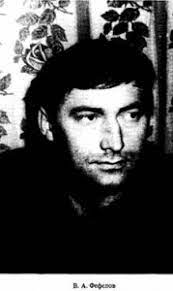
On 20 May 1978, three disabled men (all Group I invalids) either with paralysed legs or without both legs, announced that they had formed an Action Group to Defend the Rights of the Disabled in the USSR. They are Yury Kiselyov (Moscow), Valery Fefyolov (Yuryev-Polsky, Vladimir Region) and Faizula Khusainov (Chistopol, Tatar ASSR) [1].
The group see their fundamental task as
“assisting in setting up an All-Union Society of the Disabled, since … only the disabled themselves can assert their rights; they cannot entrust this matter to any indifferent guardians such as the Ministry of Social Security …”
*
The Action Group has put out three issues of their Bulletin
(edited by Valery Fefyolov)
Bulletin No. 1 (20 May 1978)
reports on an unsuccessful attempt in 1973 to set up a society of the physically handicapped.
It was then “impressed pretty categorically” on one of the participants in this attempt, I. Vinogradova, by social welfare officials that the action was ‘anti-State’.
A letter about Gennady Guskov was published (see Bulletin No. 2) and Khusainov’s appeal to Brezhnev. To a question from Fefyolov an editorial consultant of the official journal Law and the Individual replied: “At present, disabled workers have no housing privileges.”
*
Bulletin No. 2 (22 June 1978)
contains an announcement that the Action Group has been formed (Document No. 1) and an appeal in defence of G. Guskov dated 20 June (62 signatures).
The report “Existence on the Brink, or the Lifestyle of the Disabled and their Relations with the State Apparatus” cites material published in the Soviet press describing the situation in homes for the disabled. Glushchenko, head of social welfare in Yuryev-Polsky, states that compensation (120 roubles a year) for increases in expenditure on petrol, spare parts and service for motor transport for the disabled, due to a doubling of prices, is given only to disabled war and army veterans.
*
Bulletin No. 3 (26 August 1978)
includes the Action Group’s appeal to the governments of the Helsinki Agreement signatory countries (Document No. 2) and Faizula Khusainov’s Open Letter to the Disabled of the West.
Also included are information about the state of prosthetics and orthopaedics in the USSR, a sociological survey of the problems of finding work for the disabled, and Yu. Valov’s letter to the Newsletter’s editors (see “Psychiatric Hospitals”, CCE 51.11). A questionnaire for disabled people is attached and a paper from the Action Group, “On the Position of the Disabled in the USSR” (Document No. 3).
The paper investigates the legal and material position of the various categories of disabled people (for example, a Group 1 disabled person, who has never worked, receives benefits of 17 roubles 50 kopecks per month), their living conditions, medical facilities, problems with artificial limbs, means of transport and mobility, work and education, and also gives another reminder of the right of the physically handicapped to have their own public organization.
*
The reaction of the authorities to the idea of forming an All-Union Society of the Disabled is apparent from the views of two officials quoted in the paper:
“There was someone in Ivanovo who wanted to organize a society for the disabled. If you know what they did to him, you wouldn’t envy him!” (Soldatenkov, deputy minister for Social Welfare);
“The State has the strength and the means to force you to shut up”, (Fyodorov, vice-president of Moscow City Social Welfare).
*
GENNADY GUSKOV
Gennady Guskov (b. 1941) has been a Group I invalid from birth. He is almost completely paralysed and has a congenital defect, deformed and atrophied hands.
In order to write, he has to guide, with his teeth, a brush with a pencil attached. Guskov completed a correspondence course at a technical college and was the author of several inventions (reported in Engineering for Youth and Komsomolskaya Pravda).
While living in a residential centre in Voronezh (south-central Russia), Guskov was behind setting up an electrical engineering workshop there on a cooperative basis. From 1972, the workshop operated under his technical supervision, producing accumulator testers. It made steadily increasing profits and guaranteed disabled people well-paid work. Suggestions were made to expand production, train disabled people and encourage house-bound disabled people from other regions to work there. To do so the workshop was due to be transferred to the authority of local industry: social welfare agencies would have lost control (in homes run by Social Welfare half the salary of disabled workers is deducted. Their labour is not considered to be ‘work’ — that would have legal consequences — but ‘occupational therapy’).
*
Officials of the residential centre and of the Social Welfare agencies launched a campaign of slander and persecution against Guskov.
On 21 August 1977, D.P. Komarova, RSFSR Deputy Minister of Social Welfare, authorized Guzkov’s forcible expulsion from the Voronezh Residential Centre to another home for the disabled. He was immediately removed from his bed, in his night-clothes and without his belongings, and driven by ambulance several hundred kilometres southeastwards to the Saratov Region (Volga District).
(After the expulsion of Guskov from the Voronezh Residential Centre, the workshop was shut down for six months. When it reopened, output was considerably reduced.)
At the present time Gennady Guskov is in an old people’s home in the village of Verkhnyaya Krasavka (Atkarsky district, Saratov Region) and is trying, without success, to secure his return to Voronezh. He is allowed neither to visit Moscow for treatment nor to use a telephone.
The Director has been told not to allow him out for walks. On 7 June 1978 Gennady Guskov was beaten up in the Director’s office.
*
VALERY FEFYOLOV
Valery Fefyolov (b. 1949) suffered damage to his spinal cord and complete paralysis of both legs in a serious industrial accident in 1966. He lives alone, confined to a wheelchair, and has difficulty looking after himself.
On 11 October 1977, the State Motor-Vehicle Inspectorate (SMVI) in Yuryev-Polsky banned Fefyolov from driving his Zaporozhets invalid car for five years. The car had been his only means of transport outside the home. False reasons were given for this penalty. When Fefyolov tried to contest them an SMVI Chief A.N. Chernov, informed him verbally of the real reason: Fefyolov’s contact with unreliable individuals, with dissidents.
On 30 October 1978, an illegal search was carried out in Valery Fefyolov’s flat, without sanction from the procurator. Officers of Yuryev-Polsky district office of internal affairs, Senior Lieutenant Karaulov and Lieutenant Yegorushkov, carried out the search. They informed Fefyolov that they were looking for “unauthorized people”. Taking advantage of his helplessness, they came into his room, searched his personal possessions and looked through his correspondence, photographs and typewritten texts.
Fefyolov filed a complaint with the town procurator, pointing out the illegality of the police action and also that “a Group I invalid without both legs has been subjected to force, humiliation and insult.”
==================================================
NOTES
- Town of Yuryev-Polsky, pop. 21,900 (1979); small city of Chistopol, pop. 64,285 (1979).
↩︎
============================
 A Chronicle of Current Events