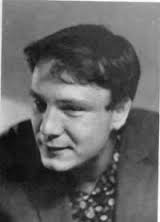
THE BUKOVSKY CASE
- 1.1 — Appeals and Trial
- 1.2 — Final Words
*
1.1: APPEALS & TRIAL
*
(a) Appeals and Statements
PSYCHIATRY
In a letter of 26 November 1971 [1] addressed to the 5th International Congress of Psychiatrists in Mexico, the Action Group announced its support
“for the appeal and proposals of the Committee for Human Rights [CCE 22.7 (5)], aimed at devising ways to limit the possibility of arbitrary treatment and malpractice with regard to people ruled to be mentally ill or who are undergoing psychiatric examination”.
The letter reads:
“We share the Committee’s anxiety about the imperfect guarantees of these people’s rights.
“In particular,we consider it essential to try and draw the attention of the Congress’s participants to the most immediate and, in our opinion, in practice most important question: it concerns the psychiatric criteria of non-responsibility which are used in forensic medical diagnosis during the investigation and trial of people charged with political offences”.
Listing the documents, the study of which, in their opinion, would be useful in this connection (the diaries of Petro G. Grigorenko, [2]; the letter of Victor Fainberg [3]; and A Question of Madness, the book by Zhores and Roy Medvedev), the authors of the letter especially stress the achievement of Vladimir Bukovsky [4]:
“It is thanks to Bukovsky’s initiative that the participants in the Congress, and the world as a whole, have gained access to materials which describe the illegal methods used to carry out such examinations in the Soviet Union”.
*
BUKOVSKY
On 28 November 1971, the Action Group made an appeal to the USSR Procurator-General, R.A. Rudenko, which they copied to the International League for the Rights of Man (FIDH), in protest against the new illegalities to which Bukovsky had fallen victim.
He wanted to use the services of lawyer Dina Kaminskaya, who had defended him at an earlier trial. This request had been rejected by the investigator on the grounds that Kaminskaya did not possess “a security pass to “secret” proceedings [5]. This argument was repeated on 24 November 1971 by K.N. Apraksin, Chair of the Presidium of the Moscow Bar Association (lit. Collegium of Lawyers) [6].
The authors of the Action Group letter note the illegality of the practice of demanding “security passes” of this sort, and the absence in the existing situation of any sort of guarantee that illegal methods of pressure would not be applied to Bukovsky by the investigators.
(Throughout the entire period of his eight-month detention Bukovsky’s mother, Nina Ivanovna, had not had a single meeting with him; nor had she received a single letter. He had been completely deprived of contact with the outside world).
The letter-writers continue:
“Because of the absence of a lawyer until now, it is unknown what Bukovsky is actually accused of.
“The absence of a lawyer may facilitate the thickening of the mystery surrounding the trial itself, even including the possibility that it may not be known when it begins. been met without the participation of a lawyer” contradicts Soviet criminal procedural law.
“In addition, the whole practice of demanding ‘security’ before lawyers can be admitted to ‘secret’ cases contradicts international law. We demand the admission to Bukovsky’s case of the lawyer demanded by him, Dina Kaminskaya, and full publicity for the forthcoming trial of Vladimir Bukovsky…
“We are convinced of the complete innocence of Vladimir Bukovsky, hut at the present time we refrain from the natural demand for his release, as we are certain that full publicity for the trial proceedings, together with the granting of his right to a defence, will be enough to prove his innocence”.
*
On 29 November 1971, members of the Committee for Human Rights, Valery Chalidze, A.D. Sakharov and Andrei Tverdokhlebov, and consultant to the Committee Alexander Volpin, sent a supervisory complaint to USSR Procurator-General Rudenko.
An end must be put, they wrote, to the violation by the investigators of Bukovsky’s right to a defence:
“The statement of the chief investigator that ‘the requirements of the Russian Code of Criminal Procedure under Article 201 have already been met without the presence of a defence lawyer’ contradicts the Code of Criminal Procedure, the Constitution of the USSR, the lawyers’ statutes of the RSFSR, and elementary logic.
“Not to mention that whatever body issued the decree whereby Apraksin rejected Kaminskaya for her lack of a ‘security pass’, it is clear that this body not only issued an illegal decree: it is also ineffective, in the sense that the decree does not ensure the secrecy of proceedings.
“Certainly, according to the Code of Criminal Procedure the lawyer in a case has the right to study no greater number of documents than the defendant, but the liability of a person to be charged with an offence does not depend, either according to the law or in practice, on his possession of a ‘security pass’ for secret proceedings.
“Such deliberate mistrust of a lawyer is unfounded and undoubtedly infringes the professional dignity of the profession, especially as, according to Article 10, people ‘who do not possess the moral and professional qualities to be a Soviet lawyer are not to be elected to the Collegium of Lawyers’.”
*
On 7 December 1971 the mother of Vladimir Bukovsky, Nina Ivanovna BUKOVSKAYA, appealed to N.V. Podgorny, Chairman of the USSR Supreme Soviet Presidium.
She asked him to issue an order that the right to a defence, as guaranteed by Soviet law, should be observed. The lawyer whom Nina Bukovskaya had been able to find for her son had been refused by him, as the investigator had not presented this lawyer to Bukovsky personally, but had recommended him in his absence.
Nina Bukovskaya also wrote of her fears that she might not be admitted to the courtroom, since she may be named as a witness in the case: she asked to be protected from such an arbitrary act.
*
On 12 December 1971 the members of the Committee for Human Rights (A.D. Sakharov, Andrei Tverdokhlebov, Valery Chalidze and Igor Shafarevich) appealed to N. A. Osetrov, Chairman of the Moscow City Court.
They expressed a desire
[i] to be present at the trial of Bukovsky and “to observe in person the workings of justice in this case, which has aroused great public interest”, and
[ii] asked Osetrov to inform them by telephone of the date of the court hearing.
*
In a letter [7] to the USSR Procurator-General and to V. I. Terebilov, USSR Minister of Justice, Academicians Sakharov and Leontovich, Igor Shafarevich, corresponding member (USSR Academy of Sciences), and the writer Alexander Galich reported that, after studying materials which give a clear idea of Bukovsky’s activities, they consider
“that these materials cannot serve as the basis for the arrest and trial of Bukovsky. They do not contain libellous fabrications, nor agitation or propaganda with the aim of undermining the Soviet political and social system.
“His TV interview [8] is based on what he saw and heard and experienced himself during his imprisonment in a Special Psychiatric Hospital and in a camp. As regards the medical documents sent by Bukovsky to Western psychiatrists [9], they can in no way be regarded as libellous, as they are copies of genuine documents.”
*
On 27 December 1971 member of the USSR Writers’ Union Vladimir Maximov [10], whose secretary Bukovsky was right up to his arrest (CCE 22.2), sent this statement to the USSR Procurator-General and to A. F. Gorkin, Chairman of the USSR Supreme Court:
“Having studied the documents sent by my secretary Vladimir Bukovsky to the court of international psychiatry, I consider it my duty to state the following:
“(1) As far as I know, extracts from a person’s medical history, medical conclusions, and records of medical diagnoses have never been, and are not, state secrets. All the more so if they are written in a qualified and impartial way.
“(2) Soviet psychiatrists should only welcome wide publicity being given to their, I dare to hope, impartial conclusions, so that the provocative rumours and idle fabrications of political speculators, which are used with great advantage to itself by so-called bourgeois propaganda, may be cut off at their very source. …
“On the basis of the above I consider the initiation of a case against Vladimir Bukovsky on these grounds to be unfounded.
“Naturally, the investigators may have additional information about which, until I can study it, it is difficult for me to judge. In that case it is the duty of the investigatory organs to present this information to our public”.
*
On 29 December 1971, in an Open Letter about Bukovsky, the Action Group said that he had
“obtained and collected forensic psychiatric diagnoses, on the basis of which people who have dared to criticize those things in our country which in their opinion deserve criticism, are being subjected to refined torture for many years. Bukovsky sent these documents to Western psychiatrists so that they could study the problem and raise it before the judgment of world public opinion …
“… The fate of Bukovsky is now, and always will be, linked with this crucial social fact: the sentencing of Bukovsky is necessary to those people who wish to conceal the existence of the system of repressing people by psychiatric means, and to continue such repressions.”
The letter ends with the appeal: “Freedom for Vladimir Bukovsky!”
*
(b)
THE TRIAL
On 5 January 1972 the trial of Vladimir Konstantinovich BUKOVSKY took place in Moscow’s Lyublino district court, 14 Yegorev Street [11].
The approaches to the courthouse were sealed off by the police a block away on either side.
Neither Bukovsky’s mother Nina, who had been summoned to appear as a witness in spite of her statement that she could not tell the court anything about the substance of the case, nor any of his friends, nor any member of the Committee for Human Rights was admitted to the courtroom (“because of the lack of unoccupied places’’).
The judicial examination was conducted by an assizes session of the Moscow City Court.
The Judge was Valentina Lubentsova [12] the People’s Assessors were Kondakov and Shlykov.
The procurator (prosecutor) was Aza M. Bobrushko; the defence counsel was Vladimir Shveisky [13]. (The court secretary was Osina.)
*
Vladimir Bukovsky was charged with having circulated anti-Soviet materials of libellous content, with having communicated to foreign correspondents slanderous information, and with having asserted that in the Soviet Union healthy people are placed in psychiatric hospitals of prison type [14].
In the indictment it was also stated that “Bukovsky had the aim of organizing an underground printing-press in order to circulate samizdat materials”.
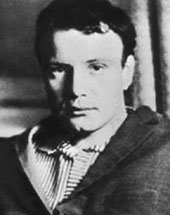
Vladimir Bukovsky (1942-2019)
Bukovsky announced to the court nine petitions: to make the charges more specific; to summon to court witnesses who could confirm the truthfulness of his statements to Western correspondents; to provide publicity [glasnost] for the court proceedings and to admit his friends and acquaintances to the courtroom. And to attach several documents to the case files, in particular the refusal of K.N. Apraksin, Chairman of Moscow’s Bar Association (Collegium of Lawyers), to appoint lawyer Dina Kaminskaya because of her lack of “a security pass for secret proceedings.”
The court rejected all the petitions made by Bukovsky and his lawyer Shveisky, and resolved merely to attach to the case materials a few of Bukovsky’s written complaints.
*
BUKOVSKY TESTIFIES
Bukovsky informed the court that in the interview he had given to foreign correspondents he had spoken about the facts of his biography and about other people known to him, who, while absolutely healthy mentally, had been interned by courts in psychiatric hospitals without any medical or juridical grounds.
He described the conditions of life in the Leningrad Special Psychiatric Hospital (SPH) and the methods of forcible treatment applied there: how injections of aminazin and sulphazin, which produce a heightening of the temperature and serious mental depression, are used following complaints by hospital orderlies; also how it is possible to get oneself discharged only by renouncing one’s beliefs. Bukovsky informed the court of a series of inhuman actions concerning the prisoners in the Leningrad SPH.
Asked what his motive had been in giving an interview to Western correspondents, and whether he had not had the aim of undermining or weakening the Soviet regime, Bukovsky gave a categorical denial. He had been thinking, he replied, only of those people, his friends and others, whom, perhaps, it might be possible to save.
Bukovsky denied having handed two documents to the Belgian Hugo Sebreghts, an action with which he was charged.
Referring to the testimony of witness A. E. Nikitinsky, a school friend who is now a customs official at Moscow’s Sheremetyevo Airport, Bukovsky said that more than once Nikitinsky had offered to let through someone from abroad with a duplicating machine, without a customs examination. He had rejected such an idea, after which Nikitinsky had ceased to visit Bukovsky’s home.
Under cross-examination, witness Nikitinsky was asked why he, a Communist, had listened at Bukovsky’s flat to anti-Soviet statements: according to him, they had distressed him, but he remained silent and continued to visit Bukovsky at home. Nikitinsky replied:
“I said to him: Volodya, chuck it, you’re hitting your head against a wall”.
Defence counsel V. Ya. Shveisky said that the prosecution had made a mistake by defining Bukovsky’s actions under Article 70 of the RSFSR Criminal Code, and that parts of the indictment, as the judicial examination had shown, had remained unproven.
He asked for the acquittal of his client.
*
The court sentenced Bukovsky to seven years’ loss of liberty, the first two to be served in prison, the remaining five in a strict-regime corrective labour colony, followed by five years of exile [15].
Court expenses to the sum of 100 roubles were to be paid by Bukovsky [16].
*
Final Words [32]
“I will not touch on the juridical side of the indictment, because I have already fully proved to the court its lack of substance. My lawyer in his speech has also proved the complete lack of substance of the indictment, and I agree with him on all the points of his defence. …”
Read “Final Words” (Part Two) …
===================================
NOTES
- The Action Group letter was signed by nine members, including Pyotr Yakir. It was briefly summarised in an AP dispatch from Moscow two days later (28 November 1971).
↩︎ - The Russian text of Grigorenko’s prison notes can be found in Possev, No 4, Frankfurt, 1970, and Kaznimye sumusshesiviem [Punished with Madness], Possev Verlag, 1971 (pp. 300-333).
A French version was published in La Russie contestataire, Fayard: Paris, 1971 (pp. 205-232).
↩︎ - The Russian text of Fainberg’s letter is also in Kaznimye sumasshestviem (pp. 381-99). French and German texts are to be found in the French and German editions of Bukovsky’s documents.
↩︎ - The Fifth International Congress of Psychiatrists in Mexico produced no public condemnation of these practices, thanks in part to the intense diplomatic activity there of Professor Snezhnevsky and other Soviet psychiatrists.
See an important critical review of the Congress and allied issues by I. F. Stone in the New York Review of Books, “Betrayal by Psychiatry” (10 February 1972) and his article in the New York Times, 15 February.
However, the January 1971 initiative by the Canadian Psychiatric Association was followed up in a resolution passed on 25 November 1971 by the Executive Board of the World Federation of Mental Health. This reads in part:
“In recent years there have been numerous public allegations concerning the current misuse of psychiatric diagnoses, psychiatric treatment and enforced confinement in psychiatric institutions to persons whose only ‘symptoms’ have been the avowal of opinions disapproved by their .society. These accusations have been directed in particular—though not exclusively– against the alleged incarceration of political dissenters in prison mental hospitals in the USSR.
“The World Federation for Mental Health resolutely opposes any such abuse of psychiatric procedures and calls on its Member Associations throughout the world promptly to investigate all such allegations, and to defend the individual’s freedom of opinion where it appears to be threatened.’’
↩︎ - On the rejection of Dina Kaminskaya as Bukovsky’s lawyer, see the London Times (7 December 1971), which also includes a description of the annual Constitution Day demonstration (CCE 43.2) , and an interview with Yakir. And see UPI dispatches from Moscow, 23 and 27 December 1971.
↩︎ - Konstantin N. Apraksin, Presidium Chairman of the Moscow Bar Association (Collegium of Lawyers), played a role in the second trial of Red Square demonstrator Vladimir Dremlyuga
(CCE 20.11 [13]) and other judicial hearings.
↩︎ - The letter from Sakharov, Leontovich, Shafarevich and Galich to the USSR Procurator-General and Minister of Justice was summarized in AP and Reuters despatches from Moscow of 4 January 1972.
↩︎ - For the text of Bukovsky’s TV interview see Survey, London, No. 77, 1970.
↩︎ - For the medical documents sent by Bukovsky to Western psychiatrists, see the French and German editions, and selected documents in English in Survey, No. 81, 1971.
↩︎ - After Maximov’s statement to the USSR Procurator-General and the Chairman of the USSR Supreme Court, the KGB considered laying charges against him. (See The Daily Telegraph, London, 29 February 1972.)
↩︎ - A lengthy samizdat transcript of Bukovsky’s trial (50 typescript pages) appeared later in Russkaya mysl, Paris (9 March 1972). Later it became known that it was largely the work of Bukovsky’s friend Alexei Tumerman (CCE 26.7).
It was due to appear in English in Survey No. 83, London. Long extracts were printed in the London Times on 7 February 1972.
See also numerous Western press reports, printed at the time, on 6 and 8 January 1972, and a crudely distorted Soviet report in Vechernyaya Moskva (Evening Moscow; 6 January 1972).
↩︎ - Like Judge Bogdanov, Valentina Lubentsova presided over many Moscow trials of dissidents and rights activists, see Judge Lubentsova and the transcript in Gorbanevskaya’s, Red Square at Noon (1972).
↩︎ - Shveisky was also defence counsel to Alexei Dobrovolsky, Boris Talantov and Andrei Amalrik (CCE 1.1, CCE 10.2 and CCE 17.1) and to a number of others.
↩︎ - On Bukovsky, see CCE 19.1, CCE 21.5, CCE 22.2, CCE 23.1-1, CCE 24.1, CCE 43.1 and Name Index.
↩︎ - Numerous protests and appeals were made against this sentence:
(1) There was an appeal of 22 January by 52 of Bukovsky’s friends to UN Secretary-General Kurt Waldheim (text and signatories in Russkaya mysl, 23 March);
(2) A letter was sent to The Times (31 January) by 39 prominent British writers, scholars and politicians;
(3) An appeal by 75 Swiss writers, members of the Swiss Writers’ Association, was made to Kosygin (text and signatures in Der Bund, Bern, 20 January); and
(4) an appeal to Brezhnev was made by Academician Sakharov (The Guardian, London, 21 January).
The sentence was confirmed, nevertheless, on 22 February 1972 at a two-hour session of the RSFSR Supreme Court, to which Bukovsky’s friends, Andrei Sakharov and independent journalists were not admitted. Only his mother was allowed to attend (see AP dispatch of 22 February and The Times, 23 February).
An AP dispatch from New York of 2 March reported that Bukovsky had been sent to Vladimir Prison, adding that his friends feared for his survival in view of his heart condition.
↩︎ - For a new document by Bukovsky (June 1970) see Russkaya mysl, Paris, 3 and 10 February 1972. ↩︎
==========================
 A Chronicle of Current Events