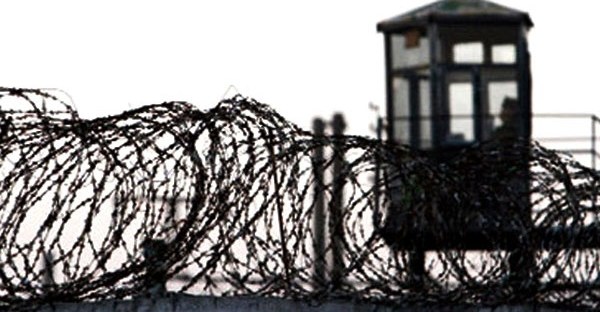
See map 3, Dubrovlag
7 ITEMS
[1]
In 1969 Rashid Dinmukhamedov (b. 1929) was sentenced for a second time to 13 years of special-regime corrective-labour camps (p/o Leplei, ZhKh-385/10). In December 1969 he was placed in hospital, where he opened his veins.
For five hours he was given no medical attention: the duty officer did not call a doctor, referring to the lateness of the hour. Dinmukhamedov died from loss of blood.
*
[2]
Valery Illarionovich ZAVERTKIN is a dentist (b. 1914).
He was arrested on 10 January 1969 and sentenced by the Moscow City Court to 15 years of special-regime corrective-labour camps for preparing an attempt on the lives of Party and government leaders, possessing arms and living on forged documents.
Previously he was convicted in 1933 for taking part in the terrorist organisation RROK (Russian initials for the “Emancipation of Russia from the Communists”). Zavertkin was sentenced to death, but this was commuted to ten years in view of his youth. He escaped from custody, was caught in 1937 and served his sentence until 1947.
In 1952 Zavertkin was again convicted, this time for Anti-Soviet Propaganda under Article 58-10, para. 1 (1924 RSFSR Criminal Code). His address in Mordovian Camp No. 10: p/o Leplei, ZhKh-385/10.
*
[3]
Boris Borisovich ZALIVAKO, a priest born in 1940 in Leningrad, was sentenced in early 1970 by the Uzhgorod (West Ukraine) Region Court to eight years of strict-regime corrective-labour camps and five years’ exile for attempting to cross the Soviet-Czechoslovak frontier (CCE 34.8 [2]).
He is in camp No. 3 (ZhKh-385/3-1).
*
[4]
Yakov Vladimirovich ODOBESCU, a Moldavian (b. 1900), was a beekeeper at the “Dubosary” State Farm when he was arrested in July 1967 [correction CCE 18.14]. Investigations were conducted by Captain Zelenyuk and the head of the Moldavian KGB, General Savchenko.
The charge (Article 67, Moldavian SSR Criminal Code = Article 70, RSFSR Code) was based on a letter Odobescu sent to: Bodyul, first secretary of the Moldavian Communist Party’s Central Committee; Ya.S. Grosul, President of the Moldavian SSR Academy of Sciences; the Moldavian Minister of Agriculture, and others. The letter contained a demand to protect Moldavia from Russification and an appeal for Moldavia (annexed from Rumania in 1940) to be reunited with Socialist Rumania.
In addition, poetry written by Odobescu which he had sent to the singer Nikolai Sulak, People’s Artist of the Moldavian SSR, was judged to be criminal; he was also charged with circulating hand-written leaflets (“Moldavia for the Moldavians; Russians, go back to Russia”).
The Moldavian SSR Supreme Court sentenced Odobescu to seven years of strict-regime corrective-labour camps. He is at present in No. 17-1, the “big” camp. (Probably “big” in relation to camp 17a.)
*
[5]
Nikolai Ruban (b. 1940) a resident of Konotop (Sumy Region, northeast Ukraine), was arrested at the end of 1968.
He was sentenced in 1969 by the Kiev Region Court to five years of special-regime corrective-labour camps for the creation of an organisation “of a nationalist character” (he was the only person to be tried) and for circulating leaflets.
Ruban is being held in Camp No. 10.
*
[6]
Albinas Telkenis, a Lithuanian (b. 1924), was educated as an agronomist.
In 1940 he entered the Komsomol; after the war he helped to set up collective farms [kolkhoz] in Lithuania. Until his arrest he was a research officer at the Kaunas Botanical Institute. He is the author of a number of articles in the Lithuanian journal Agriculture; his arrest prevented him from defending his Cand.Sc. dissertation.
Telkenis was arrested on 29 September 1969 and charged under Article 68 (Lithuanian SSR Criminal Code = Article 70, RSFSR Code) with preparing a letter “containing fabrications slandering Party policies in agriculture”, and with the aim of circulating it. The trial took place on 6 April 1970 behind closed doors: the chairman was Mezhenas, the lay assessors Adomaitis and Kokhanko; the prosecutor was Procurator Bakuchionis; defence counsel, Karchatskas.
According to the defence, Telkenis had carried out the request of an aged neighbour, formerly the chairman of a collective farm, who was unable to write himself (because of his “trembling hands”), and written at his dictation an application requesting treatment.
The response from the organisation to which the application was sent was feeble, in the old man’s opinion. On one occasion he dictated to Telkenis a letter addressed to some high authorities or other, setting out his views on agriculture. That was in 1967. In 1969 the old man died. It turned out that he had not sent off his letter — his relatives found it and took it to the KGB, after which Telkenis was arrested.
The court sentenced Telkenis to three years of strict-regime corrective-labour camps. His address in Mordovian Camp 17-1: penal institution ZhKh 385/17-1.
*
[7]
Pyotr Nikolayevich TOKAR (b. 1909) is a “Jehovah’s Witness”.
In 1947 he was sentenced under Articles 54-10 and 54-11 (1924 RSFSR Criminal Code) to 25 years of corrective-labour camps. In 1970 he sent a complaint to the Procurator: the present 1960 Code prescribes a maximum sentence of ten years’ imprisonment, he wrote, for this offence.
The reply read: “Explain to prisoner P.N. Tokar that since he was sentenced in 1947 his complaint cannot be accepted.”
============================================
NOTES
 A Chronicle of Current Events