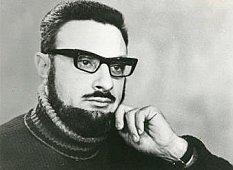
On 26 November the trial of Genrikh Ovanesovich ALTUNYAN was held in Kharkov (east Ukraine).
A radio technician, Altunyan held the rank of major until he was demoted [1]. He is a member of the Action Group for Civil Rights in the USSR (CCE 8.10) and the father of two children.
*
When arrested (CCE 9.4), Altunyan was charged under Article 62 (UkSSR Criminal Code = Article 70, RSFSR Code: “Anti-Soviet Agitation & Propaganda”). After the pre-trial investigation the charge was replaced by one under Article 187-1 (UkSSR Criminal Code = Article 190-1, RSFSR Code), covering the manufacture and circulation of documents which “contain deliberate fabrications and discredit the Soviet political and social system”.
Fifteen witnesses were questioned at the trial, including eight witnesses for the defence.
The court was shown manuscripts, letters and rough notebooks confiscated from Altunyan during a search. The trial was open, but the courtroom, as is always the case at such trials, was filled before the start of the hearing with a specially chosen audience.
Trukhin was the Procurator, Klyuchko the Judge and Ariya the defence lawyer.
*
CHARGES AND EVIDENCE
The following were cited as evidence incriminating Altunyan:
1. A conversation with one of the witnesses for the prosecution in which Altunyan condemned the invasion of Czechoslovakia by troops from the Warsaw Pact countries, and welcomed the Red Square demonstration of 25 August 1968. He also said that the State practised anti-Semitism in our country.
2. The unfinished rough draft of a letter from Altunyan to the Moscow conference of Communist Parties, in which he protested against the dismissal from their jobs of people who had signed the letter to the United Nations.
As Altunyan explained at the trial, he had given up the idea of writing this letter after he had checked the facts. The Procurator referred in his prosecution speech to the fact that information from Altunyan’s draft letter had been published in foreign newspapers, thereby implying that Altunyan had given this information to the Western press.
3. Preparing the final page of the transcript of an address on the crisis in the Soviet economy given by Academician Aganbegyan to employees of the Mysl publishing-house (written in Altunyan’s handwriting). At the pre-trial investigation Aganbegyan, who had been called as a witness, had stated that he had never said anything of the sort, and that the document certainly constituted a libel against the Soviet political and social system.
Aganbegyan did not appear in court, although he had been summoned as a witness for the prosecution. After deliberating without retiring, the court resolved that the trial could continue in his absence. Under questioning, Altunyan explained that he had lost the last page of the transcript and had attempted to reconstruct it from memory.
4. Composing and signing a letter in defence of P.G. Grigorenko.
5. Signing the letter to the UN — Altunyan is a member of the Action Group for Civil Rights in the USSR.
6. Signing a letter to the Conference of Communist and Workers’ Parties in Moscow in June 1969.
*
PROSECUTION & DEFENCE
The Procurator’s prosecuting speech enumerated all the charges as falling under Article 70, even going so far as to assert that Altunyan had committed particularly dangerous crimes against the State (ignoring the fact that Altunyan had actually been charged under Article 190-1, not under Article 70). Procurator Trukhin demanded that the accused be imprisoned for three years.
In his speech, defence lawyer Ariya, did not contest points 4, 5 and 6 of the indictment, but maintained that the documents were not deliberately false. The defendant, Altunyan, genuinely believed the statements in them to be true. Ariya rejected the first three charges as unfounded. Concluding his speech, he appealed to the court to punish the defendant, Altunyan, in some way that did not entail imprisonment.
Altunyan pleaded not guilty. In his final plea he declared that he had always had fought, and would always fight, against manifestations of Stalinism in our country.
*
SENTENCE
In sentencing Altunyan to three years in an ordinary-regime camp, the court based its judgment on the fact that Altunyan, a man with a higher education, could not fail to appreciate the libellous nature of the incriminating documents.
Especially since he had been warned repeatedly by State and Party agencies about his illegal activities, as expressed in the composing and signing of the documents cited by the prosecution. The sentence repeated in full the indictment.
*
PROSECUTING CERTAIN WITNESSES
The court made a separate resolution concerning all the defence witnesses who, like Altunyan, had signed the letter in defence of Grigorenko and the appeal to the United Nations. Their cases were assigned for separate legal treatment: Vladislav Nedobora (trial CCE 13.4), Karasik, Vladimir Ponomaryov, Arkady Levin (trial CCE 13.5), Lifshits, Kalinovsky, Podolsky and Kornilov.
At the same time Irkha, a prosecution witness and Party worker at the military academy where Altunyan taught, actually said in court that it was not yet certain: had the rehabilitation of Army Commander Iona Yakir, father of Pyotr, been justified or not?
*
On 23 December, in Kiev, the appeal hearing took place in the case of Genrikh Altunyan.
His friends were not allowed into the courtroom, and were told that the hearing would be held in camera. The third charge was struck from the sentence, together with the words “Altunyan committed particularly dangerous crimes”. The term of imprisonment was left unchanged.
===========================================
NOTES
- On Altunyan, see CCE 21.10 [21], CCE 22.8 [15], CCE 49.18 [10] and Name Index.
↩︎
*
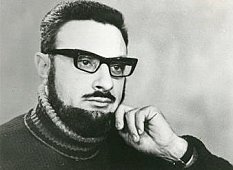
Genrikh Altunyan (1933-2005)
======================
 A Chronicle of Current Events