<< Other texts and documents >>
*
“What makes the Chronicle so impressive is its utter lack of melodrama” (New York Times)
*
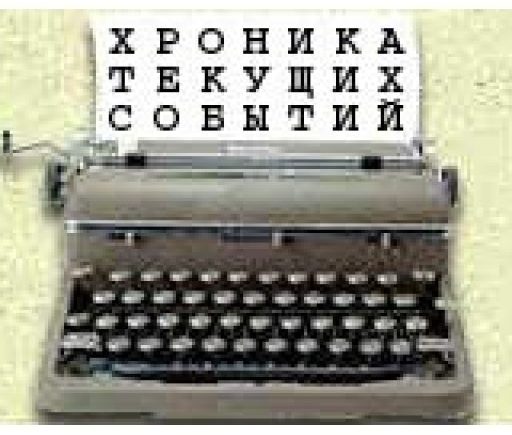
A typescript journal, the CHRONICLE OF CURRENT EVENTS was produced in Moscow and circulated every 2-4 months for fifteen years by an “anonymous and changing group of human-rights activists” (Reddaway).
Today it offers a unique, uncensored and continuous account of life inside the Soviet Union from 1968 to 1982. Starting with reports from Moscow and Leningrad the periodical’s network of contacts and sources of information expanded over the following 15 years until it regularly included (see CCE No. 56) reports about human rights violations from Ukraine, Lithuania, Georgia, Armenia, Estonia and other parts of the USSR: the persecution of believers; those imprisoned for their beliefs (in prisons, labour camps and psychiatric hospitals); the growing rejection of Soviet citizenship; etc.
A detailed account of the CHRONICLE‘s origins, development and demise can be found online in the extended Wikipedia entry. (The Contents Page, recently added to this website, lists the 19 themes that the periodical regularly included by the end of the 1970s.)
♦
On this website, for the first time, all the translations into English made many years ago may be accessed from one location: see Table 1. CCE in English: Issues 1-15 (1968-1970). (The contents in Russian and the original reports from the 2008 Memorial website can also be located on the menu bar.)
Contents lists are provided for the 64 available issues (1-58, 60-65).
Due to the repressive circumstances under which the CHRONICLE operated one issue (59) was confiscated by the KGB and the last (65) never went into circulation, either in Russian or English. (See the Chronicle in Russian.) Its editors and contributors were persistently harassed by the Soviet authorities: many were arrested and sent to labour camps or psychiatric hospitals; others were encouraged to leave the country.
*
Many deserve thanks for making such an English-language website possible, above all the late Peter Reddaway.
He drew the world’s attention to the Chronicle‘s existence.
He assembled and published Uncensored Russia (1972), a refashioned version of the first eleven issues, thereby publicising its understated reporting, insistently self-critical accuracy and ever-expanding contents. Peter Reddaway also ensured that it was regularly translated into English thereafter, battling to persuade Amnesty International to continue the work he began with issues 1-11, himself circulating translations of successive issues 12-15 until the organisation agreed (and Ed Kline helped to fund) publication of the result.
This became a major commitment as the Chronicle grew constantly in size, increasing from 51 pages in 1972 (CCE No. 23) to 182 pages by 1978 (CCE No. 48).
On the other hand, that merely reflected and paid homage to the extraordinary labours of the unnamed, diligent and courageous supporters in the USSR who made and circulated carbon copies on mechanical typewriters. As the veteran bard Alexander Galich put it, “An Erika will make four copies.” [1]
*
A pause in Amnesty’s publication of the Chronicle occurred between January 1976 (CCEs 32-33) and 1978. Issues 40-45 were not published in English until 1979: see Table 3. CCE in English: Issues 32-47 (1974-1977).
The plain, unannotated Russian text of the Chronicle was then being regularly issued by the Khronika Press in New York (founder, Valery Chalidze). The Bibliographical Note (CCE 31.27) at the end of volume CCE Nos. 28-31 confirmed that the Russian texts of CCEs 32-34 “have already reached the West”; its equivalent in the next AI volume (CCE 34.24) said that “the Russian texts of numbers 37 to 46 are already in Amnesty’s possession”.
There had always been a pause in publication outside the Soviet Union.
This was due to delays in transfer, translation and annotation. (US and Canadian, but not British diplomats, assisted transfer to the West of the typescript samizdat version of the Chronicle.) The 1976-1978 delay was notably longer than before. And it occurred at a critical moment. Helsinki Groups were then being established in Moscow, Ukraine, Lithuania and elsewhere in the USSR to monitor and report Soviet violations of the August 1975 Helsinki Accords.
Peter Reddaway retained responsibility for getting hold of issues of the Chronicle and ensuring they were translated into English: he himself continued to annotate each new volume. This was, doubtless, one reason for the new delay. Reddaway was then heavily engaged in researching and writing, with co-author Sidney Bloch, a definitive and influential work about psychiatric hospitals in the USSR. Meanwhile, the closely-related quarterly Chronicle of Human Rights in the USSR (CHR) continued to appear, in Russian and English, as did Reports of Helsinki Monitors’ comments [2].
*
In 1978 the publication of annotated translations of the Chronicle resumed and was put on a regular basis at Amnesty International with the support and aid of the late Marjorie Farquharson. Issues 43 to 64 (December 1976 to June 1982) were translated into English and published as rapidly as possible.
The latest issues of the CHRONICLE, however, often appeared in Russian months after the closing date on their front page. For example, Vesti announced late in February 1982, “CCE No. 62 has been released in Moscow”: it was 160 pages long and bore the date July 1981.
Nothing would today be possible, however, without the work of the largely unnamed translators of the 1970s and 1980s: Elizabeth Winter, Xenia Howard-Johnston and others. They ensured that each issue appeared in English. Many thanks for their contribution. We hope that they are aware of this website’s existence.
*
Some revision of the translated texts took place when preparing this website.
For example, the preferred translation in the present version of Chronicle of the Russian term «Советская власть» is ‘Soviet regime’ [3], not ‘authority’ or, bizarrely, ‘power’. Certain words (Party, State) have been capitalised throughout. And so on.
The pdf copies can still be read today, using Adobe.
The conversion of all but the last six issues (CCE Nos. 60-65, 1981-1982) for posting on the internet was made possible by the ABBYY 12 programme.
John Crowfoot, March 2025
*
The 2015 website launch
The Chronicle website was formally launched at Pushkin House (London) on 15 September 2015. The discussion at that event has been uploaded to YouTube and may be watched in its entirety (2 hours) or in the edited highlights (24 minutes).
Our thanks to Pushkin House for hosting the event, to the panel of speakers — Alexander Podrabinek, Martin Dewhirst, Melek Maksodoglu and Josie von Zitzewitz — to Elena Cook, our interpreter for the evening, and to Sarah Hurst who filmed the event.
*
Additional materials
The detailed annotations by Peter Reddaway in Uncensored Russia, and those he provided for the later Amnesty editions, were first included on this website as a separate Commentary (e.g. CCE No 58) to the respective issue. Now many have been added to each report as end notes. More recent notes have been added by the present editors, especially links to the wide-ranging Name Index posted late in 2024.
A number of relevant maps, e.g. of the major administrative divisions of Russia (RSFSR) and of the constituent republics of the USSR, have been added to guide readers as to the location of places mentioned in the text.
*
Also of relevance is USSR News Update (Vesti iz SSSR). Produced in Munich every fortnight by Kronid Lyubarsky between November 1978 and December 1991, some issues of this invaluable periodical were translated into English by Marjorie Farquharson.
*
Work-in-Progress
The translations were admitted by the original editors of the English edition to be “rather literal”. Please contact us if you find anything you consider an important error in translation — we are correcting any mistakes we find as each report is uploaded to the website.
— and do report any links that don’t work.
John Crowfoot and Tanya Lipovskaia
mailto: jcrowfoot@mailfence.com
9 April 2019 (updated 24 Jan 2025)
=============================
NOTES
- As Alexander Podrabinek commented, from long experience (the very first issues of Express Chronicle were also produced on mechanical typewriters) an East German Erika could actually take more. It was regularly used to produce six carbon copies …
↩︎ - Four volumes of translation were published in 1977 and 1978. English translations of the different Helsinki Group statements may be found in Reports of Helsinki Accord Monitors: Vol 1 (Feb 1977), Vol 2 (June 1977), Vol 3 (Nov 1978) and The Right to Know, the Right to Act, Washington, 1978
↩︎ - ‘Regime’ strikes the editor as more accurate than the alternatives “Soviet authority” or the bizarre and unique term “Soviet Power”, commonly used in semi-official translations throughout the post-Stalin years.
↩︎
========================================
 A Chronicle of Current Events